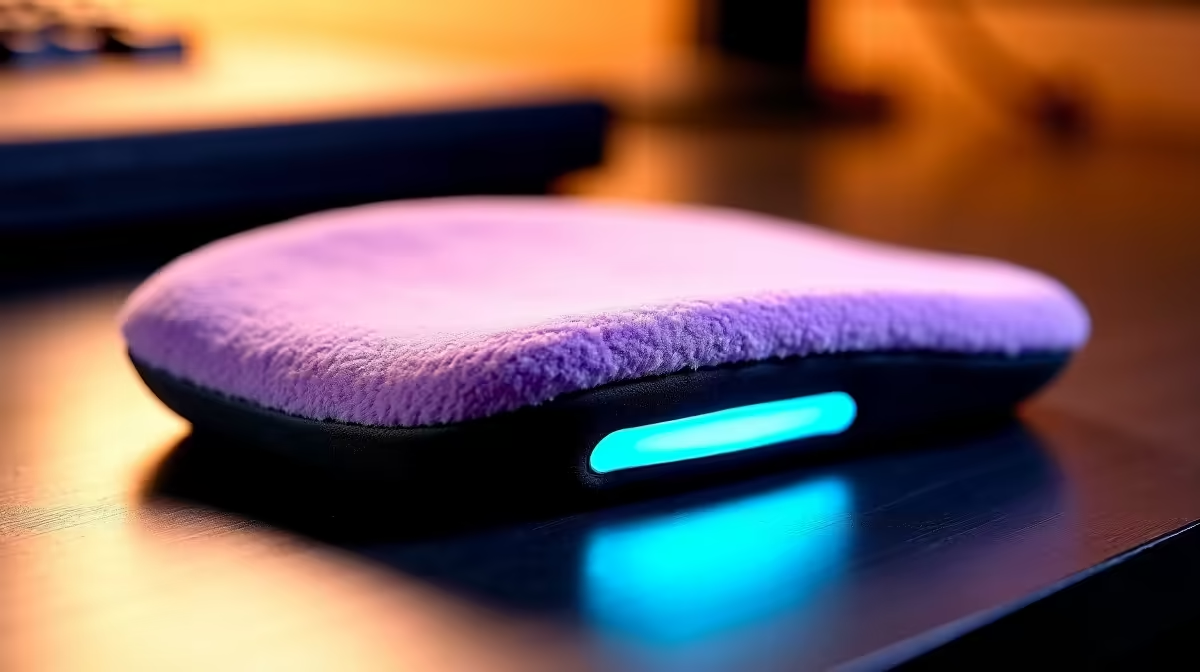
The relationship between keyboard use and repetitive strain injury is well established, but the mechanism is specific enough to be worth understanding properly. Sustained typing with a wrist held at the wrong angle concentrates stress on the structures inside the carpal tunnel, and that stress accumulates. A memory foam palm rest for RSI prevention interrupts the cycle by holding the palm in a position where those structures operate without strain, provided it is used correctly alongside other adjustments.
Quick Answer
A memory foam palm rest reduces RSI risk by supporting the heel of the palm so the wrist stays within 10 degrees of flat. This allows tendons to glide freely through the carpal tunnel rather than pinching under load. It works best paired with a desk height that keeps elbows near 90 degrees and regular movement breaks throughout the session.
🧠 The Biomechanics Behind the Rest
The carpal tunnel is a narrow channel at the base of the wrist, bounded by bone and a tight ligament. Nine tendons and the median nerve pass through it. When the wrist bends upward, the space inside the tunnel compresses and the nerve and tendons are pressed against the walls. Held in that position for hours, the resulting pressure builds the inflammation that eventually becomes repetitive strain injury.
Even 20 to 30 degrees of extension, a common posture when typing without support, is enough to increase carpal tunnel pressure measurably over a sustained session. Ergonomic guidelines aim to keep the wrist within 10 degrees of neutral because beyond that threshold the pressure increase accelerates.
Memory foam at the heel of the palm supports this neutral angle. It props the palm at a height consistent with the keyboard surface rather than letting the wrist hang below it or strain upward. The support is passive, requiring nothing from the user other than resting naturally.
Why the Heel of the Palm, Not the Wrist
This distinction is consistently misunderstood. The rest should contact the fleshy heel of the palm, below the little finger and below the thumb mound. Resting the underside of the wrist itself on a surface while typing places direct pressure over the carpal tunnel.
The correct usage is to let the palm heel sit on the foam between bursts of typing, and to lift the hands slightly during active keystrokes so the wrist moves freely. This is a posture anchor between actions, not a wrist immobiliser.
🔧 Foam Properties That Actually Matter
Memory foam's defining property is its slow response to compression and even slower recovery. This means the foam continuously conforms to the palm shape rather than pushing back with a fixed resistance. Contact pressure distributes across the full area rather than concentrating at high points.
Medium density foam at around 50 kilograms per cubic metre is the standard specification for ergonomic palm rests. Below that, the foam compresses too quickly under sustained load and loses its effective height by the afternoon. Above medium density, the foam starts to feel like a firm cushion, resisting the palm shape rather than accepting it.
For offices on the South African coast, particularly Cape Town or Durban where humidity is higher than inland cities, closed-cell foam resists moisture absorption better than open-cell variants, which can soften unevenly with daily hand contact in humid conditions.
Foam vs Gel in Practice
Gel rests feel soft and conforming when new but redistribute under sustained pressure, reducing effective height over months. Memory foam maintains its structure under repeated compression more reliably, which is why it is specified in ergonomic certifications that include long-term use criteria.
✨ Pairing the Rest With the Right Desk Setup
A palm rest can only do its job if the desk height allows it. If the keyboard sits above elbow height, the wrist is forced into extension regardless of how good the rest is.
Desk height should place the keyboard at a level where the upper arm hangs naturally and the elbow bends at approximately 90 degrees, forearm parallel to the floor. At this height, the keyboard and rest together allow a neutral wrist position. Adjustable desks are the cleanest solution, but a fixed desk can be made workable with appropriate chair height and a monitor arm that removes the need to lean forward.
Pro Tip ⚡
Set your desk height so your forearm is parallel to the floor with shoulders relaxed, then position the keyboard directly in front with the palm rest touching the desk edge. If your chair cannot raise high enough to achieve the elbow angle, a seat cushion adds height without requiring a new chair.
🎙️ Movement: The Factor a Rest Cannot Replace
Sustained static posture, even a well-supported one, carries its own RSI risk. Holding any position for hours without movement reduces circulation and allows waste products from muscle activity to build up rather than clearing. The result is fatigue and eventual inflammation regardless of wrist angle.
Short movement breaks of five minutes every 45 to 60 minutes significantly reduce cumulative strain compared to long sessions with infrequent pauses. Gentle wrist rotation and light forearm stretching during those breaks maintains the mobility that typing positions gradually reduce. This takes under two minutes per break and is the most effective addition to any palm rest setup.
Contoured vs Flat Rests
A flat strip provides consistent height across the keyboard width. A contoured rest is shaped to the natural curve of the palm heel, contacting the palm over a larger area and reducing edge pressure points that flat strips can create. For most users the difference is modest, but for those with wider palms or existing hand sensitivity, a contoured rest distributes pressure more comfortably.
Frequently Asked Questions
How does a foam palm rest reduce carpal tunnel pressure?
By holding the palm heel at a height that keeps the wrist within 10 degrees of flat. In that range, the carpal tunnel maintains its full internal space and tendons pass through freely. Once the wrist bends into extension, the ligament across the front of the tunnel tightens and the space compresses, increasing pressure on the nerve and tendons with continued use.
Should the palm rest be used while actively typing or only at rest?
Both, but with a distinction. During active keystrokes the hands should move freely without pressing the wrist into the foam. The rest supports the palm heel during pauses between key sequences. Over a long session this posture becomes natural, keeping the wrist from drifting into extension during idle moments.
Can a palm rest alone prevent RSI from developing?
No. It addresses one factor, wrist posture at the keyboard. It does not address desk height, which determines the wrist angle before any rest is involved. It does not replace movement breaks, which clear cumulative strain even in a well-supported posture. Used alongside correct desk height and regular breaks, it is a meaningful intervention.
What foam density works best for all-day support?
Medium density at around 50 kilograms per cubic metre is the standard for ergonomic products designed for full-day use. Lower densities compress under sustained load and lose effective height by mid-afternoon. Higher densities resist conforming to individual hand shapes. The medium range provides consistent support from morning to end of day.
Does keyboard tilt affect how well the palm rest works?
Yes. A keyboard with positive tilt, where the back edge is raised, forces wrist extension even with a palm rest in place. The rest holds the palm at desk level while the keys angle upward, recreating the wrist bend the rest is trying to prevent. A zero-tilt or slightly negative tilt keyboard works with a palm rest rather than against it.
Ready to build a desk setup that protects your wrists through a full working day?
Browse the ergonomic keyboard and accessories range to find a palm rest and keyboard combination suited to your desk height and daily session length.