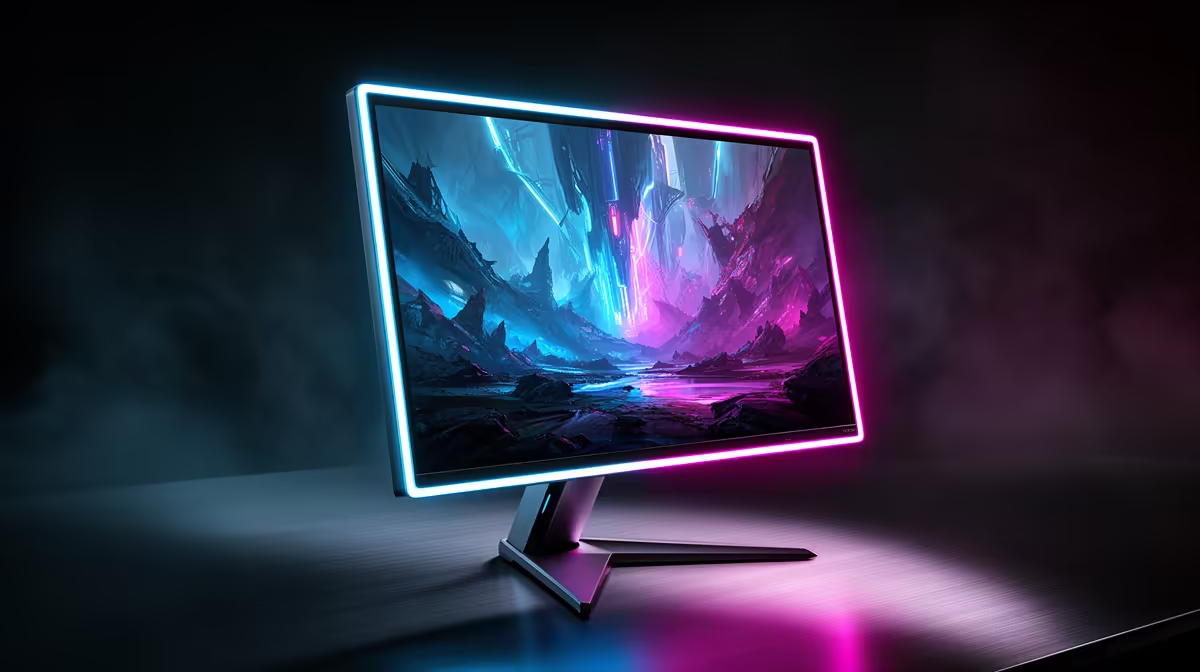
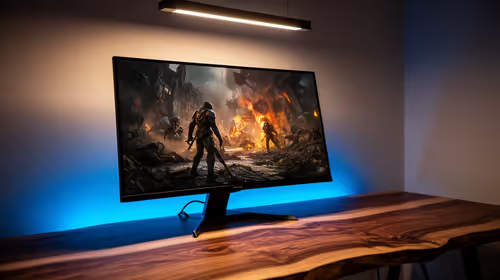
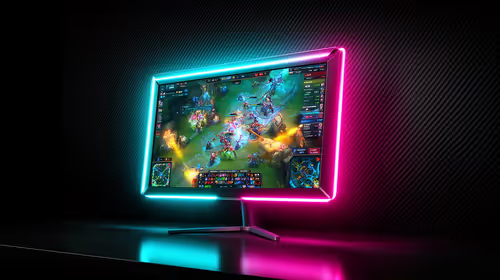
The RX 9070 fits naturally with a 1440p high-refresh monitor. Start at 165Hz for mixed gaming, move to 240Hz when fast multiplayer fills your week, or choose 4K 120Hz to 144Hz when image detail matters enough to tune the demanding titles. The useful answer lives in your genres.
Quick Answer
A 27-inch 1440p monitor at 165Hz to 240Hz is the easiest RX 9070 recommendation. A 34-inch 3440x1440 ultrawide suits racing and immersive games. A 4K display is worthwhile for mixed work and visual single-player play when you accept settings adjustments. Evetech's July 2026 in-stock gaming-monitor data placed the category median at R4,499, a dated starting point before high-end panels and resolutions change the budget.
🎮 Use 165Hz as the mixed-gaming centre
A 165Hz 1440p screen gives the RX 9070 enough headroom for esports while keeping new AAA games inside a broad variable-refresh range. You do not need a locked 165fps for the monitor to feel smooth; output at 90, 120 and 150fps all benefits.
At 27 inches, the resolution provides clear text and fine game detail without aggressive scaling. It also keeps desk size manageable. A quality stand, useful ports and good overdrive will affect every session, so do not spend the whole budget on the headline rate.
Browse Evetech's monitor category to compare current 1440p panels by size, refresh and technology.
🏎️ Buy 240Hz for a repeatable reason
Run your competitive game at the settings you use in real matches. If the RX 9070 and CPU hold frame rates well above 165fps, a 240Hz panel gives you more frequent updates and cleaner motion on a fast pixel response.
CPU performance matters. The GPU can sit below full use when the game thread cannot prepare more frames. Check one-percent lows and frame time before lowering every setting in search of a number.
A 240Hz OLED can combine fast scanning with very quick pixel transitions. A 240Hz LCD can still look blurred if response time cannot keep pace. Model-level motion testing matters more than the refresh label alone.
🌄 Go ultrawide when peripheral view improves the game
The 3440x1440 format asks more of the GPU than standard 1440p but remains below 4K. It suits sim racing, flight, role-playing and strategy, where width changes the experience rather than decorating it.
Check field-of-view support and interface placement in your main titles. Some competitive games restrict the view. Cutscenes and video can keep vertical side bars because 16:9 content does not fill a 21:9 panel.
Measure the desk and consider an arm. A deep ultrawide stand can leave little room for a full-size keyboard and wheel base.
Plan where a second screen would go before buying the ultrawide. A vertical chat display or telemetry panel can turn a wide setup into a wall of glass, while one good ultrawide may already replace two ordinary work screens. Check the GPU outputs, arm capacity and total desk width with cardboard or tape well before the courier arrives.
4️⃣ Treat 4K as a quality-first option
The RX 9070 can run 4K with the right balance of settings, upscaling and frame target. Strategy, older games and less demanding releases may use high refresh well. Heavy ray-traced games will require more restraint.
A 4K 144Hz monitor still makes sense when it spends weekdays on text, photos or video and survives your next GPU upgrade. Start at a High preset, preserve texture quality within available memory and reduce the most expensive lighting effects first.
At 32 inches, 4K provides a large sharp workspace. At 27 inches, its density is excellent but interface scaling becomes part of ownership. Check older software before assuming every app behaves cleanly.
Evetech's monitor best-sellers offer local format context while your workload makes the case for 4K.
🎨 Choose panel behaviour before brand loyalty
Fast IPS is the flexible option for work and games, with good viewing angles and predictable text. Its native contrast is limited. VA improves dark-room blacks but can smear dark motion on slower models.
OLED produces excellent blacks, HDR contrast and pixel response. Use its care routines on a static desktop and check the exact warranty. Mini-LED can deliver bright HDR and strong daytime visibility, with blooming determined by its zone control.
Test dark scenes, scrolling text and variable refresh. The weaknesses you see there will remain after the new-monitor excitement fades.
🔄 Make FreeSync earn its place
Enable Adaptive-Sync in the monitor menu and FreeSync in AMD Software. Select maximum refresh in Windows, then test a game whose frame rate moves across the panel's useful range.
Watch for low-frame-rate flicker and overdrive trails. Choose an overdrive setting that works across the range rather than one that looks fastest only at the maximum rate. Set a frame cap where it supports your latency and VRR plan.
🔌 Check the whole display link
Confirm which DisplayPort or HDMI input supports native resolution, maximum refresh, HDR and full colour depth at the same time. Use a cable rated for that mode and avoid an unneeded adapter during initial setup.
If the screen flashes black, test one monitor at a lower rate, then return to the target with a known-good cable. Driver changes come after the physical link has been checked.
Frequently Asked Questions
What monitor resolution matches the RX 9070?
1440p is the broadest high-refresh match, with ultrawide and 4K serving more specific priorities.
Can the RX 9070 drive a 240Hz monitor?
Yes, though only games and settings that exceed 165fps make full use of the extra ceiling.
Is 4K worth pairing with the RX 9070?
Yes for sharp mixed use and visual games when you are comfortable tuning demanding releases.
Does the RX 9070 support ultrawide monitors?
Yes. Game support and the extra pixel load determine the experience.
What refresh rate should I target with this card?
Choose 165Hz for mixed gaming and 240Hz for a competitive library that can sustain higher frames.
Which monitor panel type suits the RX 9070?
IPS is flexible, OLED excels in contrast and motion, VA offers affordable contrast, and mini-LED suits bright HDR.
Is FreeSync supported on this GPU?
Yes. Pair it with an Adaptive-Sync display and enable FreeSync in AMD Software.
Putting an RX 9070 behind a screen you plan to keep?
Compare 1440p, ultrawide and 4K monitors at Evetech, then choose the format your games and desk can justify.