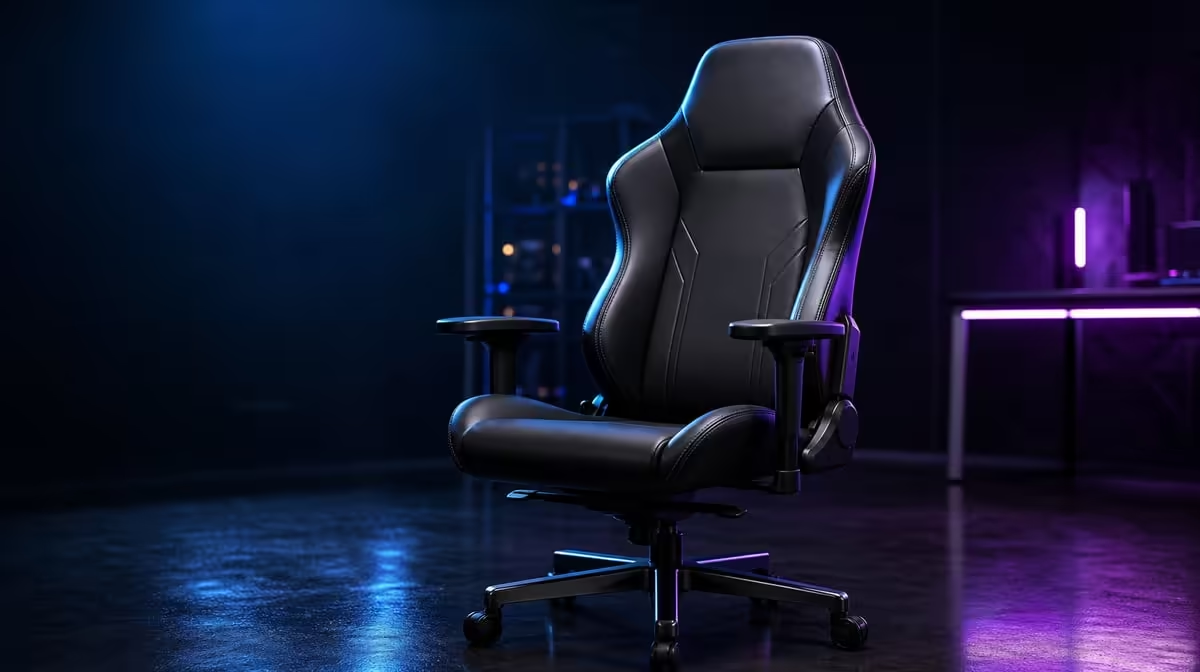
A chair budget becomes useful when each Rand is connected to a fit or construction need rather than a tier name. To decide how much to spend on a gaming chair in South Africa, begin with the user's intended range, daily hours and desk geometry. The R8,599 noblechairs HERO Black Edition provides a premium reference with steel construction and finely adjustable support.
Quick Answer
Set the budget after confirming user range, backrest fit, arm position and the adjustments needed for real tasks. At R8,599, the HERO offers a robust steel frame, design for users up to 150kg, infinite lumbar tuning, enlarged 4D armrests and ventilation-focused covering. Spend less or more only when the complete alternative meets the same required jobs.
🧾 Define the need before the tier
Write down who will use the chair, the normal session length and whether the desk handles work, gaming or both. Add the user's required range before comparing styling.
A higher price does not prove comfort. A lower price is not value when the chair misses the body or keeps the controls out of reach. The first budget gate is usable fit.
Map the current problem. Lower-back contact may need finer adjustment, forearms may lack support or a warm room may make covering choice important. Paying for a feature with no identified job weakens the budget.
Evetech's noblechairs gaming chair collection gives the HERO a direct brand context.
🏗️ Price structure and user range
On the structural side, the HERO has a robust steel frame and an intended user range extending to 150kg. These facts help a buyer filter the construction and design range without promising a lifespan.
Capacity is not a comfort measurement. A user below 150kg still needs to check proportions, lumbar contact, arm position and movement at the desk.
Compare each candidate's complete construction rather than focusing on visible trim. Normal use, care and the way forces move through the chair remain part of ownership.
The wider Evetech gaming chair category helps shoppers compare different spending levels after the essential user-range filter is applied.
Add the desk as a cost gate. If broad armrests prevent the chair from approaching the work surface, the buyer may need to change the layout or reject the fit. A premium chair should not create another purchase merely because its relationship with the existing desk was ignored.
Check how easily the chair can be retuned after another person uses it. Shared seating puts more value on repeatable controls, while a single-user setup may preserve one arrangement for longer.
🎚️ Value adjustments by frequency
The HERO's infinitely adjustable lumbar system earns value when small changes can meet the user's lower-back curve more precisely than a fixed shape. Test it gradually; maximum depth is not the goal.
Its enlarged 4D armrests earn value when different control positions require changes in height, depth, width or angle. A user with one simple desk position may use less of that range than someone switching between work and gaming.
Score each feature as daily, weekly, occasional or unused. Frequent improvements deserve more of the budget than controls admired once and ignored.
The breathable covering and styled air channels address contact ventilation. They should be tested in the real room and clothing rather than converted into a promise that the chair stays cool.
Create an adjustment-use log during the trial. Note every time lumbar depth, pad position or chair-to-desk distance is changed and whether that correction remains useful. A control used repeatedly has stronger budget evidence than one moved only during setup.
Do the same for movement breaks and task changes. A feature should not receive credit for comfort that came from standing, adjusting room airflow or moving the keyboard. Those actions still matter, but they belong in their own row.
💵 Use R8,599 as an accountable benchmark
The HERO price belongs to the whole chair, not one lumbar dial or frame fact. Build a comparison table with user range, useful support, desk fit, covering and observed task performance.
For each less expensive option, ask whether it passes the same critical checks. For each dearer one, identify the exact requirement improved. An undefined premium feel cannot replace that work.
Include care in the decision. PU needs a gentle surface routine, while any chair benefits from normal use and periodic inspection. Do not invent long-term costs or a guaranteed service period.
Compare the HERO with a simpler chair through one full working day. If both support the user equally and the extra controls remain unused, the lower spend may be rational. If the simpler chair repeatedly forces reaching or compromises lower-back contact, the R8,599 package has a named advantage.
Keep the price timestamp tied to the decision. R8,599 is the current verified reference for this wave, while availability should be checked on the live Evetech pages at purchase time.
Browse Evetech's gaming chairs above R4,000 for premium comparisons. Check the live category at decision time rather than building the budget around an availability assumption.
Set critical passes for user range, lower-back fit, armrest-to-desk alignment and comfortable session use. If one fails, a lower price does not repair it.
Then weight the benefits by daily hours. A chair used for work and gaming can justify more adjustment than an occasional seat, provided those controls are actually retuned.
Leave part of the budget unspent when a suitable chair meets the need. Stretch only when another model solves a confirmed mismatch.
The R8,599 HERO is a premium anchor, not a universal answer. Its value is strongest when the steel frame, continuous lumbar control, enlarged pads and breathable surface all contribute to the buyer's routine.
Finally, write a one-sentence purchase case. It should name the user, daily tasks and two or three HERO features that solve observed needs. If the sentence can only say premium chair, return to the desk test before spending.
Frequently Asked Questions
What should set the budget first?
Begin with user range, personal fit, desk reach and the number of hours the chair will serve.
Where does the HERO sit as a Rand reference?
At R8,599, it provides a premium benchmark for structural, support and ventilation features.
Which premium feature is easiest to test?
Lumbar and armrest adjustments can be judged directly through seated tasks and control changes.
Does a higher price prove longer life?
No. Construction facts can support comparison, but they cannot guarantee a service period.
How can overspending be avoided?
Give budget weight only to features that solve frequent, observed needs.
Does the 150kg figure guarantee fit?
No. It defines the intended user range; body proportions and desk alignment remain separate.
What should happen at the final decision?
Check the current Evetech category and compare complete chairs against the same pass criteria.
Should covering receive the same weight as fit?
Only if surface heat or care is a major daily issue. Critical body and desk fit should remain the first gate.
Can one trial settle the lifespan question?
No. A short trial can assess fit and control use, not predict an exact service period.
Ready to turn a gaming chair budget into a list of fit and support outcomes?
Compare Evetech seating and use the R8,599 HERO as an accountable premium benchmark.