You've seen the numbers plastered on the box: 7,000MB/s, 10,000MB/s, even faster! But what do these insane NVMe SSD speeds actually mean for your gaming rig or workstation here in South Africa? Are you really missing out if your drive isn't hitting warp speed? Let's cut through the marketing hype. We’ll break down what read/write performance truly means for you, your games, and your workflow, so you can make a smarter choice for your next upgrade.
Understanding NVMe SSD Read/Write Performance
At its core, SSD performance is split into two main types of operations: sequential and random. Understanding the difference is key to decoding what those big numbers on the box actually mean for day-to-day use. Getting this right helps you choose from the entire range of SSDs available.
Sequential Speeds: The Highway for Big Files
Think of sequential speed as a massive, open highway. It measures how quickly the drive can read or write large, continuous blocks of data. This is the big, flashy number used in advertising.
- When it matters: Installing a massive game like Baldur's Gate 3, transferring a 4K movie file, or rendering a large video project.
- The reality: While impressive, you're not performing these tasks all the time. It’s a great spec, but not the whole story of an SSD's performance.
Random Speeds: The City Streets of Data
Random speed (often measured in IOPS, or Input/Output Operations Per Second) is the opposite. It measures how quickly the drive can access small, scattered bits of data from all over the drive. Think of it like a delivery driver navigating busy city streets.
- When it matters: Booting up Windows, loading a new level in Apex Legends, opening applications, or web browsing. This is where you feel the snappiness of an SSD.
- The reality: For most users, high random read/write performance has a much bigger impact on the perceived speed of your PC than sequential speeds.
NVMe SSD Speeds for the Modern South African Gamer
So, how much speed do you actually need to crush the competition? The good news is that any SSD is a monumental leap from an old-school hard drive. Even budget-friendly 2.5-inch SATA SSDs will drastically cut your loading times.
For most gamers, a solid PCIe Gen3 or Gen4 drive offers the best value. These drives deliver exceptional random performance, making your system feel incredibly responsive. While the blistering NVMe SSD speeds of the latest drives are tempting, technologies like Microsoft's DirectStorage—which allows the GPU to load game assets directly from the SSD—are still in their early days. A fast, reliable drive from our wide selection of NVMe SSDs will keep you competitive for years to come.
Check Your Motherboard 🔧
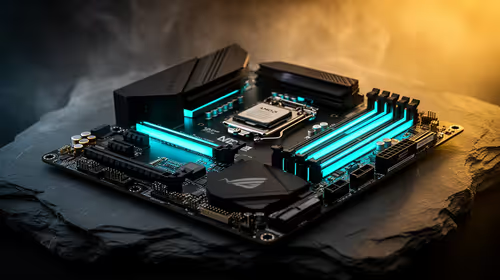
Before you buy a super-fast NVMe drive, check your motherboard's specifications! Make sure you have a free M.2 slot and confirm which PCIe generation it supports (e.g., PCIe 3.0, 4.0, or 5.0). Plugging a Gen4 drive into a Gen3 slot will work, but it will be limited to Gen3 speeds. You want to get the performance you paid for!
More Than Just Speed: Key SSD Specs to Check
Chasing the highest read/write performance number can be a trap. A well-rounded drive is always a better investment. When you're browsing for an upgrade, keep these other factors in mind.
- Capacity: Games aren't getting any smaller. A 1TB drive is a great starting point, but 2TB is quickly becoming the new standard for serious gamers.
- Endurance (TBW): Terabytes Written (TBW) tells you how much data can be written to the drive over its lifetime. For most users, this is a non-issue, as you'd struggle to hit the limit even after many years.
- DRAM Cache: A small amount of super-fast DRAM on the SSD acts as a map for your data, significantly boosting random performance and consistency. Cheaper "DRAM-less" SSDs can feel slower during intense tasks. It's always a good idea to check out the latest SSD deals to find a drive with a DRAM cache that fits your budget.
Are Blazing-Fast Gen5 NVMe SSDs Worth It? 🚀
With speeds exceeding 12,000MB/s, the latest generation of drives is undeniably impressive. These are the pinnacle of storage technology, designed for the most demanding tasks.
So, who needs one? If you're a professional video editor working with 8K RAW footage, a data scientist crunching massive datasets, or a hardcore enthusiast who simply must have the absolute best, then these bleeding-edge Gen 5 NVMe drives are for you. For these specialised workloads, pairing a compatible high-end motherboard with a powerful 2TB Gen 5 NVMe SSD can genuinely accelerate your workflow. For everyone else, the premium price might be better spent on a larger Gen4 drive or a GPU upgrade.
The bottom line on NVMe SSD speeds is simple: balance is everything. Don't just chase the biggest sequential number. Consider your primary use case—gaming, content creation, or general productivity—and choose a drive that offers the right blend of speed, capacity, and reliability for your needs.
Ready to Supercharge Your PC?
From budget-friendly SATA drives to lightning-fast Gen5 monsters, we've got the perfect storage solution for you. Explore our massive range of SSDs and find the perfect drive to conquer your load times.