Quick Answer
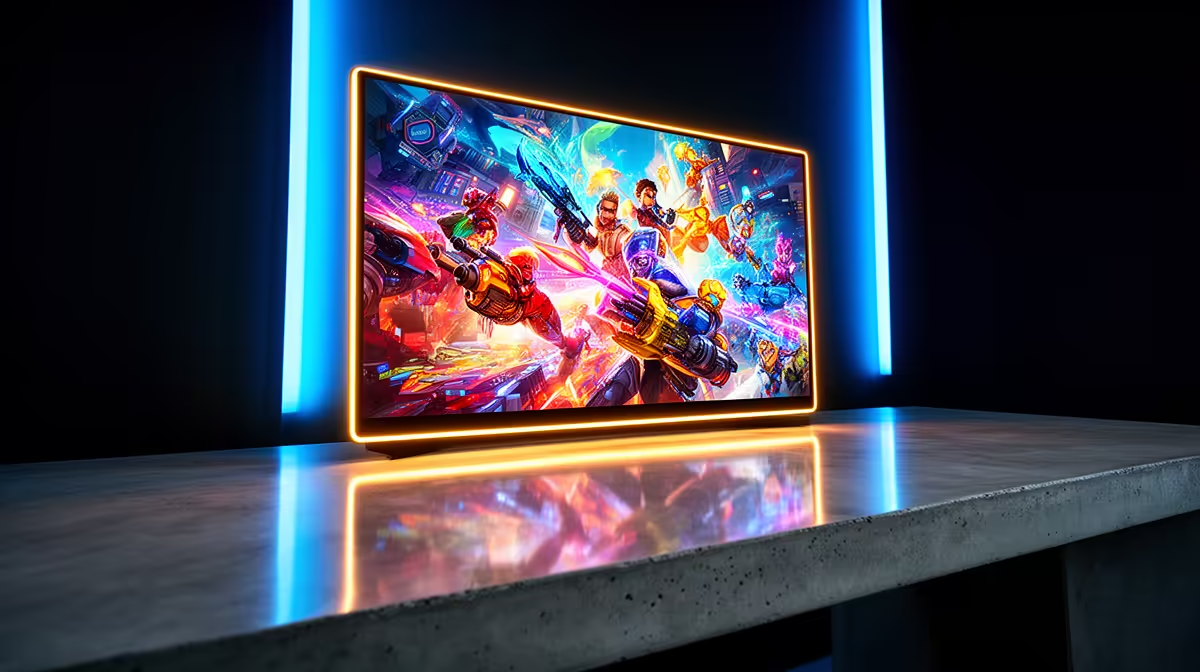
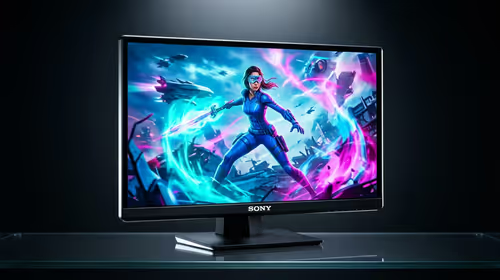
OLED gaming monitors deliver 0.03 ms pixel response, infinite contrast (true black), and 99%+ DCI-P3 colour accuracy — specs no LCD technology can match at any price. SA buyers can find OLED gaming monitors at Evetech from approximately R12,000 (27-inch 1440p 240 Hz) to R30,000+ (49-inch ultrawide), with the R13,000–R16,000 range delivering the competitive gaming sweet spot.
OLED vs LCD: The Real Performance Difference
The numbers tell the story clearly. A standard IPS monitor offers 1,000:1 contrast ratio, 350–450 nits brightness, and 4–8 ms GtG response. A good VA panel reaches 3,000–5,000:1 contrast. An OLED gaming monitor delivers infinite contrast (pixels fully off), 250–1,300 nits peak, and 0.03 ms response. In a dark gaming scene, OLED shows shadow detail that VA and IPS cannot — black is black, not a dark grey. In competitive FPS, the 0.03 ms response eliminates the ghosting trails visible on fast-moving objects on LCD panels.
SA OLED Monitor Price Guide
R12,000–R16,000: 27-inch 1440p 240 Hz OLED — LG 27GR95QE (R14,000), ASUS ROG Swift PG27AQDM (R16,000). R16,000–R22,000: 34-inch ultrawide QD-OLED or larger 1440p panels — Samsung Odyssey OLED G8, LG UltraGear 34-inch. R22,000–R30,000: 4K OLED or high-Hz ultrawide options. All stocked at Evetech with nationwide delivery to SA buyers.
GPU Requirements for SA OLED Builds
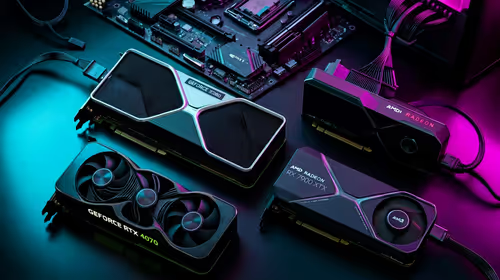
For 27-inch 1440p 240 Hz OLED: RTX 4070 (R11,500) averages 180–220 fps in Valorant, 120–150 fps in Cyberpunk 2077 at High. For 34-inch ultrawide 175 Hz: RTX 4070 Super (R13,000) needed for 120+ fps in ultrawide-demanding titles. For 4K OLED: RTX 4080 (~R20,000) required to sustain 100+ fps at 4K in AAA games. VRR support on all OLED panels means GPU-limited scenarios still play smoothly below peak Hz.
FAQ
How much does a good OLED gaming monitor cost in SA right now?
Entry OLED gaming monitors in SA start at approximately R12,000–R14,000 for a 27-inch 1440p 240 Hz model (LG 27GR95QE). Mid-range QD-OLED ultrawides (34-inch, 175 Hz) run R18,000–R22,000. Premium 4K OLED or high-Hz competition models reach R25,000–R30,000. Prices fluctuate with rand/dollar movements — check Evetech's live pricing for current figures.
Is OLED burn-in a real risk for SA gamers in daily use?
Burn-in is a real phenomenon but manageable with modern OLED panels. Static HUD elements (health bars, minimaps) left at high brightness for thousands of hours create visible retention. Modern OLED gaming monitors include pixel refresher cycles, screen saver timers, and logo dimming features that reduce this risk significantly. For gaming-primary use with varied content, burn-in risk is low over 3–5 years of normal play sessions.
What is QD-OLED and how is it different from standard OLED in SA monitors?
QD-OLED adds a quantum dot colour conversion layer to an OLED base panel, enhancing colour gamut (typically 99% DCI-P3 vs 95%+ for standard WRGB-OLED) and peak brightness. Samsung manufactures QD-OLED panels; LG manufactures WRGB-OLED. QD-OLED is used in the Samsung Odyssey G8 and MSI MPG series. Both offer better motion clarity than LCD, but QD-OLED tends to have slightly higher peak brightness while WRGB-OLED can have slightly better uniformity.
OLED monitor's built-in pixel refresh cycle (runs when the monitor idles or shuts down) and use the screen dimmer feature for static elements like desktop wallpapers and taskbars — these two habits significantly extend OLED panel lifespan.