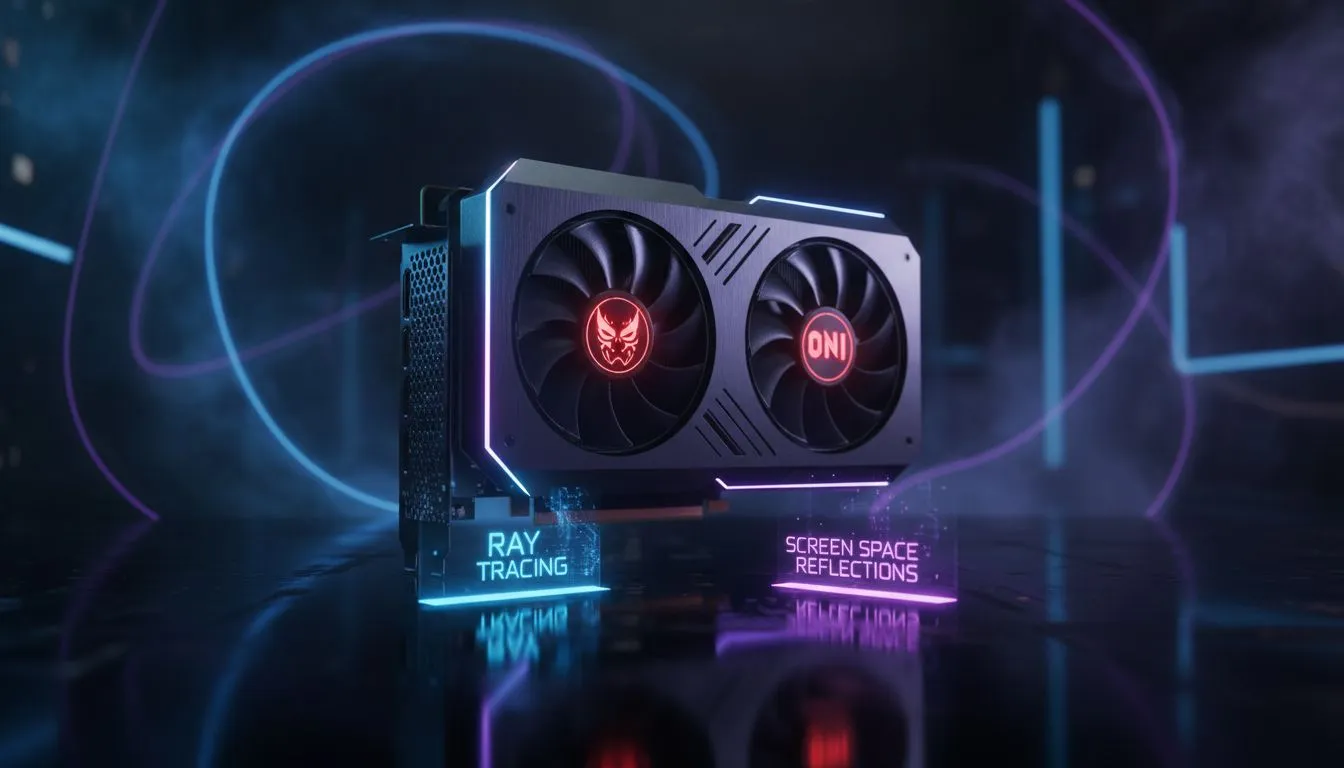
The Visual Evolution: Onimusha Ray Tracing vs Screen Space Reflections
Ever looked at the rain-slicked tiles of feudal Japan in Onimusha and felt something was missing? While Screen Space Reflections (SSR) served us well for years, the leap to true ray tracing is transformative. If you are chasing that perfect blade-glint or realistic puddle depth, understanding the tech behind the pixels is your first step to a better gaming experience here in South Africa. 🔧
Understanding the Tech: RT vs Screen Space Reflections
To appreciate Onimusha Ray Tracing, we must first understand the limitations of the old guard. Screen Space Reflections only calculate what is currently visible on your monitor. If a demon leaps from behind a pillar that is off-camera... its reflection vanishes from the water at your feet. It creates a "popping" effect that breaks immersion.
Ray tracing changes the rules entirely. It calculates light paths across the entire 3D environment. This means reflections remain accurate even for objects you cannot see. When you are looking for the latest NVIDIA and ATI graphics cards to power these effects, you are looking for hardware that can handle millions of these calculations every second.
Why Ray Tracing Wins for Atmosphere
Onimusha thrives on its dark, moody atmosphere. Shadows need to be soft... and light needs to bounce naturally off ancient stone walls. SSR often looks "oily" or overly shiny. Ray tracing provides a matte, realistic finish that grounds the characters in their world. If you want to see this level of detail, browsing premium MSI graphics cards is a great place to start your journey.
Performance Stakes in the South African Market
High-end visuals usually come with a performance tax. Running Onimusha Ray Tracing at 4K resolution requires significant "grunt". For many local gamers, finding a balance between cost and frames per second is vital. You do not always need to spend 30,000 ZAR to get a taste of modern lighting.
Performance Pro Tip ⚡
If your frame rate dips too low with ray tracing enabled, try lowering your shadow resolution first. In many titles, ray-traced reflections provide more visual impact than ultra-high-res shadows, allowing you to maintain that smooth 60 FPS target without sacrificing the "next-gen" look.
There are excellent entry-level options like Intel Arc graphics cards that offer dedicated ray-tracing hardware at a more accessible price point. Alternatively, the raw rasterisation power of AMD Radeon graphics cards provides a fantastic alternative for those who prioritse high refresh rates over heavy ray-traced effects. 🚀
The Verdict: Is the Upgrade Worth It?
If you are a purist who loves the aesthetic of the Onimusha series, the answer is a resounding yes. The depth added by real-time lighting transforms a flat scene into a living world. For professionals who might be modding or developing similar assets, even specialised workstation graphics cards can be utilised to render these complex light interactions with precision. ✨
Choosing between RT vs Screen Space Reflections ultimately comes down to your hardware's ceiling. SSR is a clever trick... but ray tracing is the truth.
Ready to Find Your Perfect Match? The debate between RT and SSR is all about finding the right balance for your setup. For maximum power, choice, and the best tech value in South Africa, Evetech has you covered. Explore our massive range of graphics card specials and find the perfect GPU to conquer your favourite games.