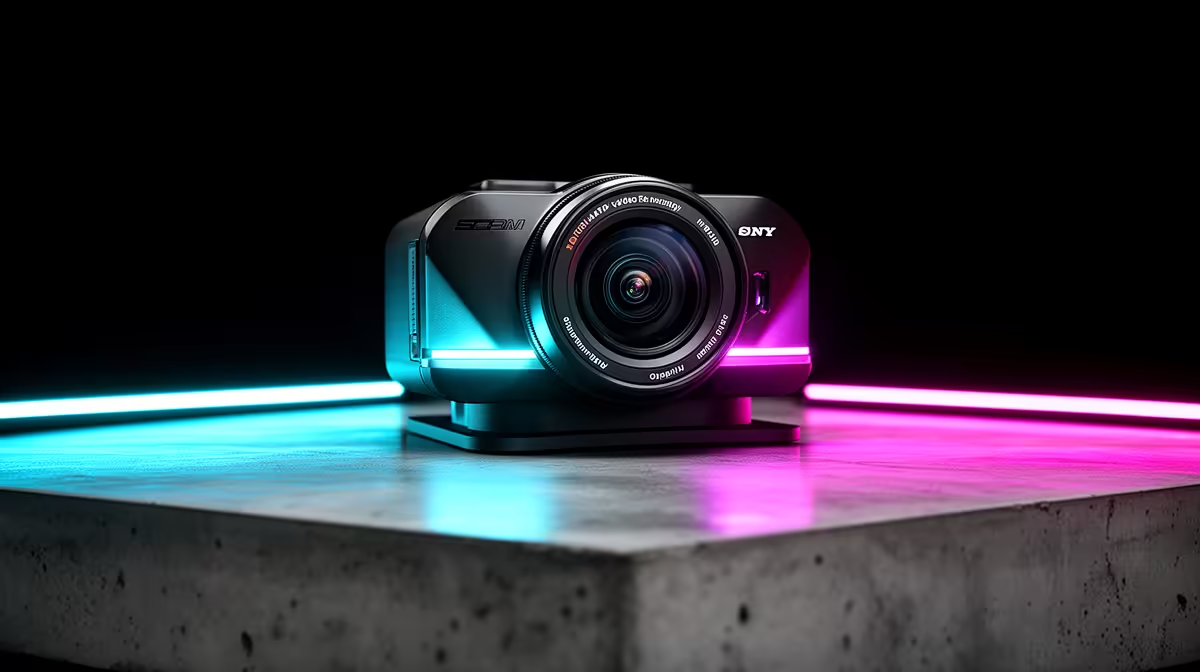
Camera specs in marketing materials often list a zoom number without explaining what kind of zoom that number represents. The distinction matters far more than the figure itself. Optical zoom in streaming equipment uses glass to achieve magnification with no loss of native image quality, while hybrid zoom combines that glass reach with AI upscaling to push further than the lens alone allows. Picking the wrong type for your use case leaves you either with a bulky lens you did not need or a soft image at the moment it matters most.
Quick Answer
Optical zoom magnifies through lens movement with zero image degradation. Hybrid zoom blends optical reach with AI upscaling to extend further at the cost of slight detail softening past the glass limit. For a fixed facecam, optical is the cleaner choice. For events needing long reach in a compact body, hybrid wins.
🔆 How Optical Zoom Works and Why Quality Is Preserved
Optical zoom achieves magnification by physically moving glass elements inside the lens barrel. As the elements shift relative to each other, the effective focal length changes and the subject appears larger in the frame. Crucially, this happens before the image sensor processes anything. The sensor receives a magnified version of the real-world scene, not a processed interpolation of a smaller capture.
The practical consequence is that a 4x optical zoom delivers the same pixel-level detail as a 1x image. You are not cropping a native-resolution frame and enlarging the result. You are capturing a magnified scene at full resolution from the beginning. For streaming, this means a tight two-shot or a close facial frame at 4x looks as sharp and detailed as your widest angle view.
The physical limit of optical zoom in a compact streaming camera body is typically around 4x to 5x. Pushing further requires a physically longer lens, which conflicts with the small-form requirements of a desk camera or conference unit. This is the ceiling that hybrid zoom was built to breach.
🧠 What Hybrid Zoom Adds to the Optical Foundation
Hybrid zoom begins with the full optical range and then applies AI-driven upscaling to extend beyond it. Once the glass elements reach their physical limit, the processing analyses the available image data, predicts the detail structure of the enlarged frame, and renders a higher-magnification view that the lens could not produce mechanically.
The reach extension is substantial. A camera with 4x optical zoom might offer 8x or 10x in hybrid mode. For a product review stream where you need to pull close to a small item on your desk, or for event coverage in a large venue where a distant stage is the subject, that extension is the difference between a usable shot and one that requires you to physically move closer.
The trade-off is texture. Adjacent to the optical range, hybrid and optical results are close enough that viewers watching at normal stream resolution cannot reliably distinguish them. Further into the AI-extended range, fine surface detail and sharp edges begin to soften slightly, particularly on static objects with high-frequency detail like text or circuit board traces.
✨ Digital Zoom and Why It is a Different Category Entirely
Both optical and hybrid zoom are distinct from pure digital zoom, which is worth understanding because some cameras list total zoom numbers that include a large digital component. Digital zoom is cropping and enlarging. The processor takes the native resolution frame and discards the outer pixels, delivering a magnified view that was never actually captured at that scale. The result is visibly degraded because no new detail is introduced, only existing pixels are stretched.
Hybrid zoom is not the same operation. AI upscaling generates plausible detail structure informed by the actual captured image, rather than simply enlarging existing pixels. The difference in output quality between hybrid and pure digital zoom at the same magnification figure is significant, and cameras that combine optical and AI rather than optical and digital produce far better results at the extended end of their range.
When comparing specifications, look for cameras that separate the optical and hybrid figures clearly. A 5x optical with 10x hybrid is a different product from a 5x optical with 10x total that relies on digital extension after the glass limit.
🎙️ Choosing Between Them for Your Streaming Use Case
A facecam positioned 50 to 80 centimetres from a seated creator needs 1x to 2x of effective zoom at most to achieve a good headshot framing. Optical at that range is entirely sufficient and any additional reach goes unused. There is no benefit to paying for hybrid capability if the lens never leaves its optical operating range.
The calculus shifts when the subject is further away or when magnification requirements change frequently within the same stream. A creator who demos physical products in close-up, cuts to a full-desk wide shot, and then pulls tight on screen content within a single session will find hybrid zoom's extended reach genuinely useful as an alternative to physically repositioning the camera.
Event streaming in a large venue like a conference hall or concert space makes the strongest case for hybrid. A compact camera body at the back of a hall cannot deliver a tight stage shot through optical zoom alone without mounting a heavy telephoto, but hybrid reach gets the shot without the weight or footprint.
Pro Tip ⚡
If you are testing a hybrid camera, zoom to the optical limit, take note of the image quality, then push one step beyond into the AI-extended range. That transition point reveals how aggressively the upscaling processes detail on your specific unit. Some handle it more conservatively than others.
Frequently Asked Questions
At what zoom level does hybrid quality start to noticeably soften?
This varies by the specific AI implementation, but most hybrid systems begin showing slight softness on fine detail from roughly 1.5x to 2x beyond the optical limit. For content where fine surface texture and sharp text are visible in the frame, staying within the optical ceiling is the safer choice. For video subjects with broader shapes and movement, the softening is rarely visible at standard streaming resolutions.
Is there a zoom type best suited for a two-person podcast?
A wide angle lens with a fixed or mild optical zoom suits a two-host setup best. The goal is to keep both presenters in frame with a clean composition, which calls for a wide field of view rather than reach. Look for cameras with a lens equivalent of around 24mm to 35mm at the wide end, which frames a standard 1.5 to 2 metre wide table setup naturally.
Does zoom type affect latency in a live stream?
Optical zoom has no processing delay because it is a mechanical movement with no computational step. Hybrid zoom adds a small amount of upscaling processing time, typically a few milliseconds, which is imperceptible in practice. Neither type introduces meaningful latency compared to the encoding and delivery delay that live streaming always carries.
Can digital zoom be added via streaming software instead?
Yes. OBS and similar platforms allow digital cropping of the input frame, which functions identically to in-camera digital zoom. The image quality result is the same, and doing it in software rather than hardware keeps the original full-frame capture available if you want to reframe later. This makes in-camera digital zoom largely redundant for creators using a capable streaming application.
Why do compact streaming cameras cap optical zoom at relatively low ratios?
Increasing optical zoom range requires adding glass elements and extending the physical length of the lens. A camera designed to sit on a desk mount or travel in a compact bag has strict size and weight constraints. A 4x to 5x optical range is the practical limit before the lens body becomes unwieldy for the streaming market. Hybrid zoom extends reach without those mechanical constraints, which is why it has become the standard solution in compact streaming hardware.
Ready to choose the right zoom for your streaming setup?
Browse the range of streaming cameras and optical accessories available for South African creators and find the lens specification that matches where and how you actually broadcast.