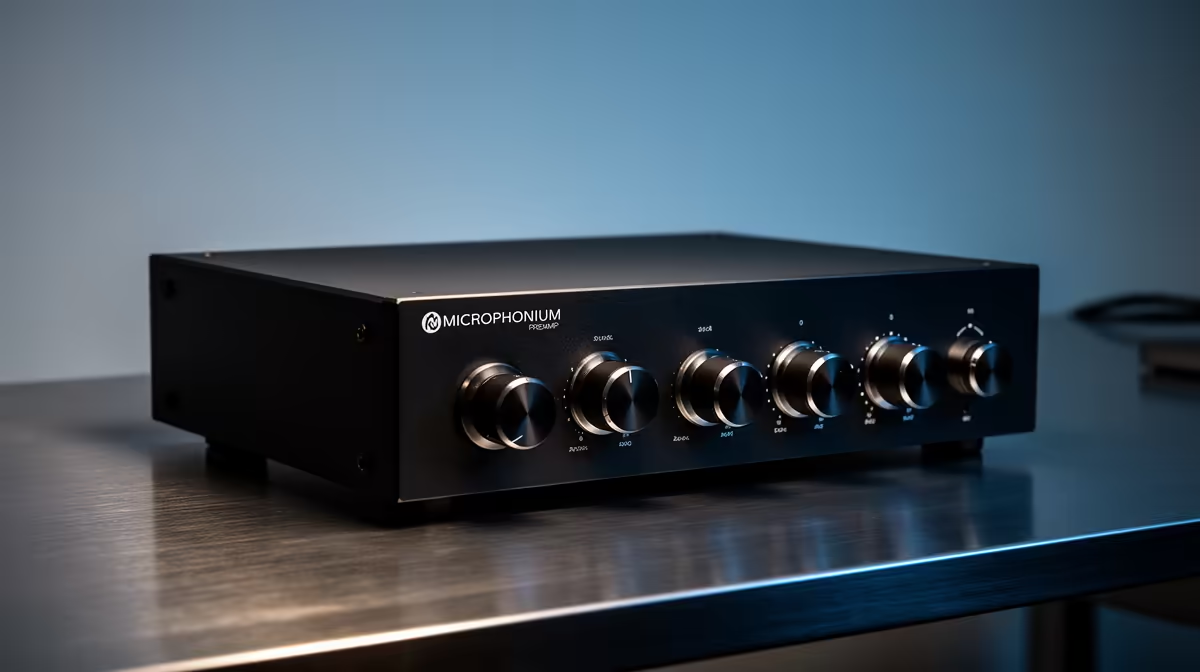
Professional voiceover demands more from a preamp than almost any other recording application. The voice arrives at a quiet dynamic microphone, gets translated into a tiny electrical signal, and then needs to be amplified sixty or more decibels before it is loud enough to record properly. Every shortcoming in that gain stage ends up in the final file. Optimising an ultra-low-noise high-gain preamp for this work means understanding what the numbers on the spec sheet actually represent, how to set levels for maximum cleanliness, and how the preamp interacts with the microphone you are using.
Quick Answer
Set gain so voiceover peaks reach around -12dBFS, leaving headroom without pushing the noise floor. A preamp rated below -90dB EIN keeps hiss inaudible even after normalising in post. Sixty-five decibels of clean gain headroom removes the need for any inline booster in most studio setups.
🎙️ Understanding What the Noise Floor Specification Means
The equivalent input noise figure, stated in dBu and abbreviated EIN, describes how much noise the preamp itself contributes before any external signal arrives. A preamp with an EIN of -128dBu is adding an extraordinarily small amount of noise. One at -100dBu is adding more, and at high gain settings that difference becomes audible.
For voiceover specifically, the target is an EIN that keeps the noise floor of the complete system below -90dB once the gain is applied. At that level, hiss remains below the threshold of audibility even when the recorded track is boosted by 12dB in post to achieve broadcast-level loudness. A preamp that adds self-noise above that point produces a faint but consistent hiss behind every word, which listeners notice even without consciously identifying it as noise.
The practical implication is that cheap interfaces and low-end preamp stages often become unacceptable at the gain levels voiceover requires. A quiet dynamic broadcast microphone may need 55 to 65dB of gain to reach a usable recording level. At 60dB of gain, a mediocre preamp is amplifying its own noise alongside your voice, and the result is a hissy take that requires aggressive processing to clean up. An ultra-low-noise stage keeps that amplified noise inaudible regardless of how much gain it applies.
Reading the EIN Figure on a Spec Sheet
EIN figures are sometimes measured at different input impedances, so comparing between preamps requires confirming the test conditions match. A 150 ohm source impedance is the common reference. Some manufacturers list noise as a signal-to-noise ratio rather than an EIN figure, which needs conversion for a like-for-like comparison. The closer the EIN is to -130dBu, the quieter the preamp will be at high gain.
🔧 Setting the Gain for Voiceover Work
The ideal gain setting for voiceover places peaks between -12dBFS and -9dBFS on normal speech. That target keeps the signal well away from the ceiling while recording with enough level to deliver good resolution from the analogue-to-digital converter.
The common mistake is recording too quietly because it feels safe. A voiceover track peaking at -24dBFS has been recorded at too low a level. When that track is normalised upward by 12 to 15dB in post, the preamp's noise floor, including any hiss the gain stage contributed, is also boosted by the same amount. The result is a noisier final track than if the gain had been set correctly at the source.
The other common mistake is hot-chasing, setting gain so peaks graze -3dBFS hoping for the fullest signal. A sudden loud word, an intake of breath, or a plosive that the mic captures more strongly than expected can push those peaks into distortion. The -12dBFS target leaves 12 full decibels of headroom for transients without sacrificing the level needed for a clean conversion.
Gain Structure and the Converter
The analogue-to-digital converter in your interface or preamp has its own performance window. Most good converters perform at their cleanest when the input signal runs between roughly -18dBFS and -6dBFS on average. Feeding a signal below -24dBFS on average wastes a portion of the converter's dynamic range, effectively using fewer of the available bits for the actual audio information.
Setting gain to target -12dBFS on peaks typically puts the average level somewhere around -20dBFS to -16dBFS on normal speech, which sits comfortably inside the converter's optimal range.
✨ When a High-Gain Preamp Replaces a Separate Booster
Certain microphones, particularly broadcast-style passive dynamics, produce very low output voltage. A standard preamp with 40dB of gain headroom cannot bring these microphones to a usable level without also amplifying its own noise to an audible degree. This is the gap that inline signal boosters were designed to fill.
A preamp capable of delivering 65dB of clean gain eliminates that dependency. At 65dB of clean headroom with a low EIN figure, a passive dynamic microphone reaches -12dBFS without the chain requiring any additional hardware. The signal path stays shorter, which is generally better for noise, and the separate inline booster, which represents around R1,500 to R2,500 of additional cost, becomes unnecessary.
A better preamp combined with a strong dynamic microphone can outperform a cheaper interface plus a booster on both noise performance and signal path simplicity.
Pro Tip ⚡
Record a 10-second silence clip at your working gain level before every voiceover session and measure the noise floor in your DAW. If the level is above -90dB, your gain is too high or your room is too loud. That reference clip also gives you a clean noise print if you need to run noise reduction on any take.
🎯 Microphone Pattern and Preamp Pairing
The microphone polar pattern determines how much room noise and reflection the capsule gathers alongside your voice. For voiceover, a tight cardioid pattern is the standard choice precisely because it captures primarily what is directly in front of the element and ignores most of what arrives from behind and from the sides.
Pairing a tight cardioid dynamic with a high-gain, low-noise preamp gives you two advantages working together. The pattern keeps room reflections from the small professional studio or treated home recording space out of the pickup zone. The clean high-gain stage then amplifies the narrow, focused signal the capsule captured without adding audible hiss to what is fundamentally a dry, direct vocal take.
A wider pattern captures more room sound. In a treated studio that is a non-issue. In a typical South African home setup without full acoustic treatment, the extra room character the preamp amplifies alongside the voice becomes audible in the final file.
Frequently Asked Questions
What gain level suits a passive dynamic microphone for voiceover?
Most broadcast dynamic microphones need 55 to 65dB of clean gain to reach a -12dBFS recording level on a firm speaking voice. A preamp rated for that headroom handles the task without requiring an additional inline signal booster.
How low does the noise floor need to be for professional voiceover?
Below -90dB on the complete system, which requires a preamp EIN figure below -90dBu at your working gain level. At that point, hiss stays below audibility even after normalising the track by 12dB in post-production.
Why does my voiceover sound hissy when the gain is high?
Hiss at high gain indicates that the preamp is amplifying its own self-noise alongside your signal. This happens when the preamp's EIN figure is not low enough to stay quiet at the gain levels a quiet dynamic microphone requires. Upgrading to an ultra-low-noise preamp stage resolves it without changing microphone placement.
Should voiceover be recorded at -12dBFS or hotter?
Target peaks at -12dBFS. That puts average levels in the optimal range for the analogue-to-digital converter and leaves enough headroom for unexpected loud transients. Recording hotter than -6dBFS risks distortion; recording below -24dBFS average wastes dynamic range and raises the apparent noise floor after normalisation.
Can a high-gain preamp replace an inline mic booster for broadcast dynamics?
Yes. A preamp delivering 65dB of clean gain brings a passive broadcast dynamic to a usable recording level without any additional hardware. The simplified signal path also reduces the number of connections where noise can enter the chain.
Ready to record voiceovers with a genuinely clean signal?
Browse the professional audio interface and preamp range at Evetech and find the ultra-low-noise gain stage that keeps your voice forward and your noise floor where it belongs.