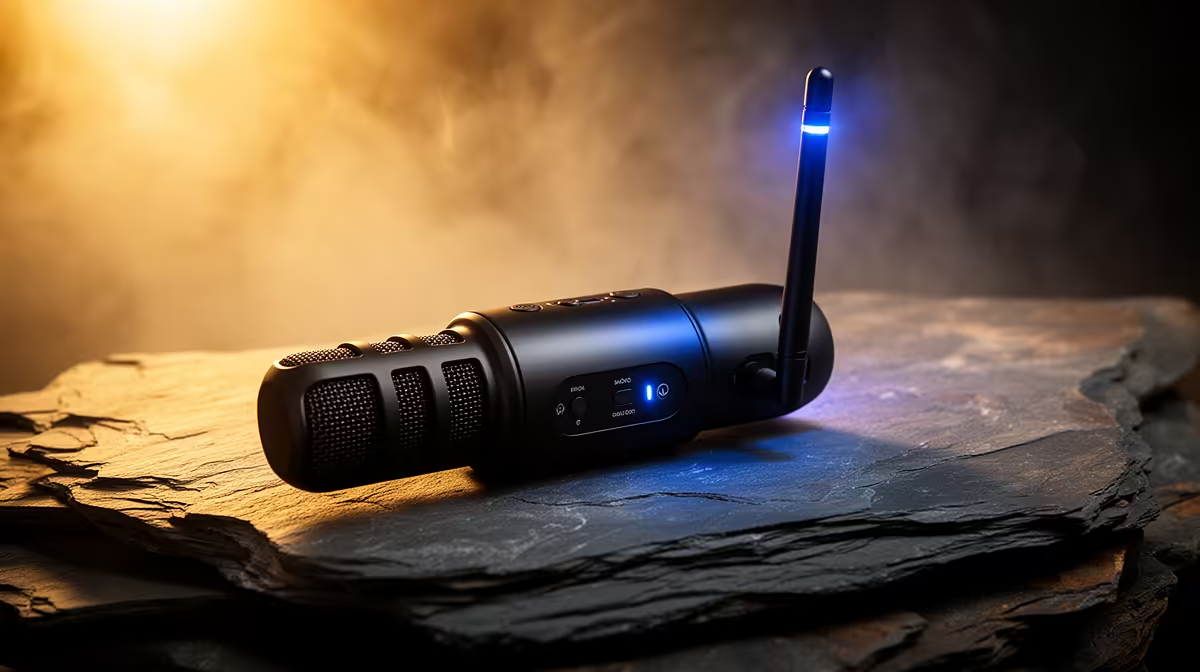
Shooting outdoors in South Africa is not the same as shooting outdoors anywhere else. Cape Town's coastal gusts, Durban's salt-heavy humidity, Highveld midday heat, and the fine Karoo dust that infiltrates everything ask very specific things of your audio gear. An outdoor wireless microphone for South Africa needs to handle wind noise, stay alive through a long remote shoot, and resist the environmental conditions that shorten the life of gear built only for studios. Knowing which specs matter on local terrain is what separates a kit that survives the shoot from one that fails quietly halfway through.
Quick Answer
For South African outdoor shoots, prioritise a furry deadcat windshield, at least 7 to 9 hours of battery life, an IP-rated sealed body, and a locking clip or magnetic mount. These four features cover the four most common failure modes: wind rumble, flat batteries on remote locations, dust and humidity ingress, and thumping from movement.
🌬️ Wind Rejection: The Non-Negotiable Feature
Wind is the primary audio threat on most South African outdoor shoots. The south-easter that defines a Cape Town summer afternoon, the Atlantic-facing cliffs along the West Coast, the open Highveld flats where wind has nothing to slow it, all of these environments produce wind noise that a bare capsule converts directly into low-frequency rumble that swamps the voice.
A foam windscreen handles light movement and indoor air conditioning. It is not designed for anything above a gentle breeze. A furry windshield, sometimes called a deadcat, works on a different principle: the fibres trap and dissipate the turbulent air layer before it ever reaches the capsule mesh. The reduction in wind noise is substantial, measured at up to 20dB on strong gusts, which is the difference between a voice you can hear and a voice you cannot.
Checking deadcat compatibility before you buy
Not every wireless clip-on transmitter ships with a furry windshield as standard. Some include a foam cap only and offer the deadcat as an optional accessory. Confirm before purchase that the deadcat is available for your specific transmitter model: a standard deadcat designed for a shotgun mic will not fit a small clip-on body correctly, and an ill-fitting one moves around in wind and adds handling noise rather than removing it.
🔋 Battery Life for Remote Locations
South African outdoor production frequently involves locations without power. A documentary shoot on the Drakensberg escarpment, a wildlife segment in the Kruger buffer zone, a surfing clip at a remote break along the Cape coast. None of these offer a wall socket for a midday recharge.
Seven to nine hours of continuous operation per charge is the practical minimum for a full outdoor shooting day. That figure accounts for a morning setup, a full day of intermittent takes, and a buffer for the journey back. Kits rated at five to six hours are comfortable for a half-day shoot in a managed environment but leave you vulnerable on remote locations where the schedule is less predictable.
Heat compounds the battery issue. Lithium cells lose capacity as operating temperature rises, and a transmitter clipped to a presenter working in direct Highveld sun at 35 to 40 degrees Celsius will drain faster than the spec sheet suggests under lab conditions. A kit rated to 45 degrees Celsius operating temperature is a more honest assessment of battery runtime during a hot midday shoot than one tested at 25 degrees.
🔧 Dust and Moisture Resistance
Sealed wireless transmitters carry an IP rating that describes how well the housing resists particle ingress and moisture. The first digit of the IP rating describes dust protection: IP5x means the transmitter is dust-protected, and IP6x means it is fully dust-tight. For shooting in the Karoo, the West Coast dunes, or on any game reserve where fine red dust coats everything, an IP5x or better rating keeps the capsule and the clip mechanism intact over repeated shoots.
The second digit covers moisture: IPx2 to IPx4 covers dripping water and rain splashes, which is the relevant range for coastal humidity and surprise rain in the Cape's winter season. IPx5 or higher covers more direct water exposure, useful for beach shoots or near-water content where spray is a real risk.
Salt air deserves specific attention. A transmitter used regularly near the ocean accumulates salt residue on unprotected metal contacts and mesh, which accelerates corrosion over months. A sealed body that keeps salt-laden air out of the internal electronics is an investment in the kit's service life, not just its performance on a single shoot.
🎯 Mounting Security in Moving Conditions
A transmitter that moves produces handling noise, and outdoor environments create constant movement: wind buffeting the subject's clothing, walking over uneven ground, ducking under brush. A locking clip that fastens securely to fabric at a consistent angle keeps the capsule facing the same direction take after take.
Magnetic mounts offer a different advantage: fast repositioning without fumbling with a spring clip. For a run-and-gun outdoor shoot where the presenter changes wardrobe between setups, a magnetic transmitter slides on and off in seconds. The trade-off is that cheap magnetic mounts do not hold firmly enough under heavy wind. Look for a magnetic system with a secondary friction or lock mechanism for outdoor work.
The mounting position also affects wind noise independently of the windshield. Placing the transmitter in the collar notch where a lapel meets the front of the jacket creates a partial wind shadow from the subject's own body. That natural shielding reduces the load on the windshield in moderate conditions and extends how well the kit handles before resorting to a full deadcat.
Pro Tip ⚡
On multi-day outdoor shoots in remote SA locations, carry a small silica gel sachet in the transmitter case overnight. The temperature swings between afternoon heat and night cold create condensation inside cases and on electronics. A sachet pulls that moisture out and keeps contacts dry, which is especially useful in humid coastal conditions around Durban or the KwaZulu-Natal coast.
Frequently Asked Questions
Which feature matters most for a windy coastal shoot?
Wind protection at the capsule is the deciding factor. A furry deadcat windshield breaks up turbulent airflow before it reaches the capsule, cutting wind-generated low-frequency noise by up to 20dB. A bare capsule in a Cape Town south-easter produces unusable low rumble; the same transmitter fitted with a deadcat in the same conditions yields a clean voice recording.
How much battery life should an outdoor kit provide for full-day remote shoots?
A minimum of 7 to 9 hours per charge, with the recognition that heat reduces effective runtime. Kits rated to 45 degrees Celsius operating temperature perform closer to spec during hot midday sessions. For a shoot that runs from sunrise to late afternoon in a remote location with no charging options, 9-plus hours provides meaningful margin.
Does dust resistance genuinely matter on South African outdoor sets?
Yes. An IP5x or IP6x dust-protection rating keeps fine particles out of the capsule mesh and clip mechanism. On a Karoo or bushveld shoot, dust infiltration over multiple sessions degrades audio quality and eventually jams mechanical components. A sealed body adds a service-life dimension beyond single-shoot performance.
Can Highveld heat affect wireless microphone battery performance?
It does. Lithium cells lose capacity progressively above 35 to 40 degrees Celsius. A transmitter spec-listed at 8 hours may deliver 5 to 6 hours on a hot midday shoot in the Gauteng interior. Choosing a kit with a higher temperature rating and monitoring battery level on the receiver's display helps you anticipate flat transmitters before they kill a take.
Which mounting style works best for an outdoor presenter who moves constantly?
A locking clip at the collar provides reliable directional consistency across different movement patterns. A magnetic mount offers faster repositioning between setups. For heavy outdoor movement, a locking clip with a firm positive catch is generally more secure. For a shoot with frequent wardrobe changes, a quality magnetic system with a secondary lock combines speed and hold reliability.
Ready to shoot outdoors with audio that holds up to SA conditions?
Browse the outdoor wireless microphone range and choose a kit built for wind, dust, heat, and the distances that remote South African locations demand.