Quick Answer
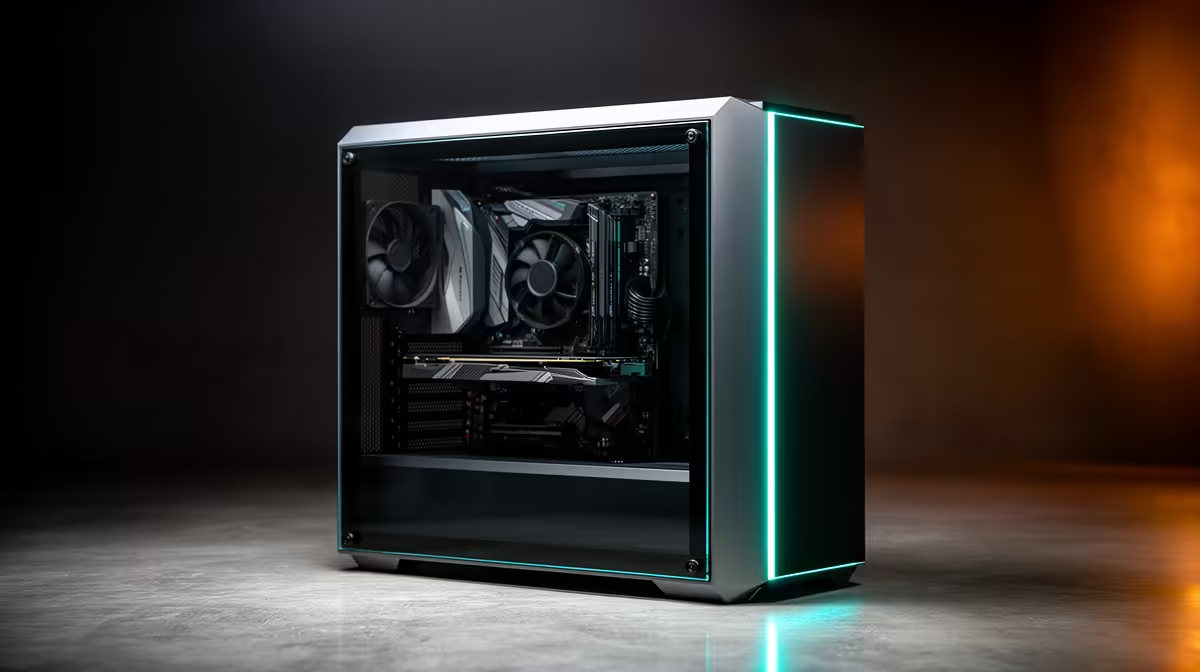
Panorama cases (full-perimeter glass or acrylic enclosures with minimal frame) show internal components from the front, side, and top simultaneously, versus traditional tempered glass cases that show only through a single side panel. The trade-off is thermal design: panorama cases require more deliberate airflow planning because glass panels on multiple sides reduce convective cooling, making fan configuration more critical than in a standard windowed case.
What Makes a Panorama Case Different 🖥️
A panorama or fish-tank style case replaces the traditional steel side panel with glass or acrylic on two to four faces of the chassis.
The distinction from traditional tempered glass cases is both visual and practical. A traditional tempered glass case has one glass side panel (usually the left side) and steel construction on all other faces. Internal visibility is excellent from one angle but non-existent from the other three. Panorama cases transform the PC into a displayable object that looks intentional from multiple positions on a desk or in a display cabinet.
Thermal Differences: Why Panorama Cases Need More Fan Planning 🔧
Steel panels radiate heat outward by conduction and create a convective path where warm air rises through gaps to the exhaust. Glass panels do neither effectively. A panorama case with glass on three sides traps radiated heat inside the chassis more than a steel-sided case, meaning the exhaust fans carry a heavier thermal removal burden.
For a high-end South African gaming build in a panorama case (RTX 5080 or RTX 5090, 9950X or Core Ultra 9 285K), the fan configuration must be deliberate.
Aesthetic Trade-offs and Practical Considerations 💡
Panorama cases accumulate visible fingerprints and smudges on the glass surfaces much faster than traditional cases because they are handled more during cable management and cleaning, and because the multiple viewing angles make marks visible from more directions. Expect to clean the glass with a microfibre cloth weekly for a consistently pristine appearance.
Cable management in a panorama case is more demanding than a traditional build because cables can be seen from multiple directions.
Seal Glass Panel Gaps in SA Dust Environments ⚡
Panorama cases with multiple glass panels often have larger perimeter gaps around panel edges compared to sealed steel cases. In South African homes where fine dust is common, stick foam weatherstrip tape around glass panel perimeters to reduce dust ingress without blocking airflow. Clean or replace the tape every three to four months when doing your routine internal cleaning.
FAQ
Are panorama cases suitable for water cooling setups?
Yes, and the combination is visually striking. Custom water cooling loops with clear or coloured coolant are the most popular pairing with panorama cases because the tubing runs, reservoir, and pump are visible from multiple angles. AIO cooling works equally well and is far more practical for most SA builders.
Do panorama cases support standard ATX motherboards and full-length GPUs?
Most panorama cases are built around standard ATX or E-ATX motherboard trays and support GPUs up to 380mm to 430mm in length depending on the model. Confirm the specific case specifications for your GPU's length, especially for large triple-fan RTX 5080 and 5090 cards that can exceed 340mm.
Is tempered glass stronger than the acrylic panels used in some panorama cases?
Yes. Tempered glass is harder, more scratch-resistant, and does not yellow over time. Some lower-cost panorama cases use acrylic (PMMA) panels that are lighter and cheaper but scratch more easily and can discolour over years of UV exposure from desk lighting. Premium panorama cases use full tempered glass on all panels.
Choosing between a panorama showcase case and a traditional tempered glass case for your SA build?
Evetech stocks both styles from quality brands with local warranty. Browse the gaming case range and find the enclosure that suits your build and your display ambitions.