Quick Answer
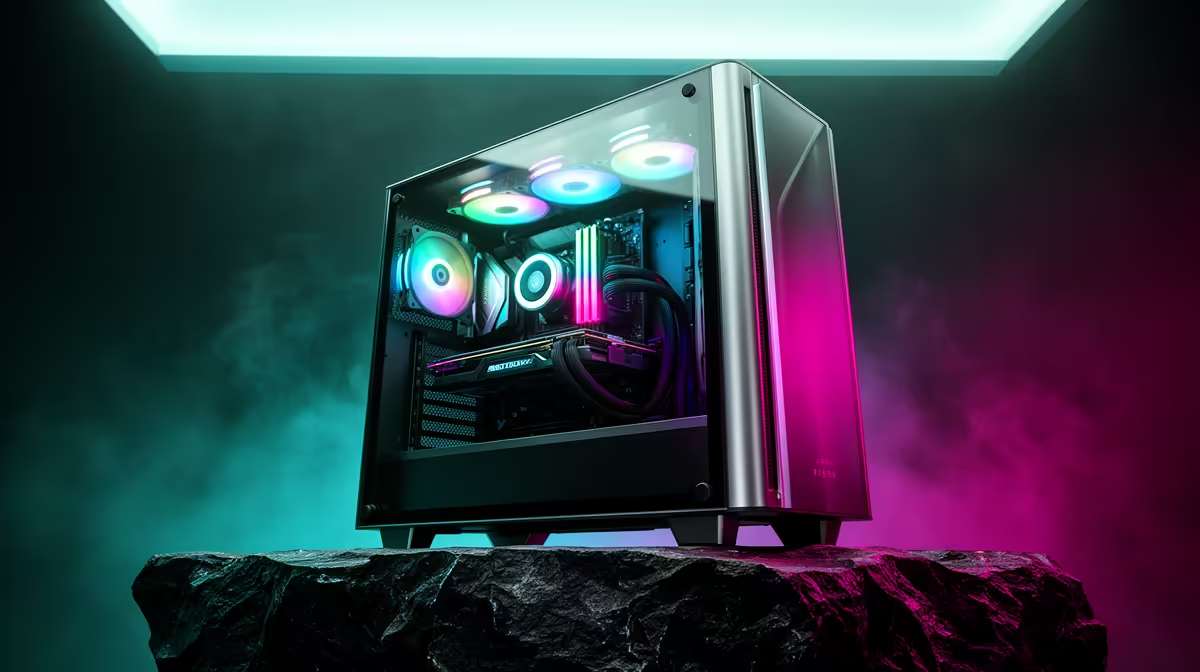
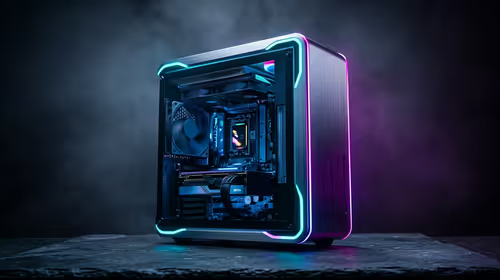
Panoramic cases expose three or more sides of the build through curved or multi-panel glass, while standard tempered glass cases show only the left side panel. The practical difference is that panoramic cases demand clean cable management, component colour matching, and ARGB planning on all visible sides, not just the left profile.
What Panoramic Really Means in Case Design ✨
A panoramic case uses a wraparound front-and-side glass design, a three-quarter glass panel, or separate glass panels on the front, top, and side simultaneously. The Lian Li O11 Dynamic EVO, Phanteks NV9, and certain Corsair iCUE 7000 series models achieve this through large curved glass that begins at the front mesh and flows into the side panel. Standard tempered glass cases like the Fractal Design Meshify 2 or be quiet! Dark Base show only the left side, keeping the front, top, and rear concealed. The panoramic approach makes the case a visual object in its own right, not just a container for components.
Build Visibility Implications: What You Must Do Differently 🔧
In a standard glass case, sloppy cable management behind the motherboard, unkempt fan cables in the top, and a plain black rear panel are completely hidden. In a panoramic case, every exposed surface becomes a design element. The top of the case may show through a glass panel, requiring a colour-matched or hidden AIO radiator. The front is visible, requiring a coordinated intake fan colour scheme. Even the PSU shroud becomes a design consideration because it may be visible from multiple angles. This raises the preparation time for a panoramic build significantly: expect a two-to-four-hour premium on build time versus a standard glass case for the same components.
Price Gap Between Panoramic and Standard Glass Cases in SA 💰
Standard tempered glass mid-towers in South Africa range from R1,200 to R3,500. Panoramic cases typically start at R3,000 and extend to R9,000 for premium models. The price premium reflects the manufacturing cost of curved glass panels, wider chassis dimensions, and more elaborate interior finishing. For a R20,000 to R40,000 showcase build, the case premium of R2,000 to R4,000 is proportionate. For a R12,000 first build, a standard glass case at R1,500 to R2,500 and an investment in good ARGB fans is a more effective allocation.
Light Your Build Before Closing Panels ⚡
In a panoramic case, test all ARGB effects with the glass panels open before seating them. Colour gradients and zone effects that look compelling on-screen in the software may look flat or washed out at certain angles through curved glass. Adjust brightness and effect speed with the actual glass in position before finalising your lighting profile.
FAQ
Do panoramic cases have worse cooling than standard glass cases?
Sometimes. Panoramic cases with glass fronts have less airflow than mesh-front standard cases. Cases like the Lian Li O11 solve this with perforated side or bottom intakes. If cooling is a priority, choose a panoramic case with at least one mesh intake surface.
Is a panoramic case harder to clean than a standard glass case?
Yes. More glass surfaces mean more fingerprint-prone panels to wipe down. Use a lint-free microfibre cloth and a spray-on screen cleaner monthly to maintain the visual quality, which is the whole point of buying a panoramic case.
Can a panoramic case be used for a non-showcase workstation build?
Functionally, yes. But the investment in premium glass and visual design is wasted if the build sits under a desk. A standard glass or solid-panel case is a better value choice for non-display workstations.
Deciding between panoramic and standard glass?
Evetech carries both panoramic showcase cases and high-airflow standard glass cases, with expert help available in-store and online across South Africa.