Quick Answer
Panoramic ATX cases prioritise glass coverage and component visibility over raw airflow efficiency. They typically cost R800 to R2,000 more than equivalent traditional ATX cases, offer superior showcase aesthetics, and usually require more deliberate fan configuration to compensate for reduced mesh area. Traditional cases offer better default airflow at lower cost but less visual impact.
Glass Coverage vs Mesh Area: The Core Trade-Off 🔍
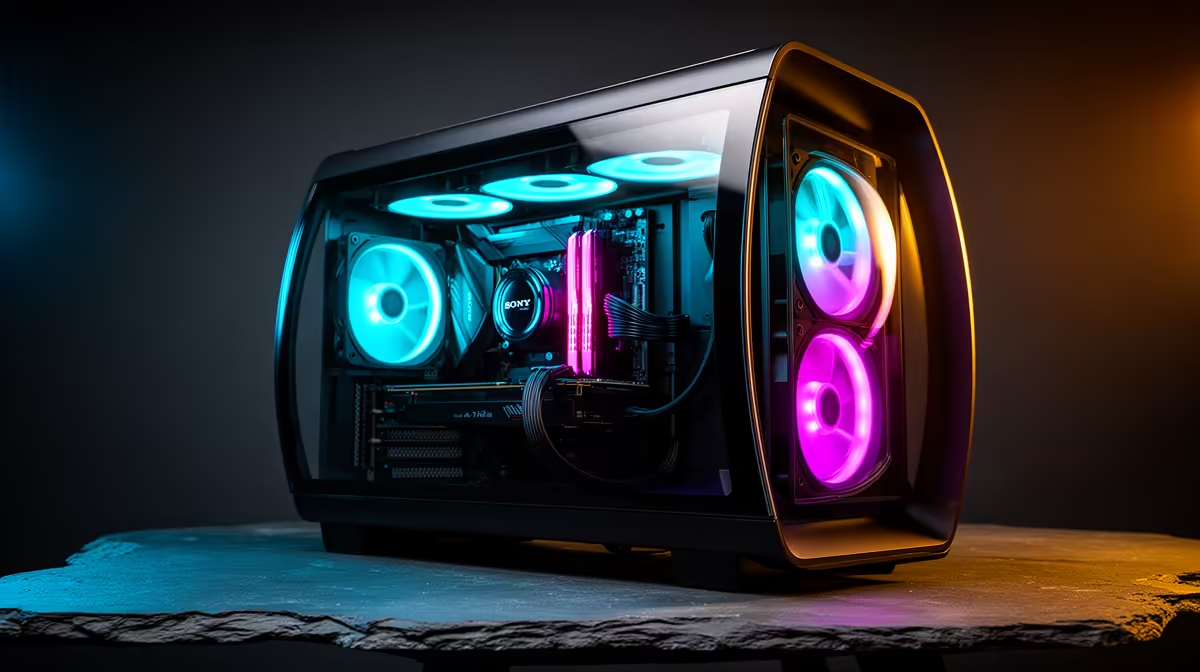
Traditional ATX mid-towers use a solid steel side panel and often a mesh-heavy front, which allows excellent intake airflow with minimal restriction. Panoramic cases replace the front mesh with large glass panels or use a three-sided glass design, which dramatically reduces the open mesh area where air enters. This means panoramic cases must compensate with powerful intake fans and strategic positive-pressure setups to push equivalent air volume through the reduced opening. In practical terms, a top-tier panoramic case with three 140mm front fans will outperform a mediocre traditional case with a single rear fan, but under identical fan configurations a traditional mesh-front case typically runs two to five degrees Celsius cooler at GPU level.
Component Visibility and Showcase Value 🌟
The defining advantage of a panoramic case is the unobstructed view of your components from multiple angles. A traditional case with a single tempered glass side panel shows the motherboard side. A panoramic design with three or four glass panels shows the front (where the AIO radiator sits), the side, and sometimes the top, creating a display-cabinet effect. For South African builders who exhibit at local LAN events or maintain social media build profiles, this visual return is substantial. Panoramic cases in the R3,500 to R6,500 range at local retailers create the kind of showcase builds that generate genuine attention, whereas a R2,500 traditional case with glass does not.
Which Builder Profile Suits Each Case Type 🎯
Choose a traditional ATX case if you prioritise thermal performance per rand, your system will sit under a desk or in an enclosed space, or you are building a workstation rather than a showcase machine. Choose a panoramic case if the build will be displayed prominently, you are investing in ARGB components and want them fully visible, and you are prepared to spend slightly more on both the case and potentially stronger intake fans. The extra R800 to R2,000 for a panoramic design is cost-effective when the entire build budget is already above R30,000 because the visual upgrade is proportional to the total spend.
Position Panoramic Cases Away From Direct Sunlight ⚡
Glass panels on panoramic cases act like a greenhouse, trapping radiated heat from direct sunlight exposure. In South African homes with west-facing rooms that receive afternoon sun, positioning a panoramic case near a window can raise internal temperatures by several degrees during the afternoon peak. Place the case on the desk side away from direct sun or close the blind during peak hours.
FAQ
Are panoramic cases harder to clean than traditional cases?
Slightly yes, because glass panels require more frequent cleaning to look presentable, and some panoramic designs make panel removal more involved.
Do panoramic cases support the same hardware as traditional ATX cases?
Yes, both formats use standard ATX motherboard mounting, standard PSU formats, and the same GPU lengths.
Which is better for a high-TDP system like a Core Ultra 9 285K plus RTX 5080?
A traditional mesh-front ATX case is the safer thermal choice for this power combination, where consistent cooling under sustained load is critical. If you choose a panoramic case for a high-TDP system, invest in high-static-pressure intake fans and a 360mm AIO for the CPU to maintain adequate thermal margins.
Choosing between showcase style and airflow performance?
Evetech stocks both panoramic and traditional ATX cases across a range of prices, browse the case category to compare your options side by side.