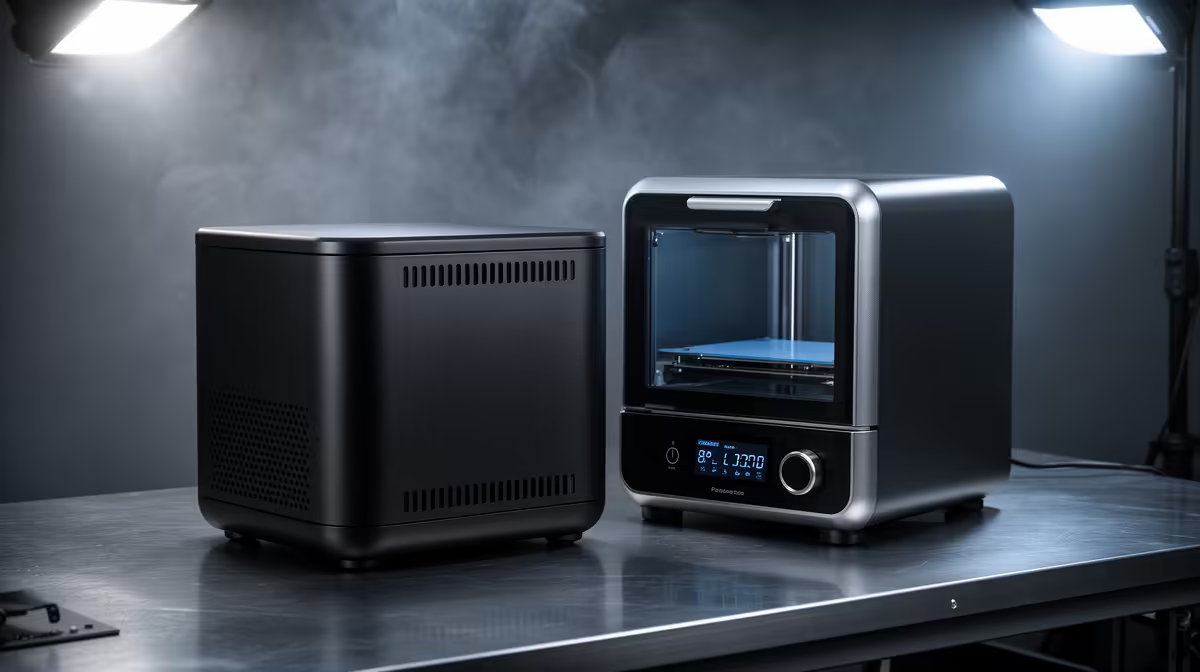
A sealed box with a few desiccant sachets and a heated dryer running at 55 degrees C do two completely different jobs, and confusing them is why a perfectly good nylon spool still prints with popping, stringing and a rough surface. A passive dry box holds already-dry filament at low humidity. A heated dryer actively bakes moisture back out of a spool that has already drunk it in. In a humid Cape Town or Durban climate that distinction decides whether your PETG and nylon stay print-ready.
Quick Answer
A passive dry box keeps dry filament dry, it cannot rescue a wet spool. A heated dryer pulls absorbed moisture out at roughly 55 to 65 degrees C over 4 to 6 hours. For PLA and PETG a good airtight box with fresh desiccant usually suffices, but nylon almost always needs an active dry first, then storage in the box. Plan to own both.
What each one actually does to the spool
Plastic does not "feel damp" the way a towel does. Hygroscopic filaments pull water vapour straight out of the air into the polymer itself, and once it is in there, no amount of sealed storage gets it back out. That is the core limitation of a passive box: airtight lid, silica gel sachets, often a hygrometer reading relative humidity. Drop a freshly opened spool in at, say, 15 to 20 percent RH and it stays usable for weeks. Drop a spool that already absorbed moisture in the same box and it sits there wet, because the desiccant only manages the air gap, not the water locked inside the plastic.
A heated dryer is the opposite tool. Gentle heat plus air circulation raises the vapour pressure inside the spool so moisture migrates out of the polymer and gets carried away. That is an active removal process with a temperature and a timer, not passive maintenance. The browse-and-compare set on the 3D printers and accessories shelf shows where both categories sit relative to your printer choice.
How wet your filament gets depends on the material
The materials behave nothing alike, so a single storage rule fails.
PLA and PETG
PLA is the most forgiving common filament. A sealed box with fresh silica gel keeps it printing cleanly for a long time, and many SA hobbyists never own a dryer purely for PLA. PETG sits a step up: it drinks water faster than PLA, slower than nylon, and it shows wet symptoms as stringing and tiny surface bubbles. Keep open PETG under about 50 percent RH, and if a spool has been left out and starts misbehaving, an active dry at 55 to 65 degrees C for several hours restores it before you reach for a new roll.
Nylon, the worst offender
Nylon is the reason this debate exists. Left open in a humid coastal room, a nylon spool can be compromised inside a day. Trying to dry it with desiccant alone is measured in months, which is not practical. The workflow that actually holds: bake it fully in a heated dryer first, then keep it in the sealed box between prints. The box maintains the dryness the dryer created. Neither tool alone keeps coastal nylon print-ready.
TPU: flexible and thirsty
TPU absorbs moisture readily and the effects show quickly as a rough, bubbled surface and inconsistent extrusion. It sits between PETG and nylon on the sensitivity scale, and in Cape Town or Durban conditions, an open TPU spool can start showing symptoms after a day or two on the bench. Keep it sealed and dry at around 50 degrees C for several hours if it has been left out. The same sealed-box-after-drying workflow that works for nylon applies to TPU in humid climates.
Drying time and temperature: the numbers that matter
Temperature accuracy is the difference between a well-dried spool and a ruined one. PLA needs only about 45 to 50 degrees C for 4 to 6 hours; higher and it can soften on the spool. PETG sits at 55 to 65 degrees C for 4 to 6 hours. Nylon requires 70 to 80 degrees C for 8 to 12 hours, and some grades need even longer if the spool has been sitting open in a very humid room for days. PC and PVA are similarly demanding, with PC drying best at 80 to 90 degrees C. Most dedicated filament dryers, including the SUNLU S4 and similar designs popular with SA hobbyists, hold temperature accurately enough for these ranges. A food dehydrator can work in a pinch but many models do not hold steady at the higher temperatures nylon needs, and the exposed elements carry a fire risk with a melting filament.
What this means for a South African setup
Humidity here is regional. Inland Joburg air is dry enough that a well-sealed box with monitored desiccant carries PLA and most PETG comfortably. The coastal belt is harder: ambient RH sits high for long stretches, so the same box that works inland lets nylon and engineering filaments creep wet between sessions. The realistic kit is a heated dryer to reset a spool plus one or more passive boxes to hold the dryness afterwards. Spend on the dryer if you print nylon, PC or PVA, and on more boxes if you mostly run PLA and PETG and just want spools to last. If you are still deciding which accessories to prioritise, the fast-moving picks on the most popular accessories list are a useful sanity check on what local makers actually buy.
Frequently Asked Questions
Can a dry box ever replace a heated dryer?
No. A passive box maintains low humidity around filament that is already dry, it has no mechanism to remove water that the polymer has already absorbed. For a wet spool you need active heat, then the box keeps it dry afterwards.
What temperature and time should I dry PETG at?
Around 55 to 65 degrees C for roughly 4 to 6 hours is the usual window for an opened PETG spool. Always check the manufacturer spec on the spool, because some PETG blends prefer the lower end to avoid softening.
How long does nylon stay good in a passive box?
Once it has been fully dried in a heated dryer, a sealed box with fresh desiccant keeps nylon print-ready for a long time. The catch is the up-front dry: passive storage on its own will not pull moisture out of nylon in any reasonable timeframe.
Do I need a hygrometer in the box?
It is the cheapest insurance you can buy. A small RH readout tells you when the desiccant is saturated and needs recharging, well before your prints start showing moisture defects.
Is silica gel reusable?
Yes. Most silica beads recharge with gentle oven heat or in the dryer itself, and indicating beads change colour when spent, so you are not guessing whether they still work.
What is the best dryer temperature for nylon?
Most nylon grades dry well at 70 to 80 degrees C for 8 to 12 hours. Some engineering nylons prefer the lower end of that range to avoid softening, so always check the spool data sheet. After drying, transfer the spool directly into the sealed box rather than leaving it open on the bench.
Can I print directly from a filament dryer?
Yes, and many dedicated dryers include a passthrough hole for the filament guide tube so the spool never leaves the heated chamber during a print. That is the ideal workflow for nylon and PC, where even an hour of air exposure between sessions in a humid coastal room can degrade print quality.
Printing nylon or PETG through a humid SA winter means owning both a heated dryer and a sealed box, not choosing between them. Browse the current 3D printing range at Evetech and kit out a workflow that keeps every spool print-ready.