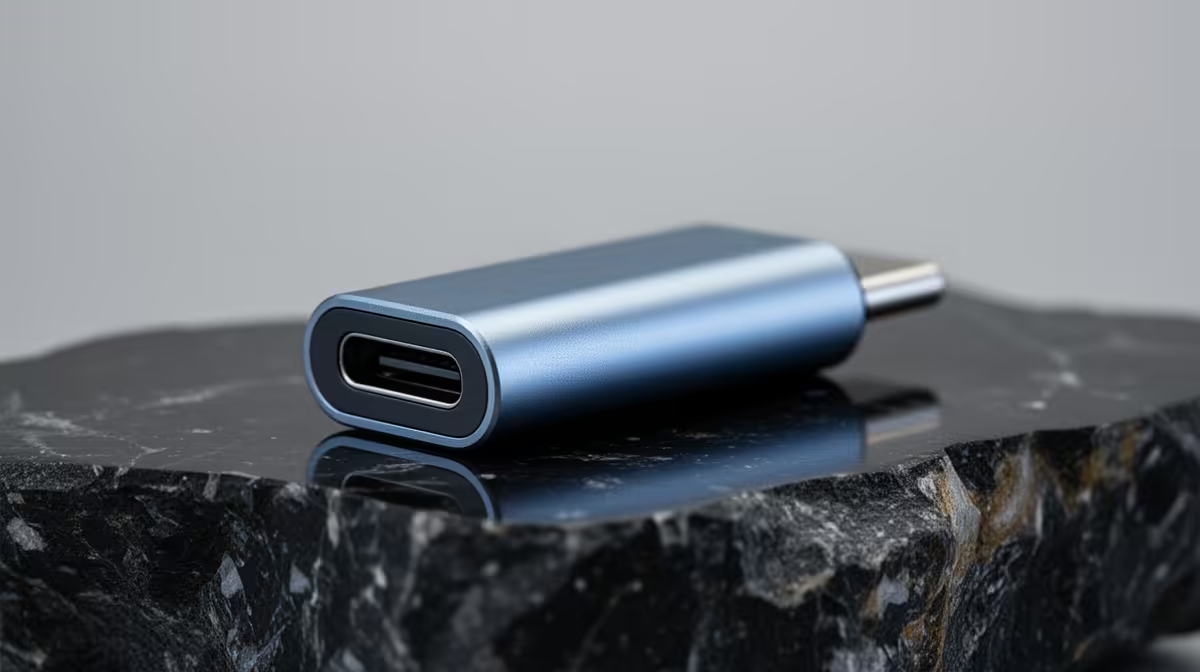
Comparing passive vs active USB-C to 3.5 mm audio adapter choice only helps once the choice is tied to daily carry. Local laptop users should weigh USB-C charging and wired audio output against the everyday risk of port strain.
Quick Answer
For passive vs active USB-C to 3.5 mm audio adapter choice, shortlist around USB-C charging, wired audio output and 50 ms wired timing check. A practical shortlist for passive vs active USB-C to 3.5 mm audio adapter choice should reduce port strain for the busiest use case.
The Practical Difference In Passive vs Active USB-C to 3.5 mm Audio Adapter Choice
Treat passive vs active USB-C to 3.5 mm audio adapter choice as part of a setup rather than a loose accessory. A practical shortlist for passive vs active USB-C to 3.5 mm audio adapter choice should reduce port strain for shared devices. Use wired audio output as the tie-breaker for passive vs active USB-C to 3.5 mm audio adapter choice after a full workday. If port strain is the concern, check 50 ms wired timing check on passive vs active USB-C to 3.5 mm audio adapter choice for shared devices.
Comfort, Timing And Compatibility Checks For Passive vs Active USB-C to 3.5
The middle of the listing is where passive vs active USB-C to 3.5 mm audio adapter choice often becomes clear. Before choosing passive vs active USB-C to 3.5 mm audio adapter choice, compare USB-C charging and wired audio output for the busiest use case. Before choosing passive vs active USB-C to 3.5 mm audio adapter choice, compare USB-C charging and wired audio output during normal desk use. If the listing for passive vs active USB-C to 3.5 mm audio adapter choice hides basic compatibility, keep comparing before you commit.
When The Simpler Route Wins For Passive vs Active USB-C to 3.5
Move up to a stronger audio adapter only when passive vs active USB-C to 3.5 mm audio adapter choice has a problem the basic option cannot solve. For passive vs active USB-C to 3.5 mm audio adapter choice, confirm USB-C charging on the main device. Use wired audio output as the tie-breaker for passive vs active USB-C to 3.5 mm audio adapter choice with the daily setup. The useful sign for passive vs active USB-C to 3.5 mm audio adapter choice is repeatable lower timing risk while shortlisting.
vs active USB-C to 3.5 mm audio adapter choice against one real daily carry session. If USB-C charging, wired audio output and 50 ms wired timing check all fit, the passive vs active USB-C to 3.5 mm audio adapter choice shortlist is already stronger.
FAQ
How should I compare Passive vs Active USB-C to 3.5 mm Audio Adapter Choice without overthinking it for Daily Carry?
Compare passive vs active USB-C to 3.5 mm audio adapter choice by USB-C charging, wired audio output and how each option behaves in daily carry. The better choice for passive vs active USB-C to 3.5 mm audio adapter choice should reduce port strain, not only add another listed feature.
Is the newer-looking option always better for Passive vs Active USB-C to 3.5 mm Audio Adapter Choice when USB-C Charging matters in Daily Carry?
No. A newer-looking product is only better for passive vs active USB-C to 3.5 mm audio adapter choice if 50 ms wired timing check and device support improve lower timing risk in your actual setup.
What is the tie-breaker for Passive vs Active USB-C to 3.5 mm Audio Adapter Choice with Wired Audio Output in Daily Carry?
For passive vs active USB-C to 3.5 mm audio adapter choice, use comfort and compatibility as the tie-breaker. If wired audio output is clearer on one option, that model is usually easier to live with during travel pouches.