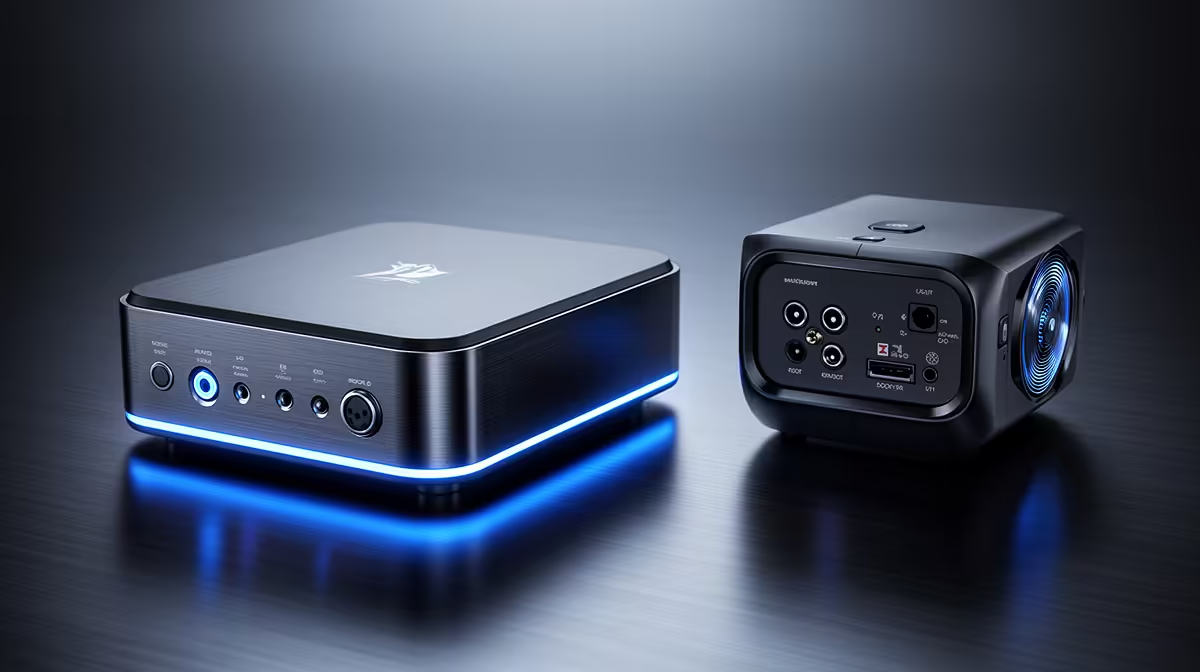
Two creators can produce polished content from completely different audio setups, and neither is doing it wrong, because the gear that makes sense depends entirely on where they work and how they move. A plug-and-play wireless receiver and a traditional audio interface are not competing products so much as tools built for different jobs. The wireless receiver wins when mobility is the priority; the interface pulls ahead only when a studio demands multiple inputs and low-latency mixing at a desk.
Quick Answer
A plug-and-play wireless receiver clips to a camera or phone, runs on battery, and works instantly without drivers or mains power. A traditional audio interface provides multiple XLR inputs, 48V phantom power, and low-latency monitoring for stationary studio work. Each excels at what the other handles poorly.
🚀 What Makes a Wireless Receiver Genuinely Portable
The portability argument for a wireless receiver comes down to its physical and operational footprint. The receiver unit itself typically weighs 20 to 35 grams. It attaches to a camera's cold shoe or connects directly to a phone via USB-C, powered by its own built-in cell rather than a wall socket or USB host. There are no cables running from subject to camera, no mixer sitting on a table, and no drivers to install before you can begin recording.
For a creator who films interviews in cafes around Cape Town or shoots travel content from a hire car in the Drakensberg, this means pulling the kit from a jacket pocket, attaching it to the phone, and being mic'd and recording within sixty seconds of arriving. An audio interface cannot match that workflow. It requires mains power or a powered USB host, a physical connection from the microphone to the interface, and in many cases a driver installation before the host software recognises it correctly.
The portability advantage compounds across a day of location shooting. Every setup and teardown takes less time with a wireless kit, which means more usable time in each location rather than time spent managing cables and power.
Battery and the Charging Case
Most current wireless kits ship with a charging case that keeps the transmitter and receiver topped up between sessions. A typical receiver unit manages 5 to 7 hours of continuous operation on a full charge, and the case adds one or two full recharges without needing a wall socket. For a full day of intermittent shooting across multiple locations, that energy reserve is sufficient without carrying a power bank as a backup.
🔧 Where the Audio Interface Still Wins
For a creator who records in a fixed studio, the interface's advantages are real and not replicated by a wireless kit. The most significant is phantom power, the 48-volt supply that large-diaphragm condenser microphones require to operate. Most wireless lavalier kits use their own capsule designs and do not provide a general-purpose phantom power output. An XLR condenser like a side-address studio microphone, the type of capsule that suits voiceover recording or podcast hosting from a treated room, needs an interface to function at all.
Multi-input recording is the second advantage that interfaces hold exclusively. A four-input or eight-input interface can record a full roundtable discussion or a studio band simultaneously, with each channel on its own track in the recording software. A compact wireless kit is typically one or two channels, which sets a clear ceiling for ensemble recording scenarios.
Monitoring latency is a third factor for producers and musicians. A good audio interface with an ASIO driver on Windows achieves round-trip latency under 5 milliseconds for real-time monitoring, which matters when overdubbing vocals or instruments and you need to hear the output in time. Wireless systems introduce 5 to 15 milliseconds of their own latency for the transmission, which is inaudible in video context but meaningful for a musician monitoring closely.
🎯 The Streaming Creator's Middle Case
A creator who streams or records podcasts from a computer occupies interesting middle ground. A wireless kit with a USB-C receiver presents itself to the operating system as a class-compliant audio input, meaning it requires no driver and is recognised immediately by streaming software, video conferencing apps, and recording tools. That is a seamless workflow for a solo operator.
The advantage over a wired setup is the physical freedom it provides even at a desk. Without a cable tethering the microphone to the computer, you can lean back, stand briefly, or move around the desk without pulling anything. For energetic streamers or presenters who gesture actively, that unobtrusive link removes a distraction.
An interface still makes sense at the desk if the creator also uses studio condenser microphones, needs low-latency instrument monitoring, or records multiple people in the same room simultaneously. For the solo streamer using a lavalier or a clip-on mic, the wireless receiver approach is simpler and produces equivalent results.
Pro Tip ⚡
If you use a USB-C wireless receiver for streaming and notice a slight gain mismatch compared to other inputs, check the Windows sound settings and set the receiver's input level to 90 percent rather than the default 100 percent. Many receivers clip slightly at maximum Windows input gain, and backing off by 10 percent cleans up the headroom without any noticeable drop in presence.
💰 Thinking About the Real Cost Comparison
A quality two-channel wireless kit costs R3,000 to R6,000 as a self-contained package. A comparable audio interface taking one or two XLR inputs runs from R2,000 to R4,500 and still needs a separate microphone and cable to complete the setup. Neither is categorically cheaper when you account for the full working rig, but the wireless kit is deployment-ready, while the interface-based rig requires assembling compatible components.
Buying both makes sense once a creator's work spans both location and studio recording. The wireless kit handles everything mobile; the interface handles everything that needs XLR condenser quality or multi-channel studio capture. Running both in parallel is a realistic configuration for a working South African content creator who vlogs outdoors and also records structured interviews in a home studio.
Frequently Asked Questions
What makes a wireless receiver better suited to location shooting than an audio interface?
A receiver is a self-contained battery-powered unit weighing under 35 grams that attaches to a camera or phone and requires no cable from subject to camera. An interface requires mains or USB power, physical cable connections, and driver installation on most systems. For run-and-gun location work, the setup and teardown time difference is significant.
What does a wireless receiver lack that an audio interface provides?
Phantom power for large-diaphragm condenser microphones, multiple simultaneous XLR inputs for multi-person studio recording, and the sub-5ms monitoring latency that audio producers need for overdubbing. These are studio-specific requirements that a compact wireless kit does not address.
Can a wireless receiver work with a laptop for streaming without any drivers?
Yes. Class-compliant USB devices, which most current wireless receivers are, present themselves to the operating system as standard audio inputs. Windows and macOS recognise them immediately without vendor driver installation, and streaming software like OBS picks them up automatically from the input list.
Why do professional studios still use audio interfaces despite wireless kits existing?
Studios need to record multiple XLR sources simultaneously at the lowest possible latency. A 4-input to 8-input interface with a low-latency driver handles that requirement natively. A 2-channel wireless kit is designed for mobile capture, not simultaneous multi-microphone studio tracking, and cannot replace the interface for that use case.
Which setup suits a South African vlogger who also shoots at home?
A wireless kit is the primary tool for outdoor and location shooting. For structured home studio recording, adding a simple USB audio interface with a large-diaphragm condenser gives the setup a second mode. Both tools can coexist in a working kit bag and serve complementary roles.
Ready to build a recording setup that travels as well as it performs?
Browse the wireless receiver and audio interface range at Evetech and put together the kit that matches where and how you actually create.