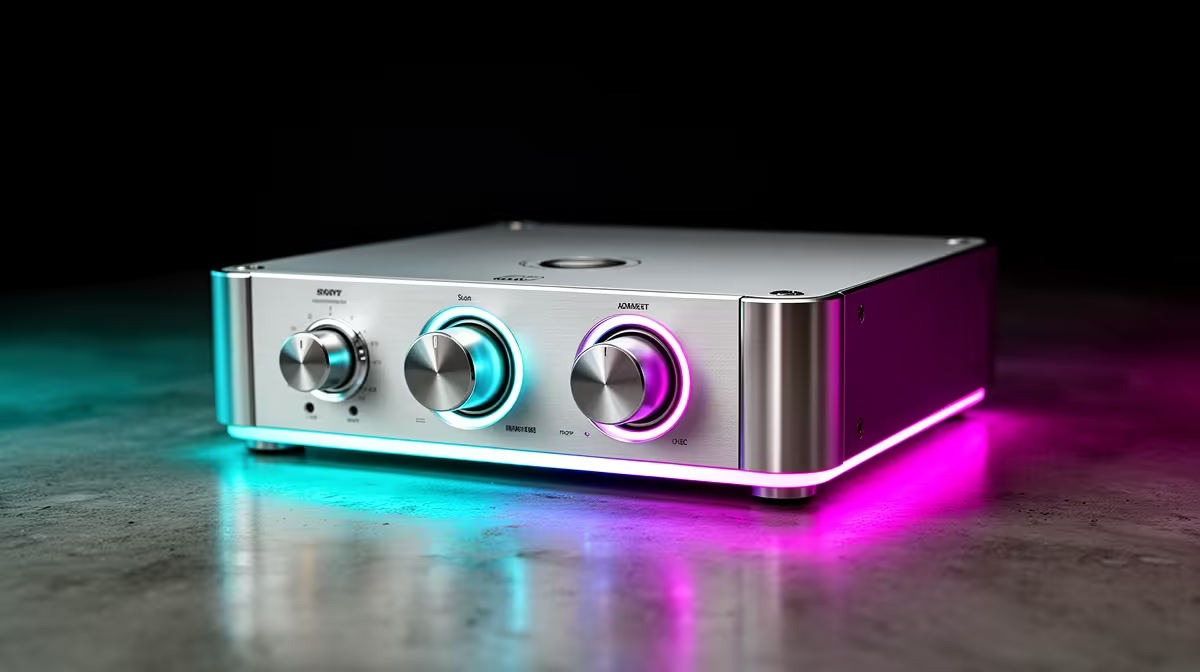
South African streamers face a straightforward trade-off every time they look at a premium mixer: spend the extra Rand on a cleaner gain stage, or direct that same budget toward treatment, a better microphone, or simply more content. The honest answer is that the value of a premium high-gain preamp depends almost entirely on what microphone it is driving and how much gain that microphone actually needs. Get that pairing right and the upgrade is audible to your audience. Get it wrong and you have paid for performance you cannot hear.
Quick Answer
Premium preamps are worth the extra Rand when you run a quiet dynamic microphone that needs over 50dB of clean gain. The lower EIN of around -128dBu removes the hiss that cheaper gain stages add at high gain settings. For a hot USB mic or a loud condenser, the audible difference is minimal and the money is better spent elsewhere.
🔧 The Setup That Actually Benefits
A quiet broadcast-style dynamic microphone is the scenario where premium preamp performance translates directly to audible results. These microphones have sensitivity ratings that require 55 to 65dB of gain to reach a recording level suitable for streaming. At that gain setting, the noise floor of the preamp becomes the limiting factor.
A budget gain stage with an EIN around -115 to -120dBu adds a noticeable hiss at 60dB of gain. A premium stage at -128dBu adds almost nothing at the same setting. The difference arrives at your audience's ears because stream encoding preserves that constant low-level noise as part of the audio signal, rather than discarding it as silence.
If you run a quiet dynamic and you have ever noticed that your stream sounds slightly airy or grainy in the quiet gaps between words, the preamp's noise floor is likely the source. A premium unit with verified low-EIN performance is a direct solution.
🎙️ When the Upgrade Adds Little
A USB microphone with an onboard analogue-to-digital converter runs its own internal gain stage and outputs a digital signal directly. The mixer preamp sees a line-level input, not a raw microphone signal, so the mixer's gain stage quality is largely irrelevant. You are not driving a microphone through it; you are passing a signal that has already been amplified and converted. Premium preamp performance in that chain makes no practical difference.
The same logic applies to a condenser microphone with high sensitivity. A large-diaphragm condenser rated at -32dBV sensitivity only needs 25 to 35dB of gain to reach optimal level. At those modest gain settings, even mid-tier preamps with EIN around -120dBu stay below the audible noise threshold. The premium is solving a problem that the condenser's natural sensitivity has already avoided.
Pro Tip ⚡
Before spending on a premium preamp, check what gain your current mic actually needs. Set the trim to your normal position and read the scale, or check the mic's sensitivity spec and work backward. If you are running below 45dB of gain, a -120dBu preamp is already clean enough. If you are above 55dB, that is where -128dBu starts earning its premium.
💰 The Cost of the Upgrade in SA
In the local market, a mid-tier dual-XLR mixer with a -120dBu EIN stage typically runs R3,500 to R4,500. A comparable unit with a verified -128dBu stage sits R1,500 to R2,500 higher, landing between R5,000 and R7,000 depending on features. That premium is specifically buying lower noise at high gain settings, not better build quality, more inputs, or additional processing.
Whether that difference is justified depends on your content output. A creator generating daily content and monetising a growing channel will hear the improvement and their audience will too. A hobbyist recording twice a month may never push gain hard enough for the EIN difference to surface.
🌐 The Room Problem That Preamps Cannot Solve
The most common error in this decision is upgrading the preamp when the real problem is room acoustics. In a bare room in a Joburg flat or a Cape Town semi with tiled floors, the reverberant tail captured by any microphone is the dominant quality problem. A premium preamp cannot reduce echo. It produces a cleaner signal, but a clean signal in a reverberant room is still a reverberant signal.
Acoustic foam panels, a thick rug, heavy curtains, or even recording in a closet full of clothing can improve perceived audio quality by more than any preamp upgrade. R400 to R800 of basic absorption material often delivers more audible improvement than R2,000 of preamp premium.
The right sequence is: treat the room first, then choose the right microphone for the room and recording style, then consider whether the gain stage is the remaining limitation. Skipping the first two steps makes the third one impossible to evaluate accurately.
🎯 The New Streamer Question
A streamer starting out should not prioritise a premium preamp. The early sessions are about developing consistent content, reliable stream setup, and a broadcasting routine. Audio quality at that stage benefits more from a clean mid-tier preamp paired with a decent dynamic microphone than from chasing the lowest possible EIN figure.
The realistic entry point is a mixer around R3,000 to R4,000 paired with a broadcast-style dynamic mic that sits somewhere between R800 and R1,500 depending on the model. That combination produces respectable audio quality with no EIN problem at normal gain settings. Once the channel is established and income justifies the investment, upgrading to a quieter gain stage then delivers an audible result on an audience that has already formed and will notice the improvement.
Frequently Asked Questions
When does a premium preamp actually deliver audible value for a SA streamer?
When the microphone in use requires over 50dB of gain to reach recording level, typically a quiet broadcast dynamic. At that gain setting, the noise floor of a budget stage becomes audible. A -128dBu EIN premium preamp keeps the background clean at high gain, which survives stream encoding and reaches the audience as a noticeably quieter signal between words.
Do condensers benefit from a premium preamp at all?
Less so than quiet dynamics. A high-sensitivity condenser needs only 25 to 35dB of gain to reach optimal level. At those settings even mid-tier preamps with EIN around -120dBu stay below audible noise. The premium matters most when gain requirements push above 50dB, which a hot condenser rarely demands.
What does the R1,500 to R2,500 premium actually buy?
A lower noise floor at high gain settings, specifically an EIN improvement from roughly -120dBu to -128dBu or better. It does not automatically buy better build quality, more features, or a louder maximum output. The premium is narrow and specific to noise performance at high gain, which is why evaluating whether your mic actually needs that gain range matters before spending.
Does room treatment matter more than the preamp upgrade?
Often yes, particularly in SA homes with hard surfaces. Echo and early reflections captured by the microphone are the most audible quality limitation in most untreated rooms. No preamp upgrade removes that. R400 to R800 of foam panels reduces reverb time significantly and delivers a cleaner recording than a preamp premium would in the same room.
Should a new streamer buy a premium preamp from the start?
No. Start with a clean mid-tier mixer in the R3,000 to R4,000 range alongside a reliable dynamic microphone. Develop the content and the audience first. Upgrade the preamp once the setup is stable and you have identified the noise floor as a real limitation in your specific signal chain. Spending on premium gain early, before the recording environment and workflow are settled, is unlikely to pay off audibly.
Ready to match your preamp quality to the microphone you actually run?
Browse the USB audio mixer range at Evetech and compare mid-tier and premium gain stages built for South African streamers who need clean audio at every output level.