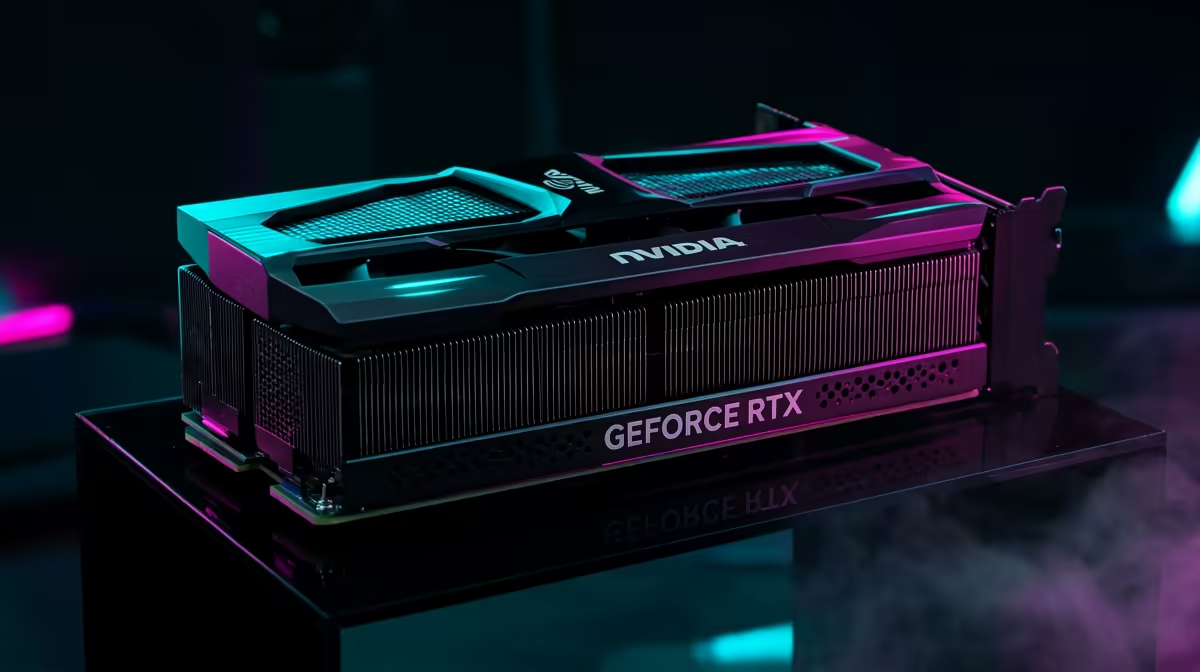
The RTX 4080 is one of the cards SA buyers ask about most for content creation, so here is a straight pros-and-cons read with local pricing and where it actually fits.
Quick Answer
For SA content creators the RTX 4080 is a capable editing and rendering card: its 16GB of VRAM and NVENC encoder handle 4K timelines, colour grading and 3D renders smoothly. At R22,000 to R27,000 it pays off for full-time creators, while hobbyists may not need this much.
What the RTX 4080 gives a creator
The RTX 4080 accelerates exports in Premiere Pro, DaVinci Resolve and Blender, and its 16GB of VRAM keeps multi-track 4K timelines and large textures in memory without stutter. The dedicated NVENC encoder offloads H.264 and HEVC exports from the CPU, shaving real time off every render, and the card doubles as a strong gaming GPU between projects.
Where the spend may not be justified
If you mostly edit 1080p clips or do light photo work, a cheaper card already handles that, so the RTX 4080 premium (around R22,000 to R27,000) is hard to justify. The gains scale with how heavy your projects are: 4K, 6K, 3D and effects-laden timelines benefit; simple cuts do not. Pair it with 32GB or more of RAM and fast NVMe scratch storage to avoid bottlenecking the GPU.
FAQ
How much does the RTX 4080 cost in South Africa?
At Evetech the RTX 4080 generally lands in the R22,000 to R27,000 band with 16GB of VRAM, varying by brand, cooler and stock. Exchange rates move pricing, so confirm the live listing before you commit.
Is the RTX 4080 good value right now?
It depends on your workload. The RTX 4080 offers strong performance for its tier, but value comes from matching it to real content needs rather than buying more card than you will use.
Is the RTX 4080 good for video editing in 4K?
Yes. Its 16GB of VRAM and NVENC encoder handle 4K timelines, scrubbing and exports well in Premiere Pro and DaVinci Resolve. Pair it with 32GB+ of RAM and an NVMe scratch disk for the smoothest workflow.
SA buyer tip
For editing, pair the RTX 4080 with at least 32GB of RAM and a separate NVMe scratch drive; the GPU is rarely the bottleneck once memory and storage keep up.