Quick Answer
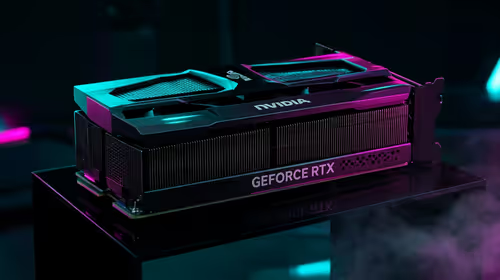
For office use the RTX 5090 is wildly oversized: productivity, browsing and video calls need only integrated graphics or an entry card, so the 5090 is pure overspend unless the "office" work is GPU-heavy creation like 3D or AI. For normal office tasks, skip it entirely.
Why Office Work Does Not Use A 5090
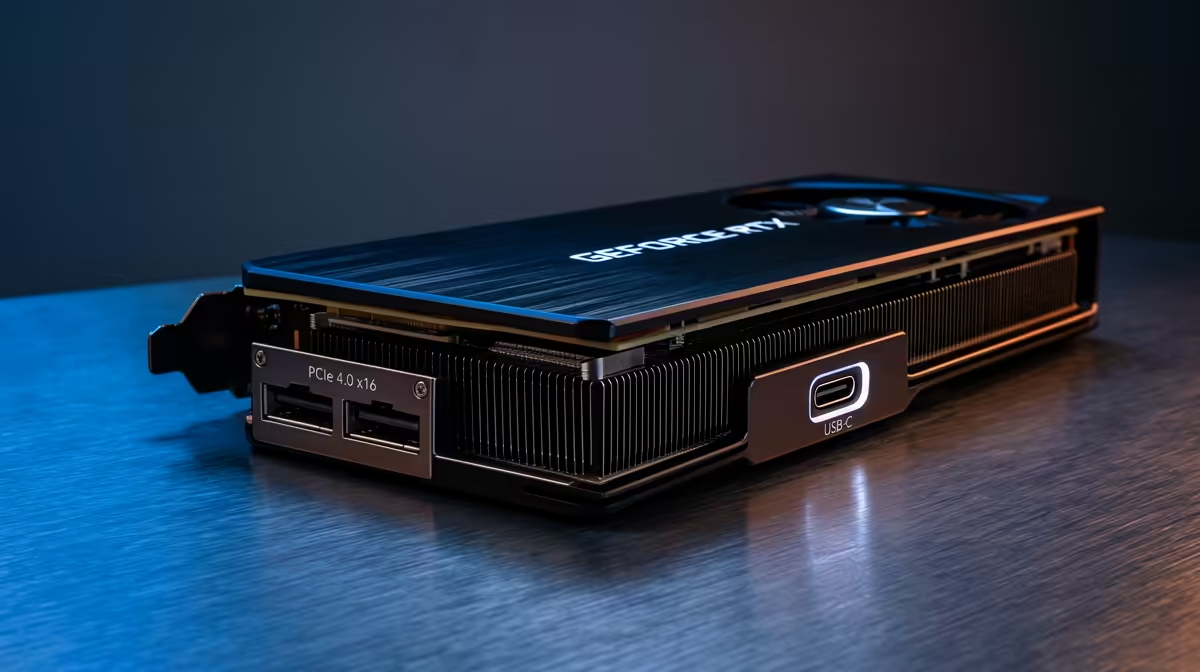
Word processing, spreadsheets, email, browsers and video meetings place almost no load on a GPU; modern integrated graphics or a basic card handle them with ease. A flagship like the 5090 would idle through these tasks, drawing power and adding heat for zero productivity benefit. Its 350-575W capability and 1000W PSU requirement make it actively wasteful in an office context.
The only office scenario that justifies it is GPU-accelerated creation: 3D design, video production, CAD rendering or AI workloads, which are really creator tasks rather than typical office duties.
Spending Office Budget Wisely
For a genuine office machine, money is far better placed in a fast CPU, 16-32GB of RAM, a quick NVMe SSD and a good monitor, all of which improve daily responsiveness. If a few users do occasional light creative work, a mid-range GPU covers it. Reserve a 5090-class card for dedicated workstations doing rendering or AI, not general office PCs.
FAQ
Does office work need an RTX 5090?
No. Office tasks barely touch the GPU, so integrated graphics or an entry card suffice. The 5090 only makes sense if the work is GPU-heavy creation like 3D or AI.
What should I prioritise in an office PC?
A responsive CPU, 16-32GB of RAM, a fast NVMe SSD and a good monitor. These lift daily productivity far more than a powerful GPU for typical office use.
When would an "office" PC justify a 5090?
Only when it is really a workstation doing 3D rendering, video production, CAD or AI. Those GPU-accelerated tasks benefit; ordinary documents and meetings do not.
office PC, invest in CPU, RAM, a fast SSD and a quality monitor. Save a 5090-class GPU for dedicated 3D, video or AI workstations.