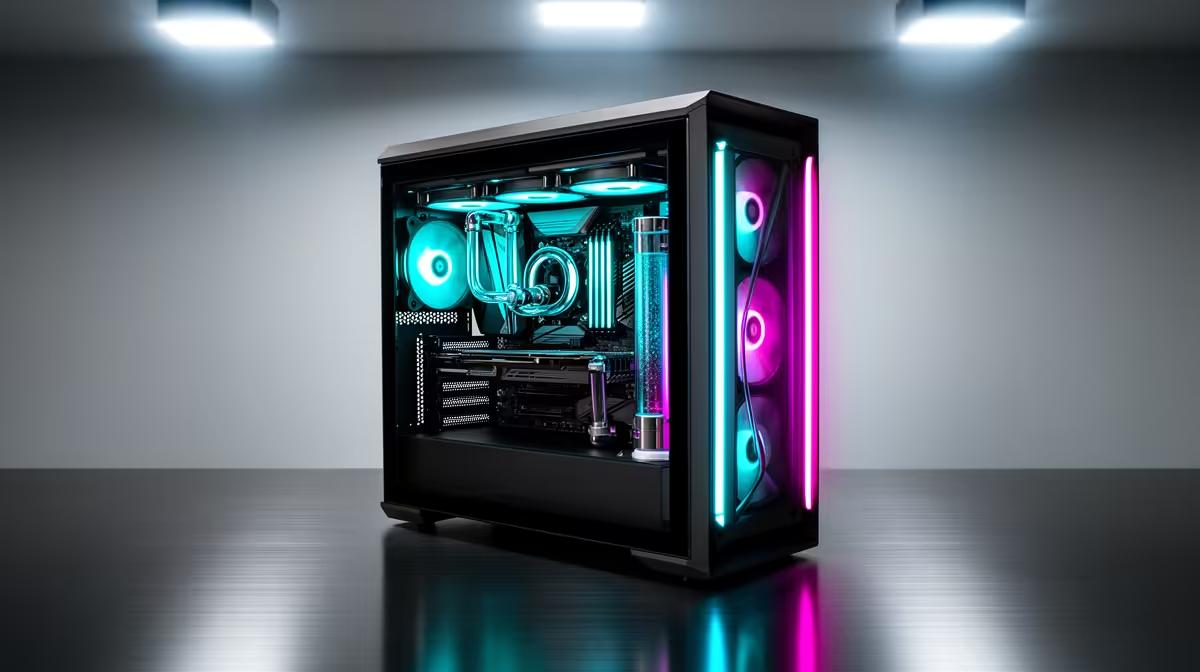
A R15,000 gaming PC in 2026 has little room for decorative spending once memory, storage and a useful graphics card are counted. The recent memory-price pressure described by this build scenario means you should ring-fence the RAM kit early, then protect the GPU and power supply. R15,000 is the build ceiling, not a quoted complete-system price.
Quick Answer
Target a modern six-core or capable value processor, 16GB in a matched two-module kit, an SSD and the strongest supported graphics card the remaining basket can carry. Choose 32GB only when your games and background tools show the need; at this tier it can force a larger graphics compromise. Price every named part from the July 2026 snapshot or its current page before locking the split.
Start with the games and monitor
A R15,000 build for Valorant at 1080p needs a different balance from one for a new single-player game at high settings. Write down two demanding titles, resolution and base frame-rate target. Use current benchmarks for exact CPU and GPU models.
At 1080p competitive settings, processor and memory performance can influence high frame rates. At high-quality 1080p, the graphics card often becomes the first limit. Do not buy a fast CPU that leaves the GPU below the target.
If the monitor sits outside the budget, state that. If R15,000 must include a display, keyboard and Windows licence, the tower allocation shrinks and the parts need to be reconsidered.
Ring-fence memory without overbuying it
Sixteen gigabytes remains a workable starting capacity for many games when Windows and background applications fit. Use a matched two-module kit in the motherboard's recommended slots. Single-channel or one-module layouts can reduce gaming performance and make the system feel less balanced.
Thirty-two gigabytes helps large simulation, modding, creation work and heavy multitasking. It does not increase every game's frame rate. At a tight R15,000 ceiling, an unused 16GB of capacity can cost the GPU tier that would improve every demanding frame.
Open the DDR5 memory range and compare the exact capacity, module count, speed and timings. The linked category can include broad memory products, so do not use its lowest figure as the RAM cost.
The memory best-seller page gives another view of current demand. Confirm whether a listed kit is DDR4 or DDR5 and whether the motherboard supports it.
Choose the platform by total cost
The CPU brings a motherboard socket, memory generation and cooler requirement. A low CPU price can be offset by an expensive board or missing cooler. Compare processor, board, cooler and memory as one platform line.
A current six-core chip is enough for many first gaming systems. An older platform may offer value when its exact parts remain supported and the upgrade path is understood. A newer platform can cost more today but leave a route to a stronger processor.
Do not pay for motherboard features you will not connect. One suitable M.2 slot, enough USB, a sound network controller and the correct case size cover many builds. Stronger power delivery matters for high-power future CPUs, not as a decorative heatsink contest.
Protect the graphics allocation
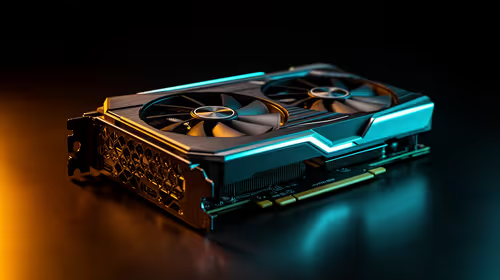
The graphics card usually delivers the largest visible game improvement at this rung. After the platform, memory, SSD and safe power supply are set, put the remaining performance budget there.
Check VRAM capacity in the games and textures you use. A card can have enough processing power and still stutter when a high texture setting exceeds memory. Compare one-percent lows, not average frame rate alone.
Upscaling can help a modest card reach a smooth output, but it cannot turn every entry GPU into a high-setting 1440p part. Inspect image quality at the internal resolution your game uses.
Storage should be useful, not impressive
A 500GB SSD can get the PC running but fills fast with large games. A 1TB NVMe drive is a more comfortable target when the basket permits it. Keep free room for updates and temporary files.
Sequential speed numbers above a sound PCIe 4.0 drive may change game loading less than capacity does. Check motherboard M.2 support and whether the slot disables another port.
You can add a second drive later if the board has a free slot. This is a safer deferred upgrade than an underpowered PSU or single memory module.
Do not cut the power supply or case airflow
Size the PSU for the exact CPU and GPU, connector requirements and reasonable headroom. Look at protections, independent electrical testing and warranty terms. A large wattage label does not prove quality.
Choose a case with a clear front intake, included fans where useful and space for the graphics card and CPU cooler. A glass front with tiny side vents can make budget hardware louder.
The PSU and case may not add benchmark frames, but they allow the components to hold performance safely. They also determine how practical the next upgrade will be.
Build the July 2026 basket
Create two named baskets. The first uses 16GB and the strongest suitable GPU. The second uses 32GB and shows what the GPU loses. Use only dated local prices, and write as of July 2026 beside each quoted part.
Do not claim a percentage increase without historical evidence. The useful effect of the memory jump is the current allocation pressure: compare today's complete baskets and choose the one that meets the game target.
If no balanced basket fits R15,000, step back from a specification or keep saving toward the complete system. A nearly complete parts pile cannot play.
Check assembly and firmware needs as part of that complete state. The board must support the processor from first boot, the cooler must include the correct bracket and the case must fit the card. Small compatibility gaps can consume the margin that made the basket appear viable.
Frequently Asked Questions
Is 16GB enough for a R15,000 gaming PC?
It is a workable starting point for many games. Check your heaviest title and background use, and choose a matched kit.
Should I buy 32GB before a stronger GPU?
Only when measured memory demand justifies it. A stronger GPU often changes more game performance at this tier.
Can I add memory later?
Yes when the motherboard has compatible slots and the final kit can be validated. Matching separate kits is less predictable than buying the intended capacity together.
Build two R15,000 named baskets with 16GB and 32GB, then protect the GPU configuration that meets your real 1080p game target.