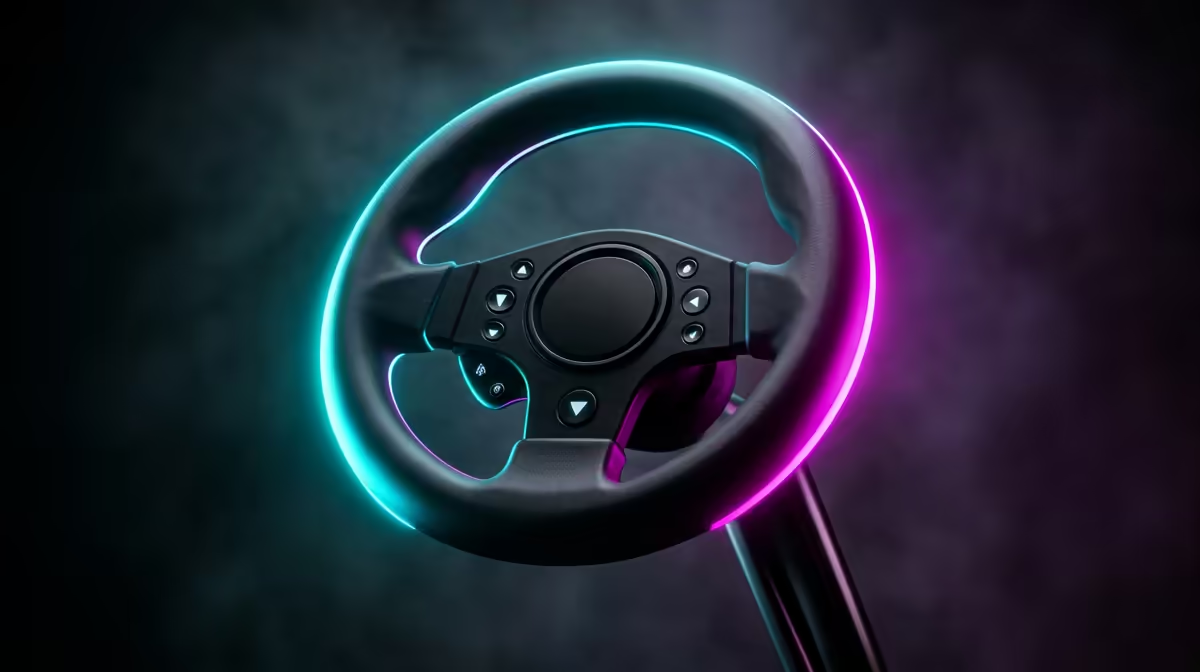
A racing wheel decision tree centres on the force-feedback technology, because the gap between gear-driven, belt-driven, and direct-drive wheels defines the entire experience and budget.
Quick Answer
Choose a racing wheel by feedback type and platform compatibility first. Entry gear-driven wheels start near R3,000 and suit casual sim racers; belt-driven units improve detail around R6,000 to R9,000; direct-drive bases deliver the strongest feel from roughly R10,000 upward in SA.
The Branches That Matter
Branch one is feedback technology. Gear-driven wheels are affordable but notchy; belt-driven units smooth the feel; direct-drive bases connect the wheel straight to the motor for the most detailed, powerful response. Branch two is platform: confirm the wheel supports your console or PC before anything else.
Branch three is the pedal set and mounting. Load-cell brake pedals transform braking precision, and a solid wheel stand or cockpit mount is essential, since a wheel that flexes on a desk undermines even a great base.
Matching Spend To Seriousness
Casual players are well served by a belt-driven wheel and a decent pedal set. Committed sim racers gain the most from direct drive plus a load-cell brake. Budget for a sturdy mount in every case; the mount is as important as the wheel for consistent inputs.
FAQ
Is direct drive worth the extra cost?
For serious sim racers, yes; the detail and strength are a clear step up. Casual players may not justify the premium over a good belt-driven wheel.
Do I need load-cell pedals?
They greatly improve braking consistency and are the upgrade most racers notice first. They are worth prioritising over a fancier wheel rim.
Will any wheel work on my console?
No. Compatibility varies by platform, so confirm console or PC support before buying. This is the first branch to settle.
Settle platform compatibility, then choose a feedback type to match your commitment, and budget for a rigid mount and load-cell pedals.