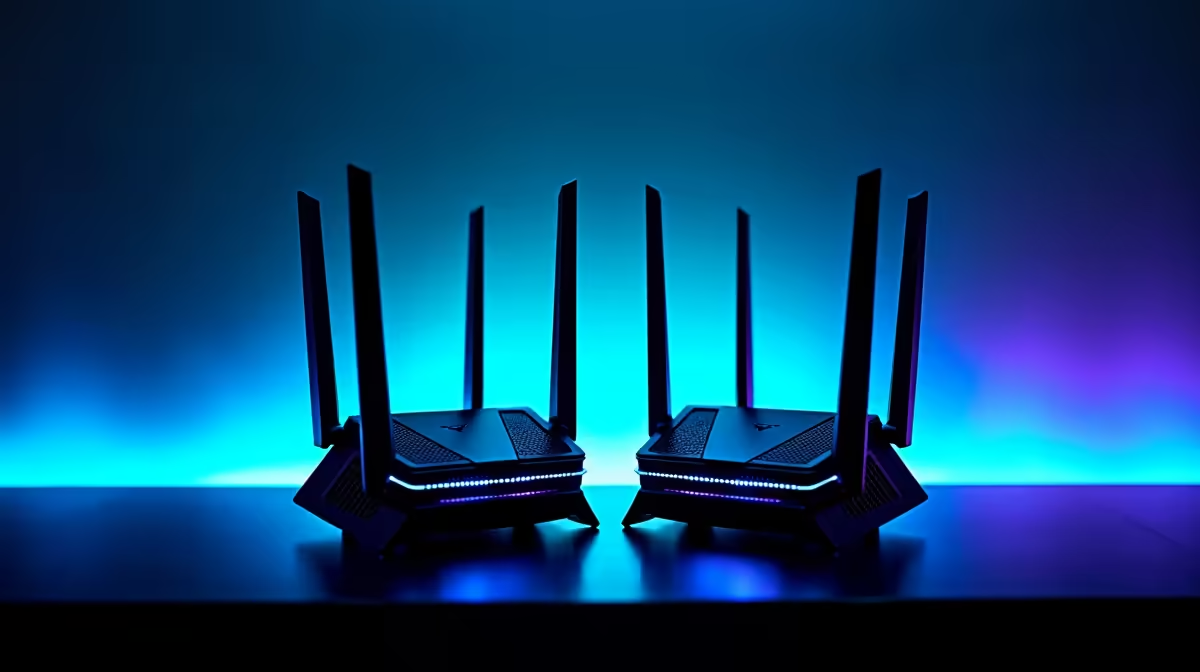
South African gamers chasing cinematic story games often ask whether Wi-Fi 7 is a real upgrade over Wi-Fi 6E, or just a newer label with a higher price.
Quick Answer
Go Wi-Fi 7 when the price gap is small and your platform is new, because Wi-Fi 7 adds 320 MHz channels and Multi-Link Operation. Otherwise Wi-Fi 6E is the smarter spend for cinematic story games, with parts typically landing around R2,500 to R9,000.
Where your Rands do the most work
For a cinematic story games machine in the R2,500 to R9,000 bracket, the order that moves the needle is usually GPU, then display, then memory, then this wireless standard choice. Spend top-down and you rarely regret it.
Real-world feel during cinematic story games
In day-to-day narrative-driven, heavily scripted single-player adventures, the difference between Wi-Fi 7 and Wi-Fi 6E is felt in smooth scene transitions and stutter-free cutscenes. If you cannot notice it side by side on your own panel, you do not need to pay for it yet.
Future headroom and upgrade runway
Wi-Fi 7 buys you more time before the next upgrade, which suits a fresh platform you plan to keep for years. Wi-Fi 6E is the pragmatic pick if you upgrade in smaller, more frequent steps.
FAQ
Can I move to Wi-Fi 7 later without rebuilding?
Often yes, if your motherboard already supports it. Buy a platform with the right slots now and you keep the door open without paying for Wi-Fi 7 today.
Does Wi-Fi 7 make a difference for smooth scene transitions and stutter-free cutscenes?
A measurable one in the right scenario, yes. Whether it is a felt difference depends on the rest of your hardware keeping pace.
Is Wi-Fi 7 worth it just for cinematic story games?
Only if your platform is new and the price gap is small. For pure cinematic story games, Wi-Fi 6E delivers nearly the same feel, and Wi-Fi 6E already offers a clean 6 GHz band for gaming.
Buyer Tip
If Wi-Fi 7 costs only a little more than Wi-Fi 6E on the day, take it; otherwise put the saving into GPU or your monitor.