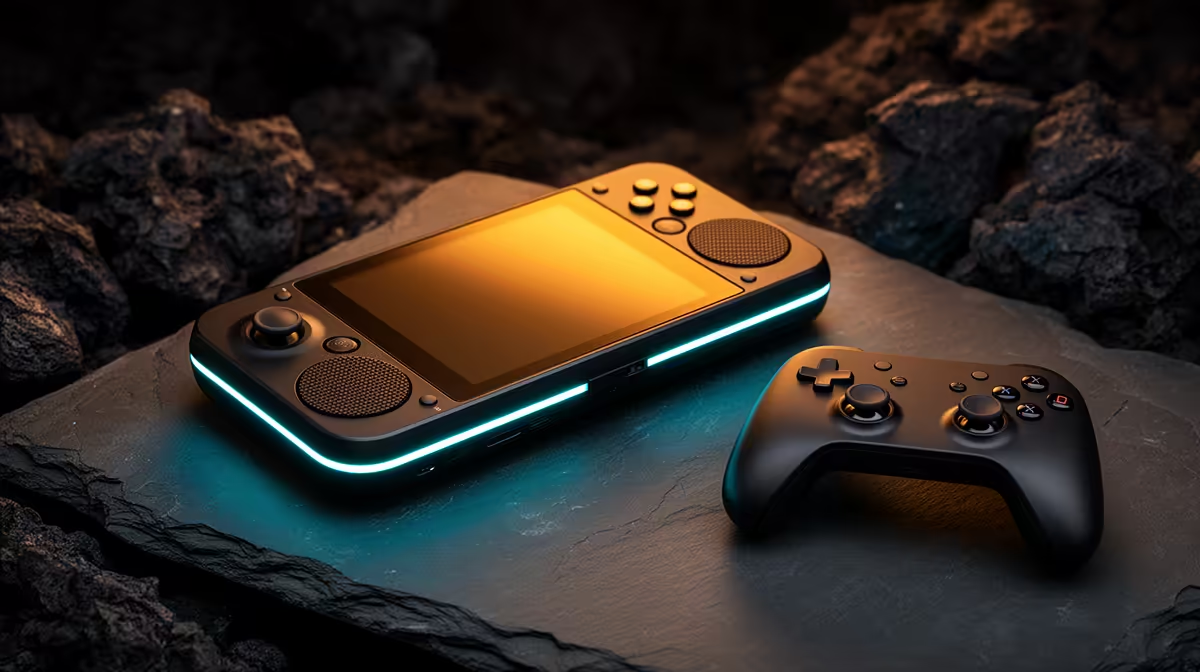
Two very different machines get lumped under the word "emulation handheld," and choosing wrong wastes real money. A Steam Deck runs an x86 chip that brute-forces demanding consoles a pocket ARM device cannot touch, while a dedicated retro handheld is light enough to forget in a jacket and built purely for the classics. Knowing which side of that line you actually live on is the whole decision.
Quick Answer
Buy a Steam Deck if you want PS3, Wii U and the heavier emulators, plus a full PC games library, and you accept a device around 669 g. Buy a pocket retro handheld if you mostly play up to PS2, GameCube and the 16-bit era, and want something well under 300 g that fits in a pocket and costs far less.
The core split: x86 power versus ARM portability
The Steam Deck uses an x86 APU, the same architecture as a desktop PC, which is why it can run the demanding emulators. PS3 (RPCS3) and Wii U (Cemu) emulation lean heavily on raw CPU single-thread performance and a flexible instruction set, and that is exactly what the Deck's chip provides. A pocket retro handheld runs an ARM mobile chip, which sips power and stays cool but hits a wall well before those systems.
That wall is not a flaw, it is a design choice. ARM handhelds are tuned to do one thing brilliantly: run the back catalogue up to roughly the PS2 and GameCube era flawlessly, for a fraction of the size, heat and price.
What each one actually emulates
The dividing line matters because it maps directly to the games you want to play.
Where the Steam Deck pulls ahead
The Deck handles the full retro range and then keeps going: PS3 titles run respectably in RPCS3, Wii U games play through Cemu, and even some early PC-era and Switch emulation is on the table. On top of that it is a real PC, so it runs your Steam library natively, takes desktop emulator front-ends, and lets you tinker endlessly. If your wish list includes anything sixth-generation or newer, the Deck is the device that can actually run it.
Where a pocket handheld is the smarter buy
A modern ARM retro handheld absolutely nails everything up to PS2 and GameCube. Game Boy, SNES, Mega Drive, PlayStation, N64, Dreamcast, PSP and most GameCube and PS2 libraries run beautifully, with instant suspend, long battery life and a device you can hold one-handed on a taxi or in bed. For a huge share of retro players, that is the entire library they care about, and paying for PS3 horsepower they will never use makes no sense.
Size, weight and where you play
The Steam Deck weighs around 669 g, which is fine on a couch but tiring on a long commute and impossible to pocket. Lightweight retro handhelds come in well under 300 g, with some models around 200 g, small enough to slip into a jacket. If most of your gaming happens out and about, in queues, on the train, on a lunch break, the weight difference is the deciding factor more than any spec sheet. If you mostly play parked on a couch or in bed, the Deck's heft is a non-issue and its power is pure upside. Browsing the handheld gaming consoles at Evetech side by side makes the size gap obvious before you commit.
Price and the SA value question
The price gap is wide, and it tracks the capability gap. A Steam Deck is a meaningful investment that buys you a full PC-class handheld; a dedicated retro device costs a fraction of that and does the classics just as well as the Deck does. In rand terms, the question is simple: are you paying for PS3 and Wii U emulation plus a Steam library, or for a flawless 16-bit-to-PS2 machine you can pocket? Both are legitimate. What you should not do is buy the expensive option and only ever load up SNES games. The current best-sellers give a sense of what local gamers are actually pairing with these devices; the most popular gaming systems at Evetech are a useful reference point.
Software, community and the tinkering factor
The Steam Deck runs a full desktop operating system, SteamOS, which means you install emulators the same way you would on a PC, tweak settings files, and update whenever a new emulator build drops. That flexibility is a genuine advantage if you enjoy the hobby side of emulation. A dedicated pocket handheld, particularly the Android-based premium tier, also supports deep customisation but within a mobile ecosystem. Budget Linux handhelds at the entry end come with curated firmware and a focused game launcher, which is less flexible but considerably less work to set up.
Community support is strong for both camps. The Steam Deck benefits from a large PC gaming community and well-documented emulator configs. The retro handheld scene has its own active spaces where device-specific firmware updates, save state management and per-game settings are shared regularly. Neither path leaves you without help.
Battery life and the long session trade-off
The Steam Deck's battery is rated for around 2 to 8 hours depending on workload, but demanding emulation sits toward the lower end of that range. A high-performance ARM handheld like the Retroid Pocket 6 carries a 6,000mAh cell and holds a longer session on PS2 emulation than the Deck typically does at full load. Budget ARM devices on lighter 16-bit libraries can stretch to 8 or even 9 hours, which is simply not in the Deck's range.
If battery life across a full day of on-the-go play is a priority, the ARM handheld wins that calculation even against the Deck's larger physical battery, because the chip is so much more efficient at the workloads a retro device handles.
Frequently Asked Questions
Can a Steam Deck emulate PS3 and Wii U?
Yes. Its x86 chip runs RPCS3 for PS3 and Cemu for Wii U at playable performance in many titles. A pocket ARM handheld generally cannot manage those systems well, which is the main reason to choose the Deck.
What is the heaviest console a pocket retro handheld can emulate?
Most strong ARM handhelds handle up to PS2 and GameCube comfortably, along with everything older. Beyond that, into PS3 and Wii U, you need the Steam Deck's x86 power.
Is the Steam Deck too heavy for portable play?
At around 669 g it is heavier than a phone and not pocketable, which makes it better suited to couch and travel-bag use. A sub-300 g retro handheld is the better pick for true on-the-go gaming.
Which is better value for retro-only gaming?
If you only play up to the PS2 and GameCube era, a dedicated retro handheld delivers the same experience for far less money. The Steam Deck's premium is only worth it if you want the heavier systems or a full PC library.
Can both run the same emulators?
Both run popular emulators, but the Steam Deck runs far more demanding ones thanks to its architecture and desktop OS. A retro handheld runs lighter emulators with less fuss, often through a streamlined custom interface.