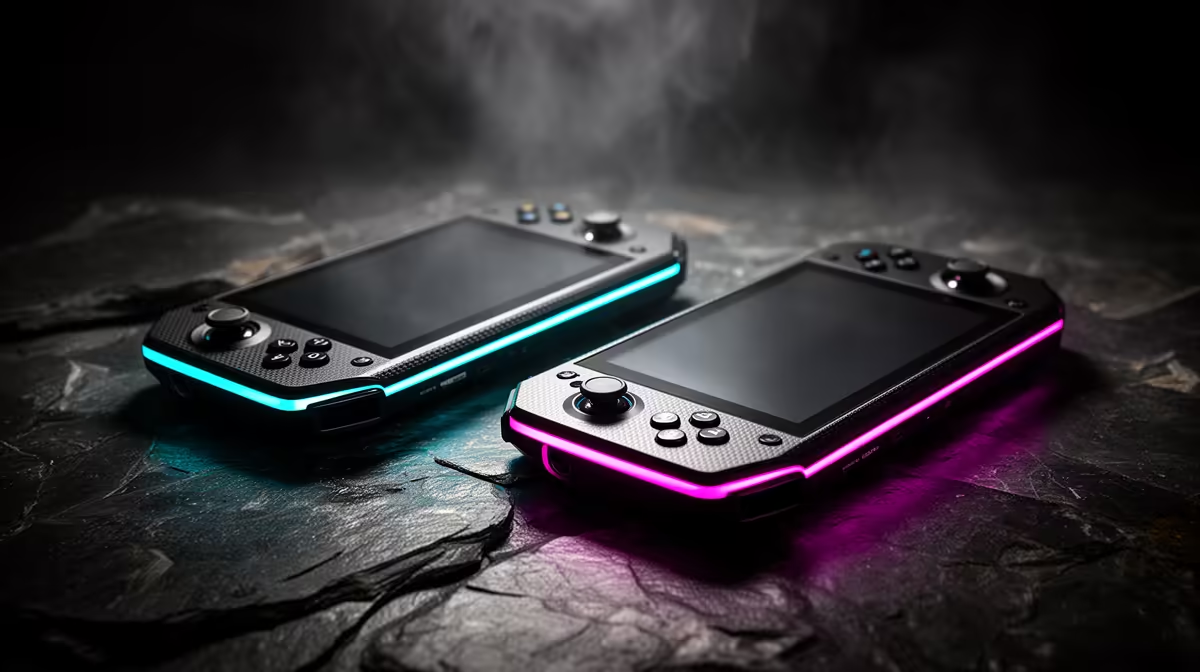
Two handhelds sit at the top of the Android emulation pile, and they win for opposite reasons. The Retroid Pocket 5 vs Ayn Odin 2 question comes down to a clean trade: the Pocket 5 gives you a gorgeous 5.5-inch 1080p OLED but an older chip, while the Odin 2 packs the far stronger Snapdragon 8 Gen 2 behind a plainer LCD. Pick the screen or pick the power, because no single device here gives you both.
Quick Answer
The Ayn Odin 2 is the more powerful emulation device thanks to its Snapdragon 8 Gen 2, which is close to twice as fast as the Pocket 5's Snapdragon 865 and pulls ahead on demanding Switch, GameCube and PS2 titles. The Retroid Pocket 5 wins on display, with a vibrant 5.5-inch 1080p OLED that the Odin 2's LCD cannot match, and it usually costs less. Buy the Odin 2 for raw performance, the Pocket 5 for screen quality and value.
The Chip Gap Is The Whole Story
The Odin 2's Snapdragon 8 Gen 2 is a flagship-class processor, and against the Pocket 5's Snapdragon 865 the difference is roughly a doubling of performance. For most of the retro library, up to and including the bulk of PS2 and GameCube, this gap barely shows; the Pocket 5 handles those at native or 2x resolution without complaint. Where it matters is at the top end. Heavier Switch titles, the most demanding GameCube games and any emulator that benefits from headroom run more reliably on the Odin 2.
The Odin 2 also uses newer supporting hardware: LPDDR5X memory, UFS 4.0 storage and Wi-Fi 7, against the Pocket 5's LPDDR4x and UFS 3.1. In practice that means faster game loading and a little more future-proofing on the Odin 2 side, even if the day-to-day feel is similar for older systems.
Where The Pocket 5 Pulls Ahead
The screen
This is the Pocket 5's trump card. Its 5.5-inch 1080p OLED delivers deeper blacks, richer colour and far better contrast than the IPS LCD on the standard Odin 2. For 2D sprite games, retro libraries with bold colour palettes and anything where image quality is the experience, the OLED is a noticeable, daily upgrade. Reviewers consistently single it out as the best screen in this class. The panel covers 107% sRGB with 500 nits brightness, numbers that show in real use rather than just on a spec sheet.
Size, weight and value
The Pocket 5 is lighter and feels like a sleek piece of modern tech in the hand, and it typically lands at a lower price than the Odin 2. For a buyer who mostly plays up to the PS2 era and wants the best-looking panel for the money, the Pocket 5 is the more sensible spend.
Controls and Build
Both devices use hall-effect analogue sticks, which is the right answer to the drift problem that has plagued cheaper handhelds. The Pocket 5's controls are well-regarded, with analogue L2 and R2 triggers that add finer input control for racing and modern games. The Odin 2 has a slightly more generous button layout given its larger body, and its grips are better shaped for extended sessions. Neither device has serious control complaints from reviewers, which makes the decision straightforward: pick based on screen versus power rather than worrying about which feels better to hold.
The Odin 2's Physical Advantages
The Odin 2 is a physically larger device with a 6-inch screen, more generous rear grips and an 8,000mAh battery that the Pocket 5's 5,000mAh cell cannot match. If all-day gaming away from a charger is the priority, the Odin 2's bigger battery is a meaningful advantage. The larger body also gives more room for shoulder buttons and triggers, which some players find more comfortable on long sessions.
The Odin 2 ships with Wi-Fi 7 support, which matters if you use the device as a streaming client pulling games from a home console or gaming PC over a local network. The Pocket 5's Wi-Fi 6 is perfectly capable for most uses, but the Odin 2 has headroom for faster streaming on a compatible router.
Battery And The Long Sessions
The Odin 2 holds a clear edge on battery life, helped by a larger cell, so it is the better pick for long sessions away from a charger. The Pocket 5 trades some of that endurance for its lighter body and brighter panel. Neither is poor, but if all-day play without a top-up is a priority, the Odin 2 is the safer bet.
Switch Emulation: The Deciding Factor
For most buyers the real deciding question is Switch emulation. Both devices can run Switch titles, but the Odin 2's Snapdragon 8 Gen 2 handles the demanding ones more reliably. Expect most popular titles to run at playable frame rates on the Odin 2, with the Pocket 5 covering the lighter half of the catalogue well but struggling on the heaviest open-world and graphically intensive Switch games. If Switch emulation is a priority, the Odin 2 is the cleaner recommendation.
It is worth noting that Switch emulation is a moving target: emulator quality improves with each update, and titles that struggled in 2024 may run well on both devices by late 2026. The Odin 2's headroom means it will track those improvements longer before hitting its ceiling. For a device you plan to keep for three or more years, that longevity is part of the premium.
Which One To Buy
If you are chasing the hardest emulation targets, Switch and demanding GameCube, and you want the best battery life, the Odin 2 is the champion. If you mostly play retro and PS2-era games, value a stunning OLED above raw horsepower, and want to spend a little less, the Pocket 5 is the smarter buy. Both sit at the premium end of Android handhelds, and you can see how they line up against other portable options in the handheld gaming console range at Evetech. For buyers weighing a handheld against a small gaming PC instead, the best-selling PCs at Evetech give a useful reference point on what your rand buys elsewhere.
Frequently Asked Questions
Is the Ayn Odin 2 better than the Retroid Pocket 5?
For raw emulation power, yes. The Snapdragon 8 Gen 2 is close to twice as fast as the Pocket 5's Snapdragon 865 and handles demanding Switch and GameCube titles more reliably. The Pocket 5 still wins on screen and price.
Which handheld has the better screen?
The Retroid Pocket 5, comfortably. Its 5.5-inch 1080p OLED beats the Odin 2's LCD on contrast, black levels and colour, making it the better choice if image quality matters most to you.
Can the Retroid Pocket 5 run Switch games?
It runs a good portion of the Switch library, but the heavier titles are more demanding. For the most reliable Switch emulation, the more powerful Odin 2 is the stronger device.
Which has better battery life?
The Odin 2, helped by a larger battery, lasts longer in extended sessions. The Pocket 5 trades some endurance for its lighter, slimmer body.
Which one is better value?
The Pocket 5 typically costs less while delivering the better screen, so it is the value pick for anyone focused on retro and PS2-era games rather than the most demanding emulation.