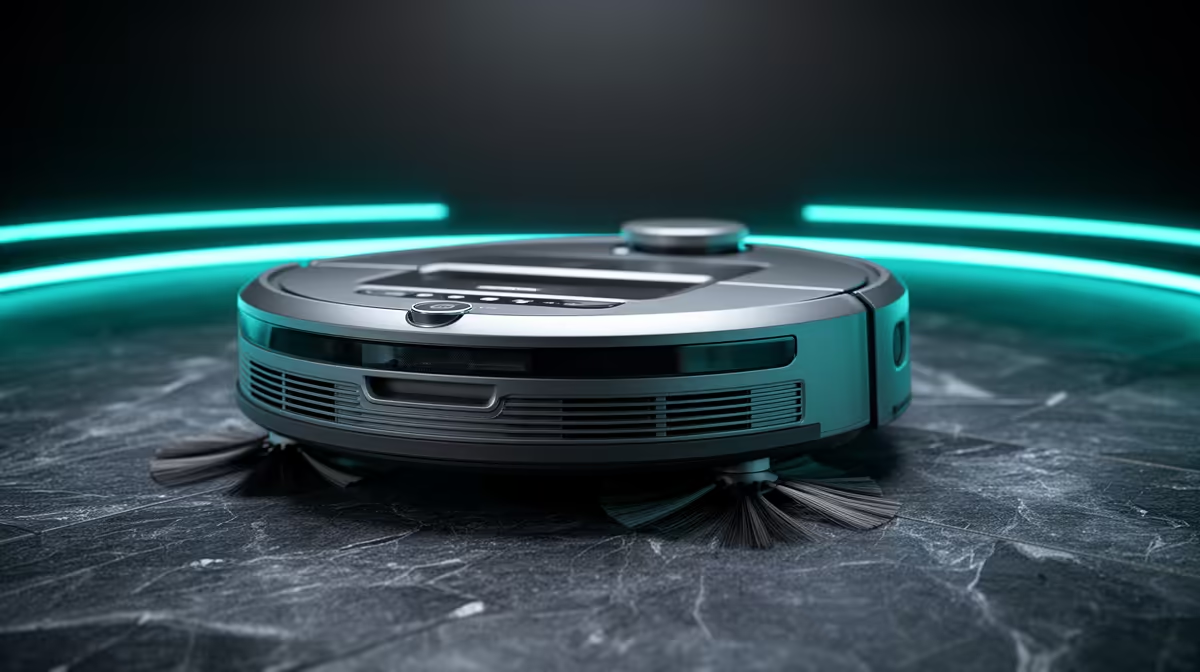
Robot vacuum marketing has turned into a Pascal arms race, with flagships now boasting 25,000Pa while mainstream models sit at 6,000 to 8,000Pa. The number sounds decisive, but robot vacuum suction matters far less on a tiled Cape Town flat than the spec sheet implies, and far more in a carpeted home with a shedding dog. Knowing which figure your home actually needs stops you overpaying for suction you will never feel.
Quick Answer
Most 2026 mainstream robot vacuums deliver 6,000 to 8,000Pa, while flagships reach up to 25,000Pa, and the difference matters most for pet hair embedded in carpet. A home with tile, laminate or hard floors and no pets rarely needs more than the mid-range figure. Pay for high Pa only if you have carpet and shedding pets; otherwise the money is better spent on navigation and mopping.
What Pa Actually Measures
Pa, or pascals, measures the suction pressure the vacuum generates, essentially how hard it pulls air and debris into the bin. Higher Pa means more force available to lift heavier or more deeply lodged dirt. So far so simple, but two things complicate the headline.
First, suction is only one part of cleaning performance. Brush design, brush speed, airflow path and how well the unit seals against the floor all shape how much actually ends up in the bin. A well-designed 8,000Pa machine can out-clean a poorly engineered higher-rated one. Second, suction has sharply diminishing returns on hard floors, where debris sits on the surface with nothing gripping it. Once you have enough pull to lift dust, crumbs and hair off tile, extra Pa adds little you can perceive.
A practical caution worth noting: Pa ratings are self-reported by manufacturers with no standardised testing protocol. The number on the box is a ceiling figure measured at peak boost mode, not what the robot runs at across most of its clean. Standard operating mode -- what the robot uses roughly 90 percent of the time -- is typically considerably lower than the advertised peak.
If you are comparing current models, our smart home and appliance range is the place to weigh suction against the features that matter alongside it.
Suction by Floor Type
The right number depends almost entirely on what is under the robot's wheels.
Hard Floors: Tile, Laminate and Wood
On hard surfaces, debris rests on top of the floor, so even mid-range suction lifts it easily. A typical SA home with tiled living areas and laminate bedrooms is well served by something in the 6,000 to 8,000Pa band. Dust, crumbs, sand tracked in from outside and everyday grit come up without needing flagship power. Spending up to 25,000Pa here buys almost nothing you would notice on the floor.
Low-Pile Carpet and Rugs
Carpet changes the maths because fibres grip dirt and hold it below the surface. Mid-range suction handles light, low-pile carpet and area rugs reasonably, pulling surface debris and most loose dirt. If carpet is a minor part of your home, the mid-range figure still copes.
Deep-Pile Carpet With Pets
This is the one scenario where high Pa genuinely earns its premium. Pet hair works its way deep into carpet pile and resists ordinary suction, and a shedding dog or cat replenishes it daily. Here the extra force of a 15,000Pa-plus or flagship 25,000Pa machine measurably lifts embedded hair that mid-range units leave behind. If your home is carpeted and you have pets, this is where you spend.
What to Buy Instead of Raw Suction
For most SA homes, the better upgrade is not more Pascals but smarter everything else.
Navigation is the big one. A robot with proper laser mapping cleans methodically, reaches edges and corners, and avoids getting stuck, which affects how clean your floors are far more than a suction bump. Mopping matters too on the tiled floors common across SA homes, and the better systems lift the mop pad over carpet and scrub rather than smear. Auto-empty docks, which collect debris over weeks so you are not emptying a tiny bin every few days, are a genuine quality-of-life feature. A mid-suction robot with strong navigation, capable mopping and a good dock will keep a typical home cleaner than a high-Pa unit that bumps around blindly.
It is worth browsing the wider best-selling smart home gear to see how these features are bundled at different price points before fixating on the suction figure.
Matching Pa to Your Home
A short framework settles most purchases. Hard floors and no pets: 6,000 to 8,000Pa is plenty, so put your budget into navigation and mopping. Mixed hard floors and light carpet, no heavy shedding: mid-range still works well. Carpet plus shedding pets: step up to a high-Pa model where the suction is doing real work. The mistake to avoid is paying flagship prices for 25,000Pa to clean a tiled flat, where the difference is invisible underfoot.
Frequently Asked Questions
How many Pa do I need for hard floors?
Around 6,000 to 8,000Pa is ample for tile, laminate and wood, because debris sits on the surface and lifts easily. Higher suction makes almost no perceptible difference on hard floors, so the extra spend is better directed elsewhere.
Is 25,000Pa worth it?
Only if you have deep-pile carpet and shedding pets. That is the one situation where the extra force genuinely lifts embedded hair that mid-range units miss. On hard floors or light carpet without pets, it is power you will not feel.
Does higher Pa always mean better cleaning?
No. Brush design, airflow, floor sealing and navigation all shape real-world cleaning, and a well-engineered mid-suction robot can out-clean a poorly designed higher-rated one. Suction is one factor among several, not the whole story.
What matters more than suction for most homes?
Navigation quality, mopping capability and an auto-empty dock usually affect day-to-day cleanliness more than raw Pascals. A robot that maps and reaches every corner cleans better than one with high suction that misses areas.
Will a mid-range robot handle pet hair at all?
On hard floors, yes, mid-range suction lifts pet hair fine. The limitation is pet hair driven deep into carpet pile, where higher suction becomes worthwhile. If your pets live on tiled or laminate areas, mid-range copes well.
Are Pa ratings accurate?
Treat them as ceiling figures only. Manufacturers self-report Pa values using boost mode, and the robot runs at standard mode -- well below peak -- for the vast majority of each clean. Compare models within the same brand rather than across brands for a more meaningful reading.
Sizing up a robot vacuum for your floors rather than a spec sheet? Compare current models in our smart home and appliance range and match the suction to how you actually live.