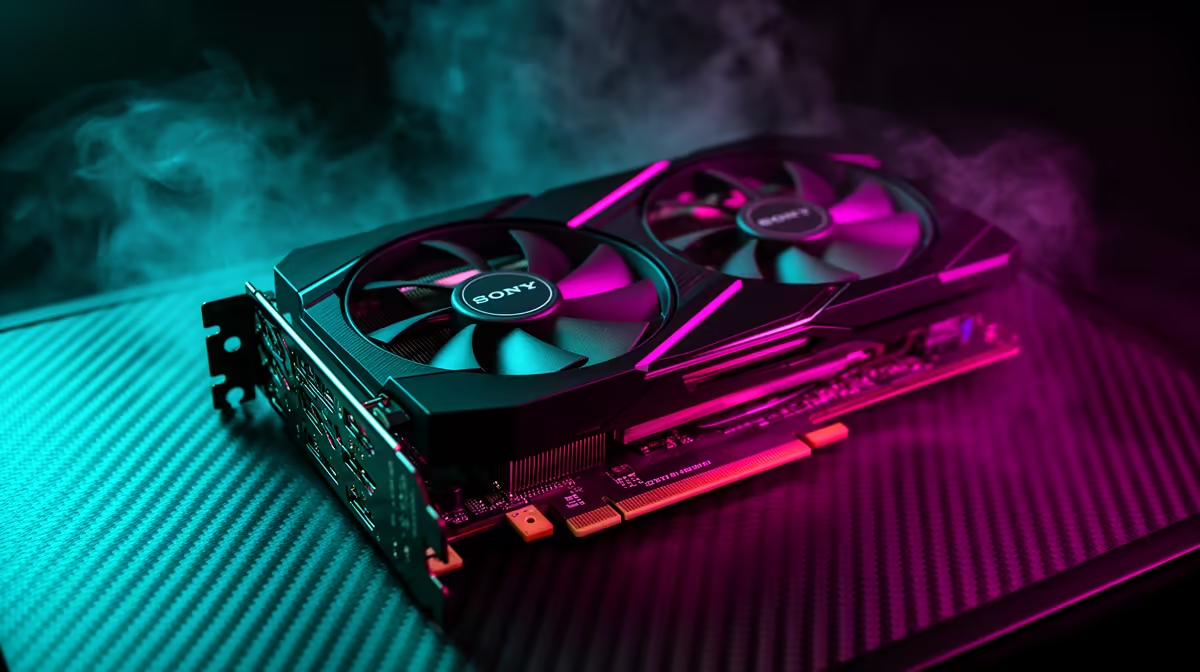
For local AI art the decision between the RTX 4090 and RTX 5090 comes down to one number that matters more than raw speed: memory. The 4090 carries 24GB of GDDR6X, the 5090 carries 32GB of GDDR7, and that extra 8GB is the difference between fighting out-of-memory errors and running full-precision Flux and longer video clips without workarounds. For SA buyers facing a real price gap between the two, knowing which jobs actually need the headroom decides where the money should go.
Quick Answer
The RTX 4090 has 24GB and is the value pick for image generation, handling every current Stable Diffusion and Flux model with memory-efficient attention enabled. The RTX 5090 has 32GB and runs Flux at full BF16 precision plus longer video generation with no memory tricks, and is roughly 38 to 50 percent faster on those tasks. For inference-only image work the 4090 wins on value; for video and training the 5090 earns its premium.
The 24GB versus 32GB question
VRAM is where AI art lives. The model weights, the image being generated and all the intermediate data have to sit in the GPU's memory at once, and when they do not fit, the job either crashes or crawls as it spills to system RAM.
The RTX 4090's 24GB handles every mainstream model today, but Flux.1 Dev at full FP16 actually requires around 33GB, which exceeds even the 4090. In practice this means the 4090 runs Flux via memory-efficient attention such as xFormers or SDPA and FP8 quantisation to stay inside budget. At FP8, Flux.1 Dev drops to around 13GB and runs well. The RTX 5090's 32GB removes much of that constraint, running Flux.1 Dev closer to full precision with less juggling. The other half of the upgrade is bandwidth: the 5090's GDDR7 moves data at roughly 1.79 TB/s against the 4090's roughly 1 TB/s, close to a 78 percent jump, and that feeds the cores faster on every memory-bound step.
Image generation: where the 4090 holds its ground
For everyday image work the 4090 remains hugely capable. In testing it produces an SDXL image in around 4.2 seconds; the 5090 does the same in around 2.8 seconds. On sustained batch work generating four SDXL images at a time, the 5090 cuts the run to roughly 15 seconds while the 4090 takes longer, and at sustained throughput it runs roughly 5.5 Flux images a minute against the 4090's 4, about a 38 percent lead.
Who the 4090 suits
That is a real gap, but it does not change what you can make, only how fast. For someone generating stills, building prompt libraries and iterating on SDXL and Flux, the 4090's 24GB covers every current model and the speed is more than fine. Given the SA price difference, it is the sensible value pick for pure image generation. The AI PC range at Evetech shows how these cards are configured into complete creative rigs.
Video and training: where the 5090 pulls clear
The picture shifts the moment you move to video or model training. In image-to-video inference the 5090 finishes a workload around 45 percent faster, cutting a run from roughly 12.7 minutes to about 7. Video and training also push memory use far higher than stills, and that is exactly where the 5090's 32GB stops being a luxury and becomes the thing that lets the job run at all.
Video models like Wan and CogVideoX require 20GB or more of VRAM for workable quality, which bumps directly against the 4090's ceiling and forces resolution or frame-count sacrifices. The 5090 handles these comfortably and can run them at full intended quality.
Who the 5090 suits
If your work includes AI video, Flux LoRA training or large checkpoints that bump against 24GB, the 5090 is the card that does it without compromise. The faster runtimes compound across a working day, and the memory headroom means fewer failed runs. For a serious or semi-professional AI art workflow, the premium is justified. SA pricing on flagship cards moves often, so check current stock rather than assuming a fixed gap, and the GPU best sellers give a live read on what creators are buying.
Power, Cooling and the Rest of the Build
Neither card slots into a generic gaming rig without some thought. The 4090 draws around 450W under sustained inference, which already pushes a standard 750W power supply uncomfortably close to its ceiling once a CPU is added. Budget for a quality 850W to 1000W unit. The 5090 draws around 575W and deserves a 1000W to 1200W supply, particularly for long inference sessions where the load is continuous rather than bursty.
Cooling follows the wattage. A card producing 575W of sustained heat needs a case that can exhaust it, because thermal throttling under a long AI art batch will clip actual throughput. Mid-tower and full-tower cases with good front-to-rear airflow and two or more 140mm exhaust fans are the practical requirement. Compact builds are possible with careful airflow planning, but a cramped case is the silent performance killer in AI workloads.
System RAM at 32GB is a minimum; 64GB is better when video or training enter the picture. The reason is that LLM-backed workflows, upscaling pipelines and batch render managers all draw from system memory in parallel, and running short forces offloading that stalls the GPU.
Making the call for an SA build
Match the card to the workload, not the spec sheet. If you generate images and iterate on prompts, the 4090's 24GB does everything useful today and saves real money against the 5090's local price. If video, training or oversized models are part of the plan, the 5090's 32GB and faster runtimes pay for themselves in fewer crashes and shorter waits. Either way, budget for the rest of the rig too, since both cards want a strong CPU, fast storage and a generous power supply to keep up. The 4090 draws around 450W and the 5090 around 575W, so the power supply and cooling budget rises with the card choice.
Frequently Asked Questions
Is the RTX 5090 worth the extra money for AI art?
Only if you do video or training. For image generation the 4090's 24GB handles every current model and the 5090's speed lead, while real, does not unlock anything new. For video and LoRA training the 5090's 32GB is genuinely necessary.
Can the RTX 4090 run Flux?
Yes. The 4090 runs Flux well using FP8 quantisation and memory-efficient attention to fit within 24GB. The 5090 runs Flux with less VRAM pressure thanks to its 32GB capacity.
How much faster is the 5090 for video generation?
In image-to-video inference the 5090 runs about 45 percent faster, trimming a sample run from roughly 12.7 minutes to about 7. The gap is widest on the heaviest memory and compute loads.
Is 24GB enough VRAM for AI art in 2026?
For image generation, yes. 24GB covers every mainstream Stable Diffusion and Flux model today when using FP8 quantisation. Video generation and model training are where you start wanting the 5090's 32GB.
Which card is better value for an SA buyer?
For image-only work the 4090 is the value choice given the local price gap. The 5090 is worth it only when video, training or very large models are part of your workflow.
Pick the GPU that matches the art you actually make. Explore the AI PCs at Evetech to see complete RTX 4090 and RTX 5090 builds configured for local image and video generation.