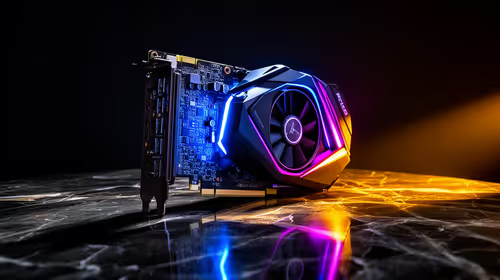
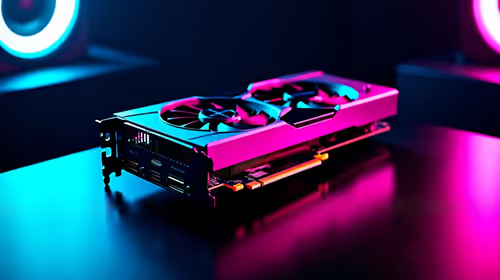
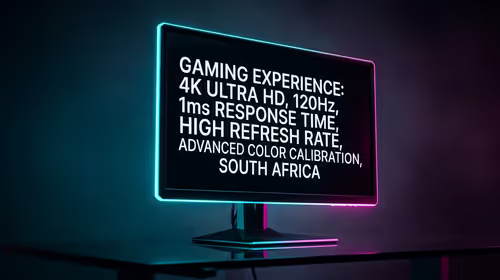
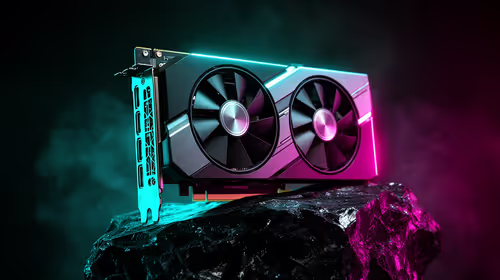
For SA gamers building around Zenless Zone Zero, the 4K decision shapes both frame rate and budget.
Quick Answer
For Zenless Zone Zero at 4K the RTX 5070 Ti is the stronger pick, holding roughly 62 fps on high settings against about 50 fps on the rival. Budget from R19,500 for the green card or R16,900 for the red, and let your monitor refresh rate make the final call.
How Zenless Zone Zero runs at 4K on each card
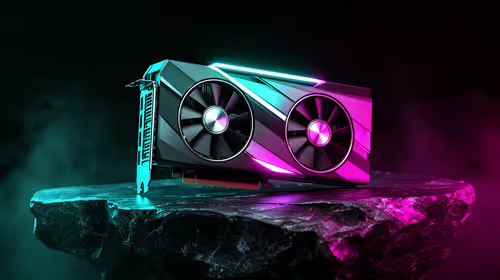
In Zenless Zone Zero the busy scenes push memory bandwidth, so the RTX 5070 Ti with 16GB and the RX 9070 XT with 16GB diverge most when effects stack up. At 4K you should expect roughly 62 fps on the faster card and 50 fps on the other before upscaling. Frame pacing, not just average fps, is what you feel during fast camera swings.
Thermals, power and case fit
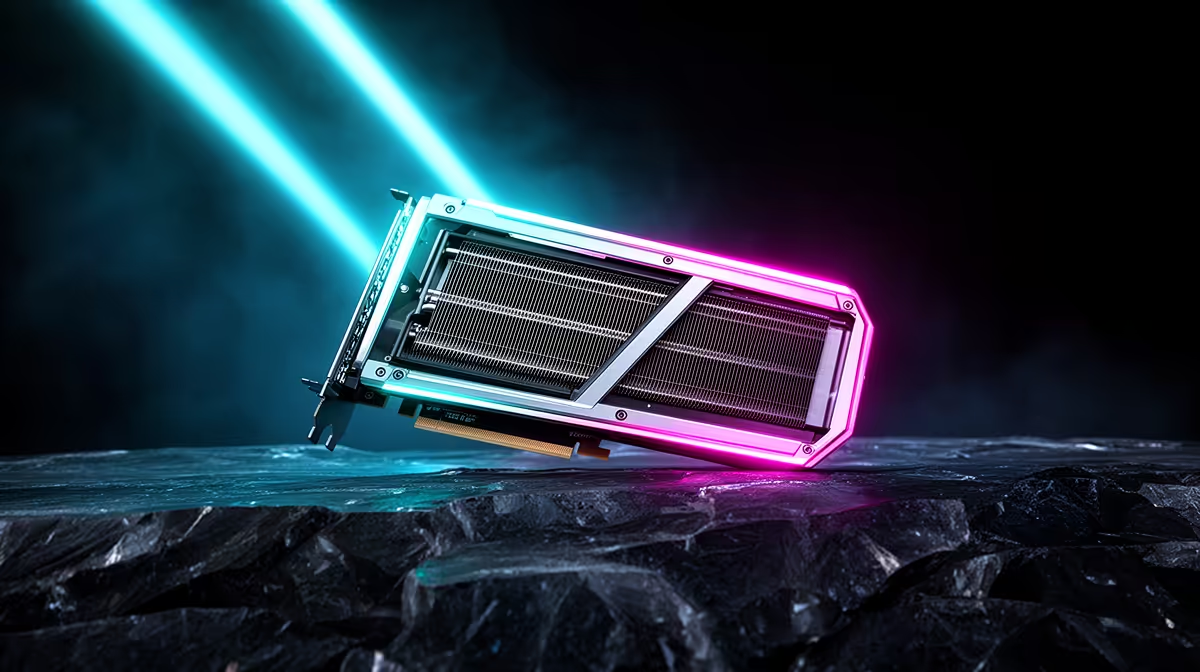
Both cards draw real wattage under Zenless Zone Zero, so plan for a 750W unit and at least three intake fans. Expect GPU temps in the high 60s to low 70s in a well-aired mid-tower at 4K. Confirm the card length against your chassis before checkout, since a 330mm card will foul some front radiators. Confirm local stock and warranty before you commit, since support matters on parts you rely on daily.
FAQ
Will a mid-range CPU bottleneck these cards at 4K?
At 4K the GPU does most of the work, so a current 6-core chip keeps up in Zenless Zone Zero. Step to 8 cores only if you stream or run heavy background tasks.
What PSU and case should I plan for?
A quality 750W PSU and a mid-tower with three fans suit either card at 4K. Check the card length against your chassis, since both run long.
Is 16GBGB of VRAM enough for Zenless Zone Zero at 4K?
Yes, 16GBGB covers Zenless Zone Zero at 4K with high textures today. Leave one notch of headroom on ray tracing if you want margin for future patches.
Build a balanced Zenless Zone Zero rig
Pair the RTX 5070 Ti with a 750W PSU, 32GB RAM and a current CPU, then verify case clearance before you order.