Walk through the kids' tech aisle and two very different products both claim to "teach coding": a chunky button-covered floor robot, and a sleeker kit that pairs a robot with a tablet app. They are not two versions of the same thing. The screen-free coding toy vs a coding kit decision really comes down to whether your child should learn command sequencing with their hands first, or jump straight into writing programs on a screen. Get the order right and the learning sticks; get it wrong and an expensive kit gathers dust.
Quick Answer
A screen-free coding toy teaches sequencing through physical buttons or cards with no app, screen or device, which suits children roughly aged 4 to 7. A coding kit needs a screen and an editor to write programs, unlocking more complex logic for children around 8 and up. Buy by your child's age and reading level, not by the price tag.
What a Screen-Free Coding Toy Actually Teaches
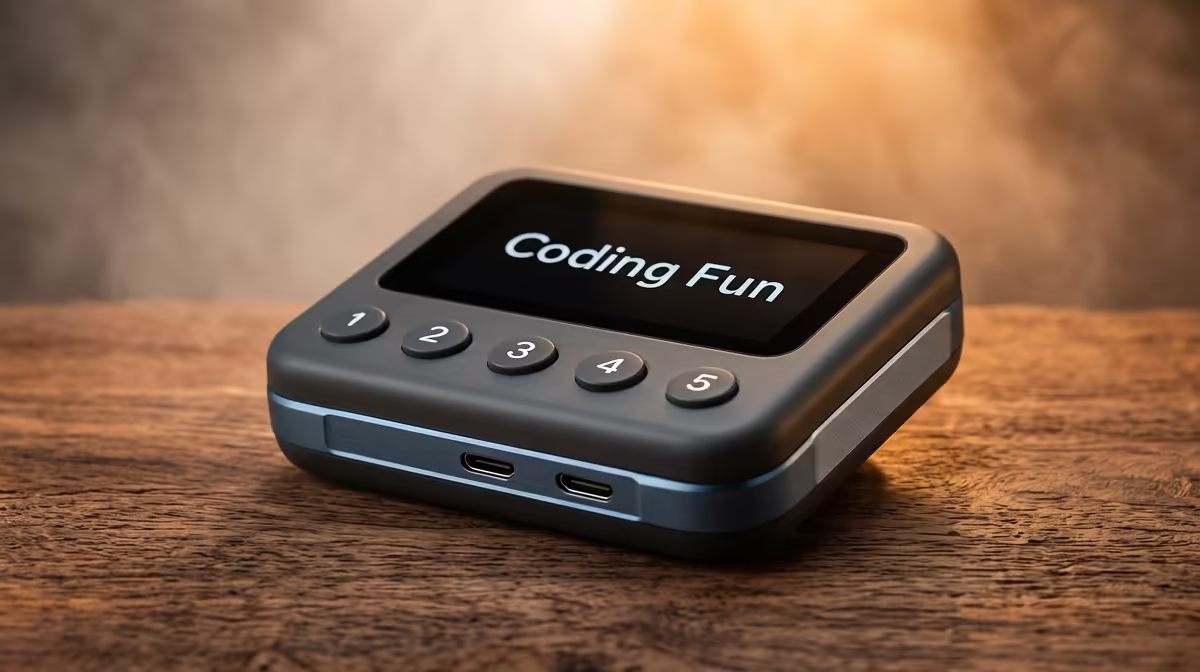
A screen-free coding toy is usually a floor robot the child programs by pressing direction buttons on its body, or by laying out command cards or tokens. Press forward, forward, turn right, then go, and the robot runs the sequence. That is real programming logic stripped down to its core: order matters, the machine does exactly what you tell it, and a wrong step means a wrong outcome.
The power here is that there is nothing between the child and the idea. No login, no app update, no screen to get lost in. A four or five year old who cannot yet read can still build a sequence, watch it run, and fix it when the robot bumps a wall. That immediate cause-and-effect loop is exactly how young children learn best, by touching and doing rather than reading instructions.
Where screen-free toys hit their ceiling
The same simplicity that makes these toys brilliant for beginners is also their limit. A handful of direction buttons can only express so much. Once a child grasps basic sequencing and wants loops, conditions, or branching logic, the physical interface runs out of room. That is the natural moment to move up.
What a Coding Kit Adds, and What It Demands
A coding kit pairs hardware with an app or editor on a tablet, phone or computer. Instead of pressing buttons on the robot, the child drags blocks together on screen, or later types real code, then sends that program to the device. This unlocks far richer logic: repeat loops, "if this then that" conditions, sensors that react to the world, and projects that grow over weeks.
The trade-off is the screen itself. A kit needs a compatible device, often an account, and a child who can read well enough to follow an on-screen editor. For an older child this is no barrier and the depth is the whole point. For a five year old, the screen becomes the activity and the coding gets lost, which is exactly the outcome most parents are trying to avoid.
Matching the Tool to the Child
Age and reading ability are the cleanest guides. Children roughly 4 to 7 generally do best with screen-free sequencing toys, where the lack of a screen is a feature, not a compromise. Around 8 and up, app-based kits with structured missions and projects tend to engage more, because the child can finally build the bigger, more creative ideas in their head.
There is also a learning-style angle. Tactile children who think with their hands often respond far better to a physical robot, even a little older, while children who already enjoy screen-based creating may take to a kit quickly. Many families land on the same answer: one screen-free toy to build the foundation, then one kit to grow into. That progression mirrors how the concepts themselves build on each other.
Cost and Longevity in the SA Context
Screen-free toys are usually the cheaper entry point and need nothing else to work, which makes them low-risk first buys. Kits cost more up front and assume you already own a suitable tablet or PC, so factor the device into the real price. The upside is longevity: a good kit can stay relevant for years as the child moves from block coding to text-based programming, whereas a button robot is eventually outgrown. If you are weighing connected gadgets and learning tech together, the smart home and learning tech range at Evetech is a useful place to compare options side by side.
Which Should You Buy First?
For a child under about 7, start screen-free. It builds the sequencing instinct without the distraction of a device, and it costs less to find out whether your child enjoys this kind of play at all. For a confident reader aged 8 or older, a kit is the better first purchase because it meets them at the level of logic they are ready for. If you are buying for siblings spanning both ages, owning both is genuinely the strongest setup, since the toy feeds naturally into the kit. Whichever route you take, pairing the right learning hardware with solid everyday accessories keeps the whole thing usable, and the accessories best sellers at Evetech cover the cables, storage and extras these devices tend to need.
Frequently Asked Questions
At what age should a child start with a screen-free coding toy?
Around 4 to 7 is the sweet spot. Children this age learn sequencing best by physically pressing buttons and watching a robot respond, with no reading or device required, which keeps the focus on the logic itself.
Does a coding kit always need a tablet or computer?
Yes. The defining feature of a coding kit is the on-screen editor where the child writes the program before sending it to the hardware. That requires a compatible screen device, so factor one in if you do not already own a suitable tablet or PC.
Can an older child still enjoy a screen-free toy?
They can, especially tactile learners who prefer building and manipulating things by hand. That said, most children over 8 want the deeper logic and creative projects that only an app-based kit can provide, so the toy may feel limited.
Is a screen-free toy too simple to teach real coding?
No. It teaches the single most important idea in programming, that instructions run in a precise order and the machine follows them exactly. That foundation transfers directly to block and text coding later, which is why it works so well as a first step.
Should I buy both a toy and a kit?
For families with children spanning roughly 4 to 10, owning both is the strongest setup. The screen-free toy builds the early foundation, then the kit lets an older child grow into loops, conditions and full projects without hitting a ceiling.