A robot vacuum that empties itself sounds like a small luxury until you realise how often a normal one demands attention. The self-empty dock turns a near-daily chore into something you barely think about, but it asks for a real premium up front. Whether that trade lands as worth it depends entirely on how you live with the machine, so let us look at what actually changes.
Quick Answer
A self-empty dock vacuums the robot's onboard bin into a sealed dust bag after each clean, so you handle dirt roughly once a month instead of after every run. For homes with pets, kids, or anyone who forgets to empty a tiny bin, it is worth the premium. For a small flat with light cleaning, the manual bin is fine.
What the dock actually does
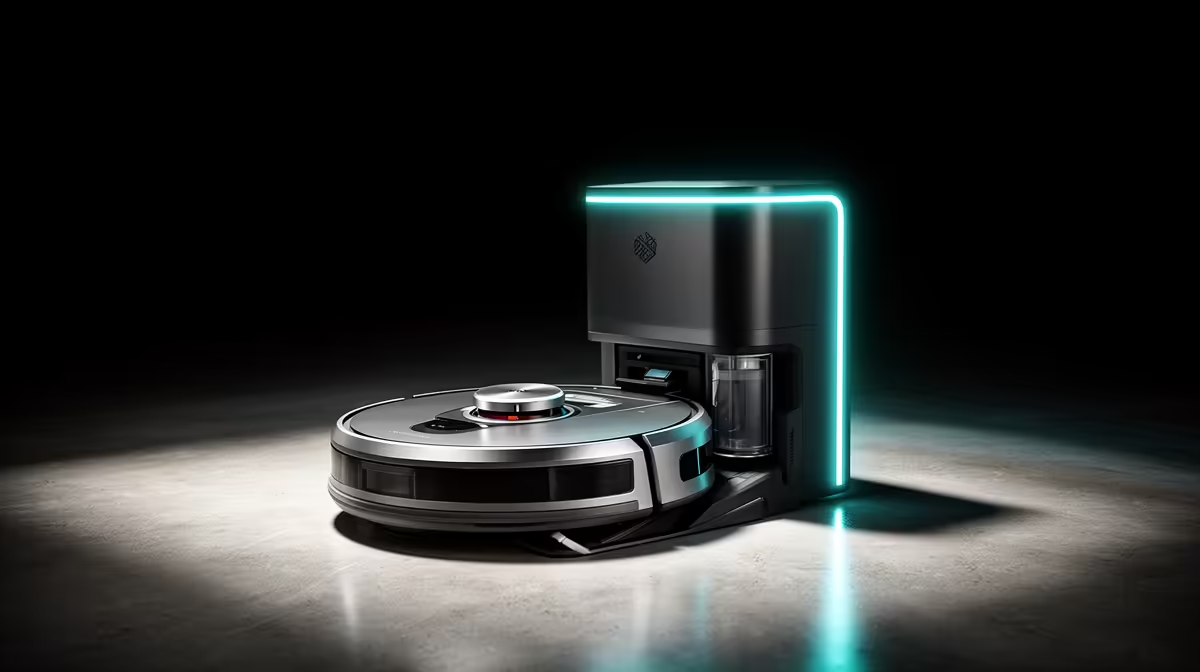
After a robot finishes a clean, it returns to base and a powerful fan sucks the contents of its small onboard bin up into a much larger sealed bag inside the dock. Those bags typically hold many weeks of debris, which is where the headline benefit comes from: you go from emptying a thimble-sized bin every day or two to swapping a bag every month or two.
The robot's own bin is tiny by necessity, because the machine has to be slim enough to slide under furniture. Without a dock to drain it, that little bin fills fast in a home that generates real dirt.
How often you actually touch the dirt
This is the real measure. With a manual-bin robot, you open the lid and tip out fine dust every couple of cleans, and in a pet household that can mean daily. With a self-empty dock, that contact drops to changing a sealed bag every few weeks. For anyone with dust allergies, the sealed bag matters twice over, because you are not shaking loose particles back into the air each time.
Where the dock shines
Pet hair is the clearest case. Long coats and constant shedding swamp a small bin within a single clean, so the dock saves you from a chore that would otherwise repeat almost every day. Large homes and busy households see the same benefit simply from volume.
Where it earns less
In a compact flat with hard floors and no pets, the onboard bin might only need emptying once or twice a week anyway. The dock still helps, but the convenience gap is narrower, and the premium plus the ongoing cost of replacement bags is harder to justify.
What the Tech Actually Does During Emptying
When the robot docks after a clean, the station's internal fan spins up and creates suction that draws debris from the small onboard bin up through a tube and into the sealed bag above. The process takes around 10 to 30 seconds and is notably louder than the robot itself, closer to a hand vacuum at full power. If noise at odd hours is a concern, check whether the model lets you schedule or delay the emptying cycle, which most current flagships do.
The bags themselves are typically rated to hold 30 to 100 days of debris depending on the size of the home and how often the robot runs. A household with pets or a large area to cover will change bags more frequently, perhaps every three to four weeks. Bags run roughly R150 to R300 each depending on the model, so factor two to six bags per year into the annual running cost when comparing a docked versus a manual-bin robot.
Omni Docks: Beyond Just Emptying
The most capable 2026 docks have moved well past self-emptying. The full omni-style stations from Dreame, Roborock and Ecovacs now add mop-pad washing, hot-air drying, water-tank refilling and in some cases automatic detergent dispensing. These stations handle nearly every maintenance task, so you interact with the robot only to change the dust bag and occasionally top up the cleaning fluid.
For a busy household where the robot runs every day, an omni dock genuinely removes a maintenance burden that would otherwise add up over a week. The trade-off is footprint: these stations are notably larger than a basic charger, sometimes 35 to 40 cm tall, so they work better against a wall with a bit of clearance than in a cramped cupboard.
Bagless Self-Emptying Docks
Some models, including certain Ecovacs flagships, use a bagless collection system where debris empties into a washable container inside the dock instead of a sealed bag. This removes the bag-replacement cost entirely but means you wash the container periodically rather than just swapping a bag. For a buyer who dislikes ongoing consumable costs, bagless docks are worth seeking out, though availability in SA varies by model.
The Costs to Weigh
Two costs sit behind the convenience. First, the dock itself raises the purchase price meaningfully over an otherwise similar robot. Second, the sealed bags are consumables you replace over the life of the machine. Neither is huge, but both belong in your maths. A look across our smart home and appliance range shows how the docked and dockless models compare, and the accessories best sellers cover the replacement bags and filters these machines get through.
Frequently Asked Questions
How often do I empty a self-empty dock?
The sealed dust bag inside the dock typically lasts several weeks to a couple of months, depending on how much your home sheds. A pet-heavy house leans toward the shorter end.
Do the dock bags cost a lot over time?
They are an ongoing consumable, but the cost is modest spread across weeks of use. Factor a few bag changes a year into your running cost when you compare models.
Is a self-empty dock worth it for a small flat?
If you have hard floors, no pets, and light dust, the convenience gain is smaller and the premium harder to justify. A good manual-bin robot may serve you just as well.
Does the dock make the robot clean any better?
No. The dock only handles emptying. Cleaning performance comes from the robot's suction, brushes, and navigation, so judge those separately from the docking feature.
Are self-empty docks better for allergy sufferers?
Yes, generally. The dirt transfers into a sealed bag and you rarely open it, which limits the dust kicked back into the air compared with tipping out a bin by hand.
Decide how often you really want to touch the dirt, then choose to match. Browse robot vacuums in Evetech's smart home range and find the right level of hands-free cleaning.