


PCIe 5.0 vs PCIe 4.0 for Strategy and Sim Games in SA
PCIe 5.0 and PCIe 4.0 differ most in lane support, compatibility, and upgrade value for strategy and sim games. SA buyers should match the choice to their actual hardware and games.
Read moreSustained 250W-class CPU loads are where a high-wattage PSU pulls ahead, particularly with fully modular cabling. Match wattage to peak GPU draw plus 30 percent headroom, then weigh ATX 3.1 readiness and connector count.
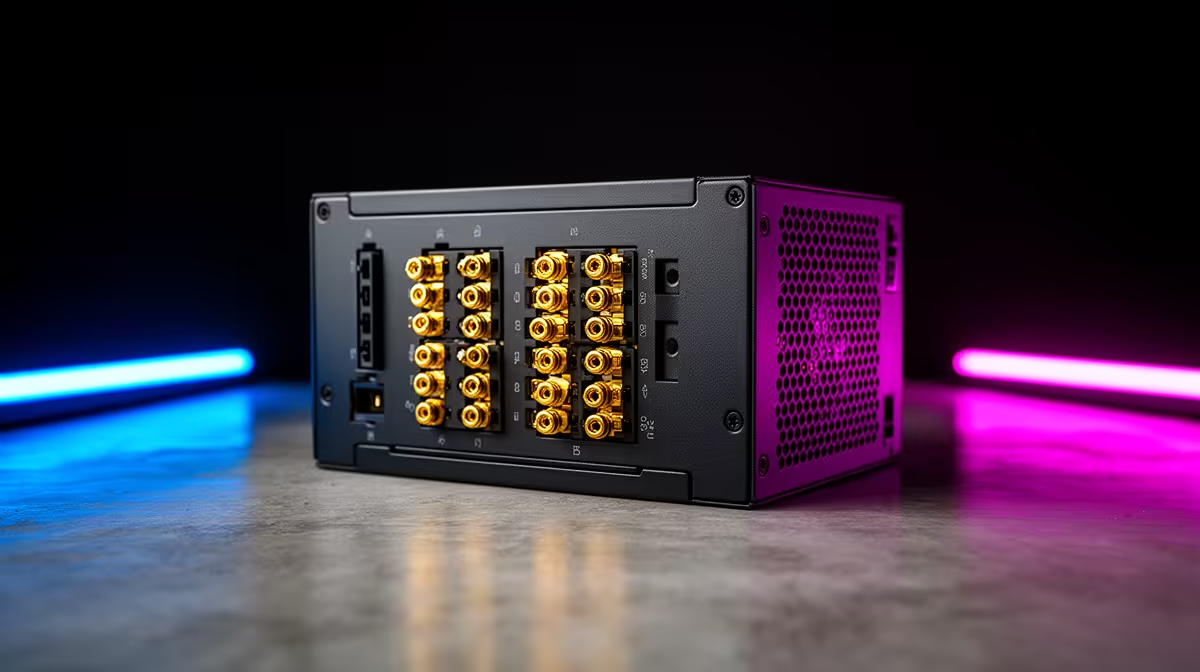
Yes, for a mid-range or high-end gaming PC build, a fully modular PSU is worth the R300 to R600 premium over a semi-modular equivalent. It reduces cable clutter in the case, improves airflow past the GPU and storage bays, and makes future upgrades significantly easier since unused cables stay out of the build entirely.
A fully modular PSU ships with all cables detached. You connect only the cables your specific build needs: one 24-pin ATX, one or two EPS 8-pin CPU, one or two PCIe GPU cables, and as many SATA or peripheral cables as your drives require. Unused cables remain in the box. By contrast, a non-modular PSU has all cables permanently soldered to the PSU unit, meaning a 650W non-modular PSU includes eight to twelve cables regardless of whether you use them, and unused cables must be bundled and stuffed behind the motherboard tray. Semi-modular units fix the 24-pin and CPU cables permanently but allow modular GPU and peripheral connections. For a clean windowed build in a case like the Lian Li O11 Dynamic EVO, full modularity eliminates roughly 60% of cable volume compared to a non-modular unit at the same wattage.
Dense cable bundles routed through the main chamber of an ATX case obstruct airflow from front intake fans to the GPU and CPU cooler. A fully modular build with only the required cables in place can reduce GPU operating temperatures by 3 to 7 degrees Celsius versus the same system with excess cables bundled haphazardly. This is measurable in tightly packed mid-towers where the area between the GPU and the PSU shroud acts as a restricted plenum. Cleaner cable routing also makes future RAM upgrades, storage additions, and GPU swaps simpler because you can trace each cable without unwinding a bundle of unused connections.
In South Africa, fully modular 850W PSUs with 80 Plus Gold certification start at around R2,800, compared to R2,200 to R2,500 for semi-modular equivalents. For a R40,000 to R60,000 build where the GPU alone costs R15,000 to R25,000, the R300 to R600 premium for full modularity is negligible. For budget builds under R20,000, the semi-modular option at the same wattage and efficiency rating makes more financial sense. The practical threshold is a build with a tempered-glass panel where cable presentation is visible, or a build where the builder expects to swap components within the next two years.
After completing a fully modular build, label each cable with the component it connects using a small cable marker or label tape and return unused cables to the original PSU bag. When you upgrade a drive or GPU in 18 months, finding the correct cable immediately saves a frustrating rummage through an unlabelled bag of interchangeable-looking black cables.
No. Modularity affects cable management and build convenience, not electrical performance. A fully modular 850W Gold PSU delivers the same wattage and efficiency as a non-modular equivalent at the same certification tier.
No. PSU modular cables are not cross-compatible between brands, and using the wrong cables can cause shorts or fire risk. Only use the cables supplied with your specific PSU unit or verified replacements from the same manufacturer.
Slightly, since you need to connect each cable individually rather than routing a pre-attached set. The benefit is that each connection is deliberate and easy to verify, which reduces the chance of a missed 8-pin CPU connector or a loose PCIe cable.
Building a clean, high-end gaming PC in South Africa? Evetech stocks fully modular PSUs from 650W to 1,600W with local warranty and 80 Plus ratings clearly listed, so you can spec the right unit for your build.
PCIe 5.0 and PCIe 4.0 differ most in lane support, compatibility, and upgrade value for strategy and sim games. SA buyers should match the choice to their actual hardware and games.
Read more
AM5 vs AM4 for video editing in 4K Difference explained is mostly about compatibility, budget, upgrade path, and setup fit. SA buyers should check device support and real needs before expecting a clear win from either option.
Read more
OLED vs QD-OLED for strategy and sim games buyers - what changes is mostly about compatibility, budget, upgrade path, and setup fit. SA buyers should check device support and real needs before expecting a clear win from either option.
Read more
DisplayPort 2.1 and 1.4 differences matter when SA PC builders match GPUs, monitors, and refresh targets. Use this difference between displayport 2 1 and displayport 1 4 explained pc builders guide to avoid mismatched parts.
Read more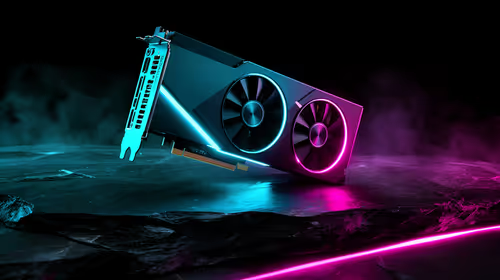
Ray tracing vs Path tracing depends on Strategy and sim games needs, platform limits, and budget fit. Compare compatibility, latency, upgrade path, and real setup constraints before choosing for an SA build.
Read more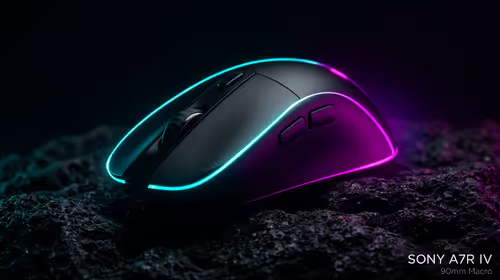
wireless mouse guide for Gqeberha gamers should be shortlisted around the job it must do. South African buyers should compare sensor, shape, weight, and wireless latency, warranty path, and upgrade room before treating any pick as best.
Read more
From 1 October 2026, WhatsApp Business Platform service replies in South Africa are expected to cost about $0.0076, or 12 cents, per delivered message.
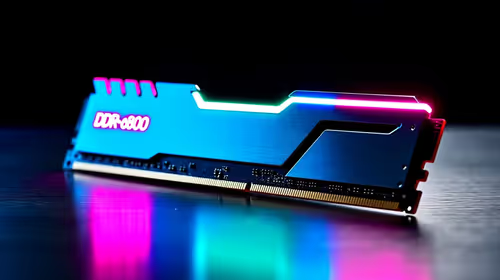
DDR5-8000 RAM Kits pros and cons depend on the build, budget, and workload. Weigh gaming needs, platform fit, power, cooling, warranty support, and South African pricing context before shortlisting it.
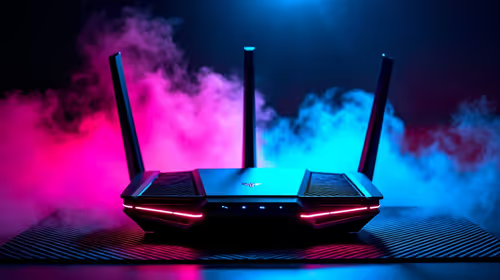
Wi-Fi 6E vs Wi-Fi 6 depends on AAA single-player gaming needs, platform limits, and budget fit. Compare compatibility, latency, upgrade path, and real setup constraints before choosing for an SA build.
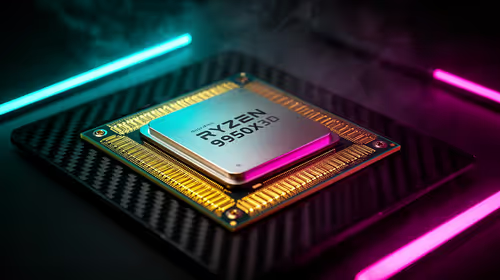
Ryzen 9 9950X3D dead pixel checks should isolate the panel first. Run colour fills, inspect the monitor menu, test another cable or input, and capture proof before linking it to the SA CPU upgrade.

YouTube will count public views from the first frame across video formats from 24 August, while earnings and eligibility remain tied to engaged viewing.
Canonical expects Ubuntu on WSL users to outnumber native Ubuntu desktop users before the end of 2026. The software is open source and runs inside supported Windows PCs.
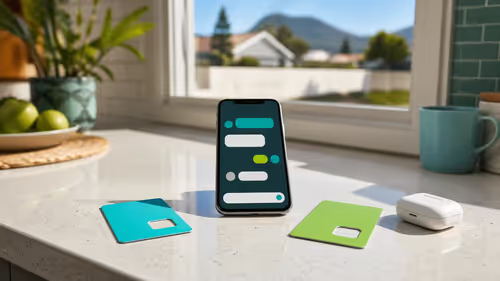
Telkom's daily bundles pair WhatsApp access with 10 all-network voice minutes. The R15 option includes 300MB, while the R17 option uses a fair-use threshold.
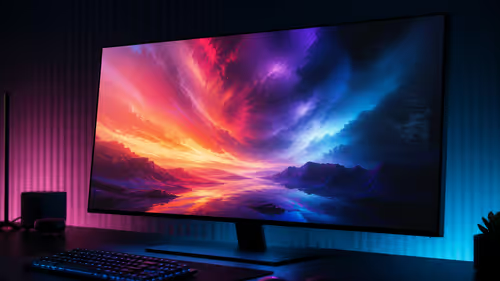
A 10,000-hour test found similar image retention across older and newer OLED TVs, while newer panels were brighter and more efficient. Local OLED monitors started at R9,999.
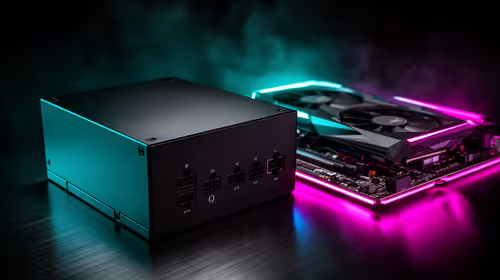
650W for RTX 5090 needs a full-build check, not a simple yes. Review GPU guidance, CPU draw, transient load, connectors, PSU quality, and upgrade plans before deciding.
PCIe 5.0 and PCIe 4.0 differ most in lane support, compatibility, and upgrade value for strategy and sim games. SA buyers should match the choice to their actual hardware and games.
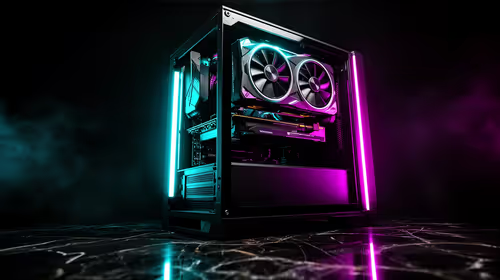
How to fix FPS drops Windows 11 RX 9070 XT starts with GPU drivers, overlays, power plans, and frame pacing checks. For SA gaming PCs, verify chipset updates, HAGS, refresh rate, thermals, and per-game graphics settings.
AM5 vs AM4 for video editing in 4K Difference explained is mostly about compatibility, budget, upgrade path, and setup fit. SA buyers should check device support and real needs before expecting a clear win from either option.