Quick Answer
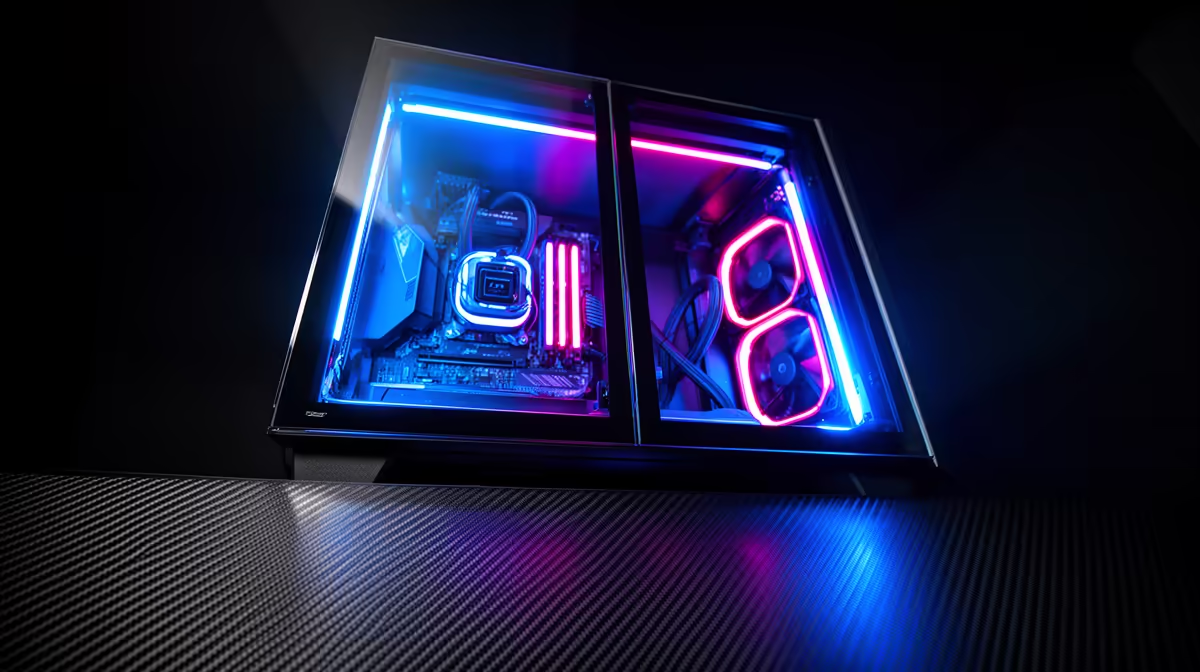
Dual tempered glass side panels are worth choosing for a showcase build only if both sides of your PC contain hardware worth displaying, such as a visible custom loop or matching RGB components on the right side. For most builds where the right panel faces a wall or covers plain cables, a single tempered glass left panel and a steel right panel deliver all the visual benefit at lower cost and better structural rigidity.
What Dual TG Panels Actually Add to a Build 🔮
A case with dual 4 mm tempered glass panels allows 360-degree visibility into the chassis, which is compelling for competition builds displayed at events like rAge Expo or streaming setups where a camera faces the side of the PC. The glass itself is typically 4 mm toughened safety glass, which resists scratching and provides a clear, low-distortion view of internal components. Some premium cases use smoked or tinted glass on one or both sides to reduce glare from window light while still revealing the internal RGB lighting. Cases with dual glass panels typically retail locally between R4,500 and R8,000, with the glass adding R500 to R1,500 to the cost of an equivalent steel-panel design.
Structural and Thermal Trade-Offs 🔧
Tempered glass side panels are heavier and more fragile under edge impact than steel panels. A 4 mm tempered glass panel for a full-tower case weighs 1.8 kg to 2.5 kg, which stresses the hinges and magnetic latch mechanisms more than an equivalent steel panel. Dual glass configurations also reduce the case's torsional rigidity: the steel frame carries all structural load, so cases with dual glass require thicker gauge steel in the top, bottom, and front sections to compensate. From a thermal standpoint, the right side panel in most builds sits adjacent to the motherboard's rear, PSU, and cable routing area, none of which generate significant heat, so dual glass has minimal thermal impact compared to a glass front panel.
When to Commit to Dual Glass for Your SA Build 🎮
Dual glass is a clear choice for purpose-built showcase builds with a custom hardline water loop where both sides of the chassis contain tubing runs, reservoirs, or pump mounts. It also makes sense for full-aluminium RGB builds where right-side cable management has been replaced with visible sleeved cables. For standard gaming builds with an AIO cooler and typical cable management, the right panel reveals only unremarkable backside cable routing. In that scenario, a single glass panel and a steel right panel is the pragmatic choice, and the R500 to R1,000 saving can go toward better fans or storage.
Tempered Glass Handling Tip ⚡
Tempered glass panels chip most often at the corners during installation and removal. Always use both hands when sliding or lifting a glass panel, support it from the bottom rather than the sides, and place it face-down on a microfibre cloth when removed. A single corner chip from a hard surface can propagate a crack across the full panel, and replacement glass panels for South African warranty claims can take 2 to 4 weeks.
FAQ
Does dual tempered glass affect PC noise levels?
Slightly, yes. Glass is a better sound reflector than perforated steel, so a dual-glass case can increase internal fan noise by 1 dBA to 3 dBA depending on fan RPM and frequency profile.
Are dual TG panels safe in an earthquake or when knocked?
Tempered glass is shatter-resistant under gradual flex but cracks readily from sharp point impacts. Place your case away from desk edges and ensure it sits on a non-slip mat, particularly on smooth desks common in SA homes and offices.
How do I clean tempered glass panels without scratching them?
Use a clean microfibre cloth with a small amount of isopropyl alcohol (70 percent concentration or lower). Avoid paper towels, which leave micro-scratches, and never use abrasive cleaners. Clean from the center outward in circular motions.
Building a showcase PC you are proud to display?
Evetech carries dual and single tempered glass cases, RGB components, and custom cooling options to bring your build to life.