Quick Answer
Yes, choose a PCIe Gen 5 compatible graphics card for a new build because all current-generation RTX 50-series and RX 9000-series cards are PCIe Gen 5 devices. The gaming performance difference between Gen 5 and Gen 4 slots is negligible for gaming, but buying a current-gen card gives you the full architecture benefits of Blackwell or RDNA 4.
What PCIe Gen 5 Actually Means for a New Gaming Build 🔧
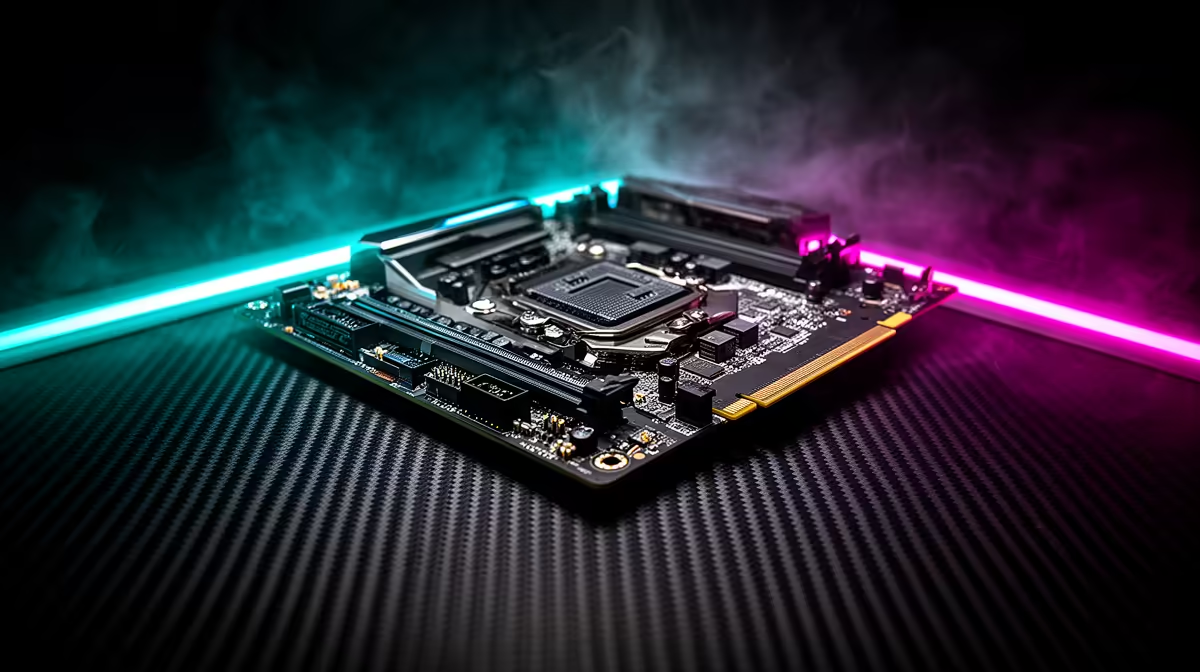
PCIe Gen 5 x16 provides 128 GB/s of bidirectional bandwidth versus 64 GB/s on Gen 4 x16. For gaming, no GPU today saturates even Gen 4 bandwidth. The PCIe bus carries texture data, draw calls, and compute commands, which peak at a fraction of Gen 4 bandwidth even on the RTX 5090.
Where PCIe Gen 5 provides real value is NVMe SSDs. Gen 5 NVMe drives deliver sequential reads of 12,000 to 14,000 MB/s versus 7,000 MB/s on Gen 4. For SA content creators moving large video files, this is meaningful. AMD Ryzen 9000-series (AM5) and Intel Core Ultra 200-series platforms include PCIe Gen 5 slots as standard, at no extra cost over comparable Gen 4 platforms in the same tier.
Platform Choice and GPU Generation Alignment 💡
For a new build, the GPU and platform generation should align where budget permits. A current-gen RTX 5060 on a Gen 4 AM4 board performs nearly identically for gaming to the same card in a Gen 5 board. Budget-conscious SA builders sometimes combine a current-gen GPU with a previous-gen platform to save cost. An RTX 5060 on a B550 board with a Ryzen 5 5600 is a legitimate R18,000 to R21,000 total build that delivers excellent 1080p performance without any PCIe-related gaming limitation.
If your total build budget is around R22,000 to R28,000, the higher-tier GPU on a previous-gen platform typically delivers better gaming frame rates today, while the AM5 platform investment pays off over a three to five year upgrade cycle through better CPU upgrade path and DDR5 memory bandwidth.
The 12VHPWR Power Connector Note 🔌
The 16-pin 12VHPWR connector on high-end RTX 50-series cards is a power delivery connection, entirely separate from PCIe slot bandwidth. It appears mainly on RTX 5070 Ti and above. The mainstream RTX 5060 and 5060 Ti tier uses traditional dual 8-pin connectors compatible with any PSU from 2018 onward.
Verify Your Slot Provides True x16 Electrical Lanes ⚡
Some budget Micro-ATX motherboards route only x8 electrical lanes to the primary PCIe slot. While x8 Gen 4 is adequate for current gaming GPUs, x16 Gen 4 provides maximum headroom. Check the motherboard manual under PCIe configuration before purchasing to confirm your GPU gets a true x16 electrical connection.
FAQ
Will a PCIe Gen 5 GPU fit in a Gen 4 slot?
Yes. PCIe uses the same physical connector across generations and is fully backward and forward compatible. The card negotiates to the highest common speed automatically.
Do I need a Gen 5 NVMe drive for a Gen 5 motherboard to be useful?
Yes, to get Gen 5 NVMe speeds. Gen 4 drives in a Gen 5 slot run at Gen 4 speeds. The slot is backward compatible with no incompatibility, but you only access Gen 5 speed with a Gen 5 drive.
Can SA gamers install a new GPU in their existing older board without a motherboard change?
In most cases yes. Any board with PCIe Gen 3 x16 or Gen 4 x16 supports current-gen GPUs with minimal to no gaming performance penalty. Only PCIe Gen 3 x8 electrical slots risk a minor 2 to 5% frame rate reduction in bandwidth-sensitive scenes.
Building a new gaming PC and weighing platform options?
Evetech stocks current-gen RTX 50-series and RX 9000-series cards compatible with Gen 4 and Gen 5 platforms. Browse the graphics card section to find the right GPU for your new build.