Quick Answer
For most bedroom use cases, no. Multi-colour effects are better suited to active gaming or entertainment sessions. For wind-down and sleep, a single warm white at 2700K dimmed to 10 to 20 percent is significantly better for melatonin production and sleep quality than animated RGB cycling.
Why RGB Effects Disrupt Sleep 🌙
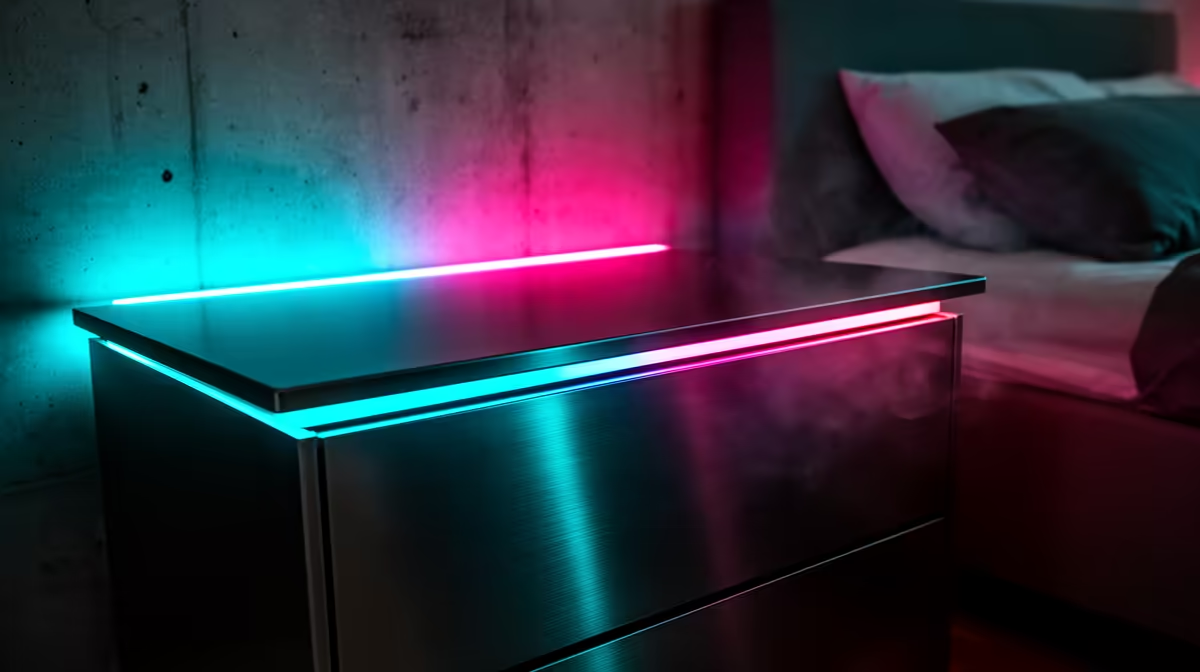
Blue-spectrum light, which appears in almost every RGB colour mode cycle, suppresses melatonin production with documented effect in sleep research. When your bedroom LED panels are cycling through a rainbow or flashing to music at 22:00, your brain registers the blue peaks as a daylight signal and delays sleep onset. In practice, SA university students who game in their rooms until midnight regularly report difficulty sleeping even after they stop gaming because the ambient RGB light keeps their circadian rhythm elevated. The distinction matters: using vibrant multi-colour effects for a gaming session from 20:00 to 23:00 is fine, but leaving those effects running as you try to fall asleep is counterproductive.
When Multi-Color Night Lighting Does Work 💡
There are specific bedroom scenarios where multi-colour night effects are useful. A deep red scene at 100 percent saturation and low brightness (under 30 percent luminance) is commonly used by photography hobbyists for darkroom-adjacent work and has almost no measurable impact on melatonin. A slow-breathing amber or orange pulse at less than 10 percent brightness creates atmosphere without the blue-spike problem of a full RGB rainbow. Some smart LED apps offer a sleep mode or circadian routine that automatically shifts colours and dims the lights on a schedule toward a warm red by 21:00, which is the best of both worlds for a gaming bedroom setup.
Choosing the Right LED Mode for Bedroom Use 🛏️
The most practical bedroom LED setup for SA gamers combines three scene presets: a bright daylight scene at 5000K for study, an amber gaming scene at 2700K for evening play with RGB accents on panels away from the bed, and a deep red or off scene for sleep. Most smart panel systems allow up to 10 saved scenes, so this three-preset arrangement takes five minutes to configure and requires no ongoing management. For students in res or small Joburg apartment setups where the gaming desk and bed share one room, this scene discipline makes a real difference to academic performance by protecting sleep quality during the academic term.
Bedroom Scene Schedule Tip ⚡
Set your smart LED system to automatically switch to the warm red or off scene at the same time each night, even on weekends. Consistent lighting cues reinforce your body's sleep rhythm far more effectively than manually dimming lights when you remember to, which in practice rarely happens on weekends.
FAQ
What is the least disruptive LED colour for sleeping with lights on?
Deep red at low brightness is the least disruptive colour to melatonin production. It provides enough ambient light to navigate a dark room without triggering the alertness response associated with blue and green wavelengths.
Can I use multi-colour effects in my bedroom for gaming and still sleep well?
Yes, as long as you schedule the effects to end at least 30 minutes before you intend to sleep and switch to a warm dim scene for the wind-down period. Apps like Nanoleaf, Govee, and Philips Hue all support time-based scene transitions.
Are LED panels safe to leave on overnight in a closed bedroom?
Yes. LED panels produce negligible heat compared to incandescent or halogen bulbs and have no fire risk at normal operating conditions. The practical concern is sleep disruption from the light itself, not electrical safety.
Want bedroom lighting that works for gaming sessions and healthy sleep?
Evetech stocks smart LED panels with full scene scheduling so you can set up once and let the system do the rest.