Push a fast CoreXY printer hard enough and the limit stops being the motion system and becomes the melt zone. The hotend simply cannot heat plastic quickly enough to feed the speed the machine is capable of. A high-flow nozzle rewrites that ceiling by reshaping how filament melts on its way through the tip, so a printer that was starved for plastic at 300mm/s suddenly has the headroom to use the speed it already had.
Quick Answer
A high-flow nozzle (CHT-style, with a split internal core) can push roughly 2x to 2.5x the volumetric flow of a standard brass nozzle at the same tip diameter, without raising the hotend temperature. If your printer is a fast CoreXY machine and you are running a plain 0.4mm brass tip, the nozzle is almost certainly your real bottleneck. If you print slowly or rarely, it changes nothing worth paying for.
What Volumetric Flow Actually Measures
Print speed is usually quoted in millimetres per second, but that number hides the figure that matters: volumetric flow, measured in cubic millimetres of plastic per second. A nozzle has a maximum rate at which it can melt filament and still extrude it cleanly. Exceed that rate and the molten plastic cannot keep up, the extruder skips, and the print starves.
A standard 0.4mm brass nozzle melts plastic in a single straight channel. Heat reaches the centre of the filament column slowly, so the practical ceiling for many standard hotends sits somewhere around 10 to 15 cubic millimetres per second with common PLA. That is enough for a printer cruising at moderate speeds, but a modern CoreXY machine can move the toolhead far faster than that flow rate can feed.
Why The Tip Diameter Is Not The Story
It is easy to assume a bigger hole means more plastic, and a wider nozzle does raise flow, but it also makes your layer lines coarser and your detail softer. The clever part of a high-flow nozzle is that it lifts the flow ceiling while keeping the same 0.4mm or 0.6mm exit diameter. You get more plastic per second at the same print resolution, which is exactly what a fast printer needs.
How A High-Flow Nozzle Melts Faster
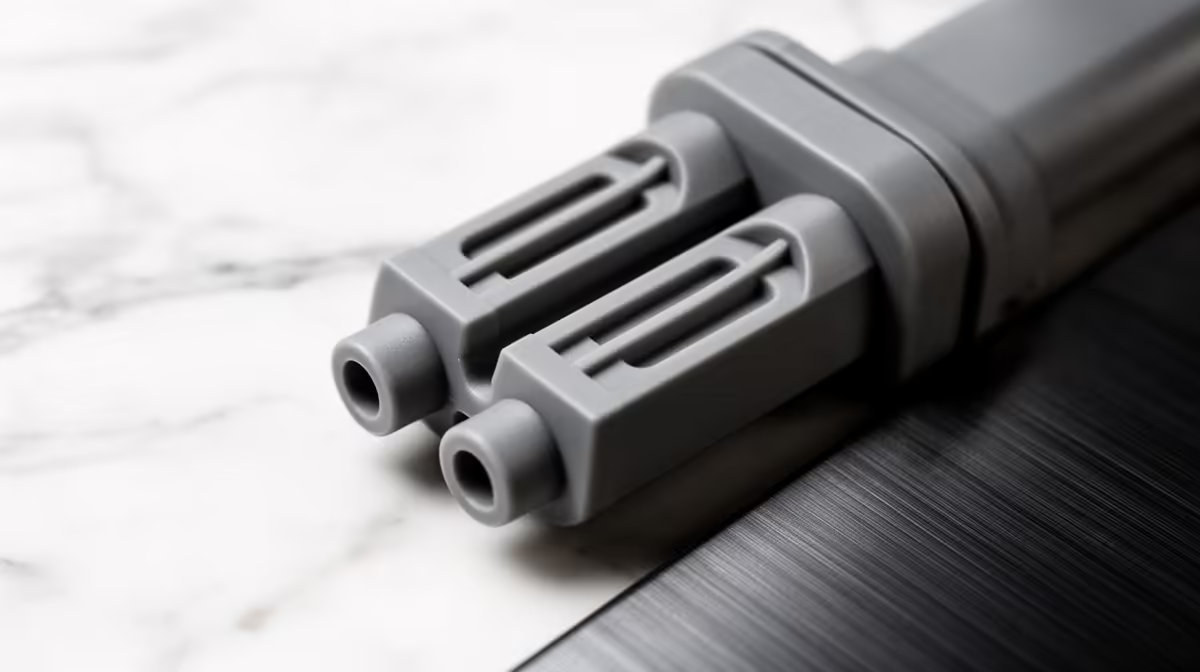
A CHT-style high-flow nozzle splits the incoming filament into multiple smaller channels inside the nozzle body. Dividing one thick column into several thinner streams dramatically increases the surface area touching the hot brass, so heat reaches the core of the plastic far quicker. The melt zone is effectively longer and more efficient, which is why these nozzles can roughly double the flow of a standard tip at the same temperature.
The practical result is that the melting stage stops being the limit. On a well-tuned high-speed printer laying long straight infill lines, a high-flow nozzle can lift the volumetric ceiling toward the 24 to 30 cubic millimetres per second range, depending on hotend, filament and how aggressively you tune.
The Catch: Other Limits Take Over
Removing the melt bottleneck does not make everything instant. Once the nozzle can feed more plastic than before, your real limit becomes whatever comes next: the printer's acceleration, the cooling fans keeping each layer in shape, and the part geometry itself. A model full of short walls and sharp corners never lets the toolhead reach the speed where high flow pays off. The benefit is largest on big, simple, infill-heavy prints.
Who Should Fit One, And Who Should Not
If you own a CoreXY machine or any high-speed printer and you regularly print large functional parts, a high-flow nozzle is the cheapest meaningful speed upgrade available and worth fitting. If you print small detailed miniatures, run a slower bed-slinger, or rarely push past moderate speeds, the standard nozzle is never your limit and a high-flow tip will sit there doing nothing useful.
Abrasive filaments deserve a note: if you print carbon-fibre or glow-in-the-dark materials, look for a hardened steel high-flow nozzle rather than brass, which wears out fast. Browse the full 3D printing hardware range at Evetech to match a printer or upgrade path to the kind of work you actually do.
Fitting And Tuning In Practice
Swapping the nozzle is the easy part. The work is in re-tuning, because a high-flow tip changes how your printer behaves. After fitting, run a temperature tower and a flow-rate calibration to find the new ceiling, then raise your slicer's maximum volumetric speed setting to match. Skipping this step leaves the new nozzle running at the old limits, which is the most common reason people fit one and notice no difference.
You will also want consistent filament feeding, so a quality extruder and clean spool path matter more once flow climbs. For odds and ends to round out the bench, the accessories that move fastest at Evetech are a quick place to find tools and consumables that pair with a printer upgrade.
Frequently Asked Questions
Will a high-flow nozzle make my prints look worse?
No, not on its own. Because the exit diameter stays the same, layer detail is unchanged. Quality only drops if you push speeds so high that cooling cannot keep up, which is a tuning issue rather than a nozzle fault.
Does a high-flow nozzle work on any printer?
It physically fits printers that take the matching nozzle format, but the benefit only appears on machines fast enough to be flow-limited. A slow printer will never reach the flow ceiling where the nozzle helps.
Do I need to print hotter with a high-flow nozzle?
Not necessarily. The whole point is more flow at the same temperature. You may nudge the temperature up slightly at very high speeds to keep the melt consistent, but you are not forced to run hot.
Standard or high-flow for carbon-fibre filament?
Choose a hardened steel high-flow nozzle. Abrasive filaments chew through soft brass quickly, so the wear resistance matters as much as the flow rating for those materials.
How much faster will my prints actually finish?
It depends on the model. Large infill-heavy parts can see a real reduction in print time because they spend most of their time at full flow. Small detailed prints barely change, since they rarely reach the speeds where flow is the limit.
Ready to stop fighting your hotend and let your printer run at the speed it was built for? Explore the full lineup on the 3D printing range at Evetech and match the right machine or upgrade to your workload.