



FSR 4 vs FSR 3.1 for Strategy and sim games in SA
FSR 4 vs FSR 3.1 for strategy and sim games depends on game support, image quality preferences, latency goals, and GPU fit. SA buyers should check the game and hardware path first.
Read moreBrass carries heat beautifully and wears out fast, so filled filament reshapes the orifice within a few spools. A tri-metal nozzle keeps a hard wear surface against the abrasive while still moving heat, and that is the combination the K1C carries at R12,599.
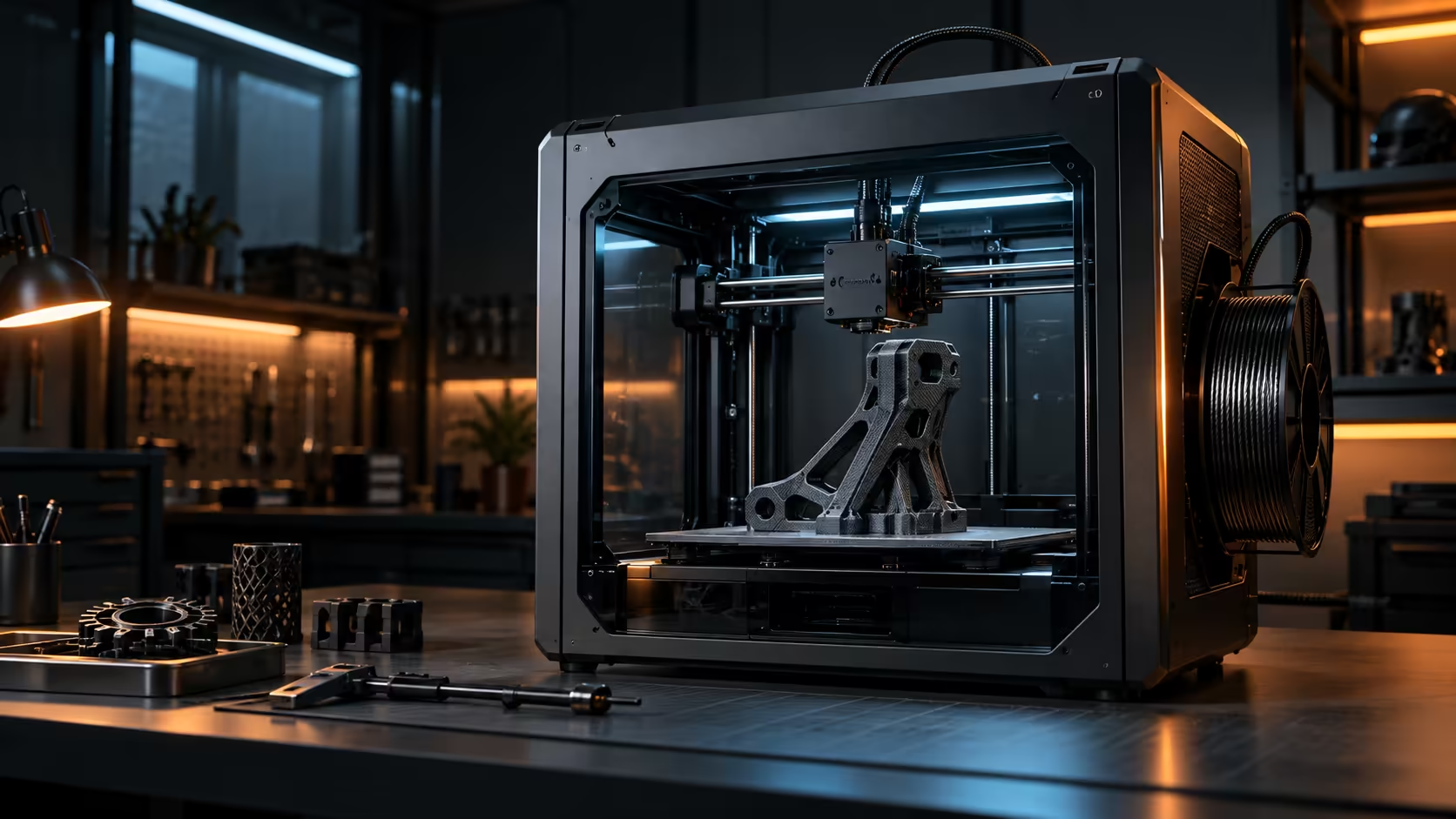
A standard brass nozzle handles most filament without any complaint at all right up until something abrasive enters the picture, and only then does the choice of nozzle stop being a minor, easily overlooked detail. Standard versus tri-metal 3D printer nozzles is exactly this trade-off between heat transfer and wear resistance.
Brass carries heat beautifully into the plastic passing through it, which is why it has been the standard choice for decades, but it wears out fast against anything abrasive, reshaping the orifice within a few spools of filled filament. A tri-metal nozzle keeps a genuinely hard wear surface facing the abrasive material while still moving heat effectively through the rest of the construction, and that combination is exactly what the Creality K1C carries at R12,599.
Brass conducts heat genuinely well, machines easily into a precise 0.4mm orifice, and costs relatively little to produce, which together explain why it remains the standard default nozzle on most printers for ordinary, standard materials. For PLA, PETG and other similar filaments carrying nothing abrasive in them at all, brass performs genuinely excellently and rarely ever needs replacing purely from ordinary wear.
The moment any abrasive filler enters the mix at all, glass fibre, carbon fibre, metallic particles for a decorative finish, that exact same softness that makes brass so easy to machine becomes a genuine weakness instead, since those same abrasive particles wear steadily down through it with every single layer printed.
A single-metal nozzle forces a choice between heat transfer and hardness, since few metals excel at both at once across a working range of 200C to 300C. A tri-metal design splits the job across different materials in the same nozzle: one layer or component optimised for wear resistance where the abrasive filament actually passes, and another optimised for moving heat into the plastic efficiently.
If your filament shelf is entirely PLA and PETG, a standard nozzle serves you well and there is little reason to pay for wear resistance you will not use. The moment carbon-fibre, glass-fibre or abrasive decorative filaments enter the plan, check the nozzle before the first spool goes in, since the wear starts from the very first layer rather than building up gradually to a noticeable point.
A spare is worth owning no matter which type is fitted, since every nozzle wears out eventually. Browse filament options with your printer's nozzle in mind, and check thermal solutions if heat management elsewhere in your setup needs attention alongside the hotend itself.
Not every listing states the nozzle material plainly on the page, and a magnet is genuinely the fastest free test available: brass reads as completely non-magnetic, while some hardened steel variants show a weak but still noticeable pull against it. A typical 0.4mm brass nozzle also weighs noticeably less on a kitchen scale than a hardened steel or tri-metal nozzle of the same size, which is a useful third check if a magnet is not on hand. This is not foolproof on its own, since several hardened alloys and tri-metal constructions are also non-magnetic, but a strong pull rules brass out immediately and is worth doing before printing anything abrasive on an unfamiliar or second-hand machine.
Visual colour is a weaker but still genuinely useful second check: brass has a distinct, recognisable yellow-gold tone, while hardened steel and most tri-metal designs read a plain silver or grey instead. Combine both checks together rather than relying on either one alone, and when in real doubt, treat an unidentified nozzle as brass until proven otherwise, since the downside of being wrong that particular way is a wasted nozzle, not an entire wasted print full of abrasive, genuinely expensive filament.
Order at least 2 spare nozzles of whichever type genuinely suits your main material, not just a single one, since even one spare still leaves a project completely stalled the moment that spare itself wears out mid-run with nothing left to replace it. For a workshop running abrasive filament every week, 4 to 6 spares kept properly in stock at any given time is a considerably more realistic buffer against the lead time on a fresh order arriving late. Check nozzle specifications carefully across the 3D printer range before ever assuming spares from one specific machine fit another different one.
No, a standard nozzle handles non-abrasive filaments like PLA and PETG well without any wear-related downside.
Often within a few hundred grams to a couple of kilograms, depending on how abrasive the specific blend is.
It is engineered to keep heat transfer close to brass levels while adding wear resistance where the abrasive material actually contacts the nozzle.
Generally yes, provided the replacement nozzle correctly matches the machine's mounting thread and size, which is always worth confirming carefully before ordering any spare part.
Try a magnet first, since brass is non-magnetic while some hardened steels show a weak pull, then check colour, brass reads yellow-gold while hardened steel and tri-metal designs read silver or grey.
At least 2 as a bare minimum, rising to 4 to 6 for a workshop running abrasive filament weekly, since a single spare still leaves a project stalled once it wears out with nothing left to swap in.
Often yes, since ordering several nozzles together at once usually costs noticeably less per unit than repeat single orders do, and it avoids a delivery wait becoming the actual reason a project stalls partway through completion.
Not always reliably; some hardened alloys and tri-metal constructions are entirely non-magnetic too, so treat a weak or completely absent pull as genuinely inconclusive rather than firm proof the nozzle in question is actually brass.
Planning to print anything abrasive on your printer? Match the nozzle to the filament before the first layer, not after it wears out.
No, a standard nozzle handles non-abrasive filaments like PLA and PETG well without any wear-related downside.
Often within a few hundred grams to a couple of kilograms, depending on how abrasive the specific blend is.
It is engineered to keep heat transfer close to brass levels while adding wear resistance where the abrasive material actually contacts the nozzle.
Generally yes, provided the replacement nozzle correctly matches the machine's mounting thread and size, which is always worth confirming carefully before ordering any spare part.
Try a magnet first, since brass is non-magnetic while some hardened steels show a weak pull, then check colour, brass reads yellow-gold while hardened steel and tri-metal designs read silver or grey.
At least 2 as a bare minimum, rising to 4 to 6 for a workshop running abrasive filament weekly, since a single spare still leaves a project stalled once it wears out with nothing left to swap in.
Often yes, since ordering several nozzles together at once usually costs noticeably less per unit than repeat single orders do, and it avoids a delivery wait becoming the actual reason a project stalls partway through completion.
Not always reliably; some hardened alloys and tri-metal constructions are entirely non-magnetic too, so treat a weak or completely absent pull as genuinely inconclusive rather than firm proof the nozzle in question is actually brass.
FSR 4 vs FSR 3.1 for strategy and sim games depends on game support, image quality preferences, latency goals, and GPU fit. SA buyers should check the game and hardware path first.
Read more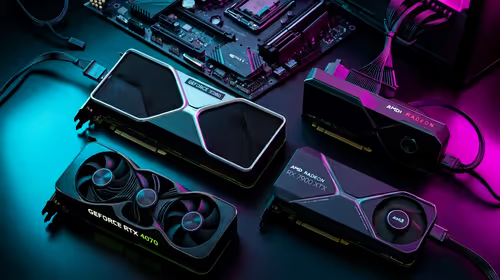
RTX 5060 too expensive? Cheaper SA alternatives should solve the exact workload without overbuying. Compare nearby options by GPU tier, VRAM, cooling, and PSU headroom, local warranty path, and total build balance before moving to a product page.
Read more
Best mechanical keyboard in Cape Town should be shortlisted around the job it must do. South African buyers should compare switch feel, latency, layout, and software, warranty path, and upgrade room before treating any pick as best.
Read more
Skip the RTX 4080 for content creation when a balanced SA workstation gives enough acceleration, VRAM, and cooling. Weigh creator GPUs by software support, export workloads, monitor resolution, and whole-PC gains.
Read more
Ryzen 9 7900X3D value for SA buyers depends on gaming needs, AM5 cost, and how often you run heavy productivity tasks. Compare honest pros and cons before choosing it over simpler Ryzen 7 or Ryzen 9 options.
Read more
Should SA gamers buy the Hall Effect keyboards? should be shortlisted around the job it must do. South African buyers should compare switch feel, latency, layout, and software, warranty path, and upgrade room before treating any pick as best.
Read more
Windows taskbar notification badges can be shown or hidden in Taskbar behaviours. This changes the small app indicators, not the underlying messages. Choose a calmer desktop while keeping a deliberate routine for checking important conversations and app updates.
B850 vs B650 for Streaming on Twitch and YouTube comes down to CPU path, motherboard features, memory support, I/O needs, and upgrade timing. SA buyers should match the choice to their setup instead of assuming one option always wins.

Ryzen 7 9700X pros, cons, and what SA gamers need start with balanced CPU speed and AM5 value. It can suit gaming and everyday creation, but the right choice depends on GPU pairing, DDR5 costs, and upgrade budget.
Content Warning PC build under R80,000 should balance GPU, CPU, RAM, SSD, and cooling around the game's needs. For SA buyers, treat the budget as a planning tier, not a live quote, and compare parts before ordering.
Windows taskbar notification badges can be shown or hidden in Taskbar behaviours. This changes the small app indicators, not the underlying messages. Choose a calmer desktop while keeping a deliberate routine for checking important conversations and app updates.

Windows USB device in use can mean a program still has the drive open. Finish transfers and close files before retrying ejection. Better performance caching requires safe removal; a replacement drive is not the first fix for an open-file warning.

Windows Nearby Sharing not working starts with feature, Bluetooth and visibility checks on both PCs. My devices only depends on matching Microsoft accounts. Test a small harmless file before buying networking hardware or changing your home router.

Windows hardware reserved RAM is different from memory used by applications. Compare installed memory with firmware detection and the usable amount before buying modules. Reservations and reporting limits vary by system; no universal setting restores every byte.

ROG Ally X may beat the LCD Steam Deck for SA gamers who prioritise newer handheld hardware, Windows flexibility, and stronger specs. Durban buyers should compare battery, screen, game support, price tier, and comfort.
FSR 4 vs FSR 3.1 for strategy and sim games depends on game support, image quality preferences, latency goals, and GPU fit. SA buyers should check the game and hardware path first.
Do You Actually Need a USB DAC for My Gaming Headset needs a cautious buyer checklist. Compare specs, real use case, compatibility, warranty, budget, and upgrade timing before treating it as the right SA choice.
RTX 5060 too expensive? Cheaper SA alternatives should solve the exact workload without overbuying. Compare nearby options by GPU tier, VRAM, cooling, and PSU headroom, local warranty path, and total build balance before moving to a product page.