

Complete Guide: Setting Up AIO Liquid 420mm
Setting Up AIO Liquid 420mm. Tested & verified settings for best FPS and visual quality on SA hardware budgets.
Read moreUnderstand the streaming laws South Africa has for creators. This guide covers copyright, music licensing, and how to avoid legal trouble. Stay safe and stream smart! ⚖️🎮 Learn the essentials to protect your channel and grow your audience without risking fines or potential bans.
So, you’re live on Twitch, the chat is popping, the vibes are lekker… and suddenly, your VOD is muted or you get a dreaded copyright strike. For South African creators, understanding the rules of the road can feel tougher than a FromSoftware boss fight. This guide breaks down the essential streaming laws South Africa has in place (and some it doesn���t) to help you broadcast with confidence and keep your channel growing. 🚀
First things first: South Africa has its own Copyright Act, but when you stream on global platforms like Twitch, YouTube, or Kick, you’re also playing by their rules. These are heavily influenced by international laws like the USA's Digital Millennium Copyright Act (DMCA). This means that even if you're streaming from Cape Town, a copyright holder in California can issue a takedown notice against your channel.
The biggest culprits are usually music, movie clips, and even some in-game assets. While streaming games is generally accepted, the licensed music within them is often a grey area. A solid gaming rig is essential to juggle the game, your streaming software, and royalty-free music sources without dropping frames. For a hassle-free start, checking out some powerful pre-built PC deals can get you online with a stable machine from day one.
This is where most Mzansi creators get tripped up. Playing your favourite Spotify playlist in the background of your stream is a near-certain way to get a copyright strike. Why? Because you (and the platform) don't have a public performance license for those tracks.
Organisations like the Southern African Music Rights Organisation (SAMRO) collect royalties for artists, and using commercial music without permission is a direct infringement. While the enforcement of South African streaming regulations on individual streamers is still evolving, the platforms themselves are cracking down hard.
Your best bet is to use royalty-free music services.
Getting started doesn't have to break the bank. You can find excellent PCs under R20k that have more than enough power to handle streaming and a browser full of royalty-free music tabs.
Before you stream a game, take a quick look at its End-User License Agreement (EULA). Most big developers (like Riot Games, Blizzard) are happy for you to stream their games, but some smaller indie titles or games with heavily licensed soundtracks might have restrictions. A quick Google search for "[Game Name] streaming policy" usually gives you the answer.
Okay, let's talk about the money. Once you hit affiliate or partner status, you'll start earning from subs, bits, and donations. The big question is: do you have to declare it to SARS? The short answer is yes. In South Africa, income is income, regardless of its source.
Treat your stream like a small business. Keep a record of all your earnings and any expenses related to your stream (new hardware, software subscriptions, etc.). While the specific streaming laws for South Africa around creator income are still being formalised, general tax principles apply. When in doubt, it’s always best to chat with a tax professional. Upgrading your setup becomes a business expense, and a robust machine from our range of all-Intel PC deals can be a smart investment in your channel's future.
Staying on the right side of the law isn't just about avoiding bans; it's about professionalism. A creator who respects copyright and manages their channel like a business is more likely to attract brand deals and build a loyal community. A key part of this is having reliable hardware that doesn't let you down mid-stream.
A powerful CPU is critical for encoding your stream while gaming smoothly. Whether you're a fan of Team Blue or Team Red, ensuring your processor can handle the workload is non-negotiable for a quality broadcast. Many top streamers rely on multi-core processors, and the options available in our all-AMD Ryzen PC deals are famous for their excellent multi-tasking performance, making them perfect for creators. By investing in your setup, you're investing in a stable, professional, and legally compliant streaming career.
Ready to Stream Without the Stress? Navigating the rules is part of turning your passion into a profession. The other part is having gear that just works. A powerful, reliable PC means less time troubleshooting and more time creating amazing content. Explore our massive range of Gaming PCs and find the perfect rig to launch your streaming career.
Generally, no. Using copyrighted music on Twitch in South Africa without a proper license can lead to DMCA takedowns, channel strikes, and muted VODs. Always use royalty-free music.
Penalties for copyright infringement in South Africa can include significant fines and even imprisonment for severe cases, alongside potential civil claims for damages from the copyright holder.
South Africa has a 'fair dealing' provision, which is more restrictive than the US 'fair use' policy. It primarily applies to criticism, review, and news reporting, not general entertainment.
The law is evolving, but currently, a TV licence is required for any device capable of receiving a broadcast signal. This interpretation can include devices you use for streaming.
To stream legally, always ensure you own the rights or have explicit licenses for all music, video clips, and images used in your broadcast. This protects you from copyright claims.
South Africa's Copyright Act and the Electronic Communications and Transactions Act (ECTA) govern digital copyright and takedown notices, serving a similar function to the DMCA in the US.
Setting Up AIO Liquid 420mm. Tested & verified settings for best FPS and visual quality on SA hardware budgets.
Read more
Intel XTU Download & Setup Guide: Intel CPU. Clear setup instructions with SA-specific considerations, troubleshooting tips & recommended components.
Read more
Cyberpunk 2077 Max Settings on RTX 4090. Tested & verified settings for best FPS and visual quality on SA hardware budgets.
Read more
The Complete Guide to GPU. Everything you need to know with SA pricing, step-by-step instructions & expert recommendations.
Read more
NVCleanstall Download & Setup Guide: NVIDIA. Clear setup instructions with SA-specific considerations, troubleshooting tips & recommended components.
Read more
to Driver Installation for Beginners. Everything you need to know with SA pricing, step-by-step instructions & expert recommendations.
Read more
AMD RX 9050 XT: Rumoured Specs, Price & Release. SA-focused analysis with local pricing data, real-world insights & actionable buying advice.
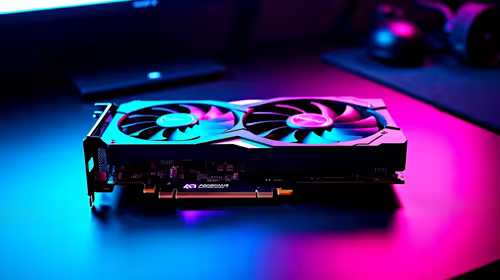
Can RTX 4080 Super Run AI Workloads for SA Developers Detailed answer with SA data, expert analysis & practical recommendations for local buyers.
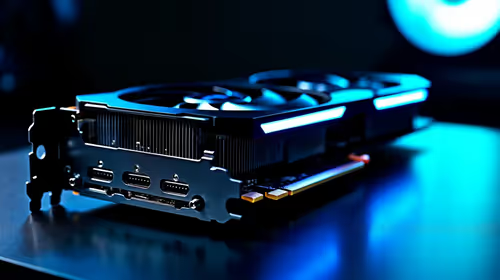
Can RTX 4090 Run AI Workloads for SA Developers Detailed answer with SA data, expert analysis & practical recommendations for local buyers.
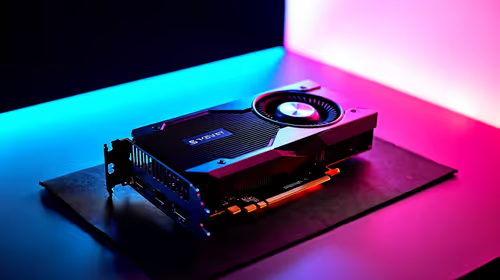
Top Settings for Intel Arc B580 at Ultrawide 1440p picks evaluated on performance, value & SA availability with current Rand pricing from Evetech.
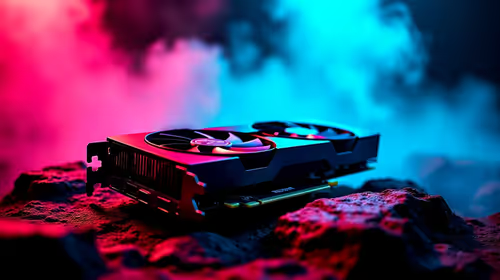
RTX 4060 CS2 Low Settings at 1080p: FPS Results. Real-world benchmark data, FPS numbers & performance analysis. What SA gamers can actually expect.

Visual Artifacts: Possible GPU Issue Issue #1. Diagnosis steps, proven fixes & when to seek professional help. SA-specific support info included.
Can the RTX 4090 Handle 1440p 144Hz Gaming. Performance testing verdict with real data & practical recommendations for SA buyers.
Top ASUS GPU Under R15000 picks evaluated on performance, value & SA availability with current Rand pricing from Evetech.
GTA 6 Max Settings on RTX 5070. Tested & verified settings for best FPS and visual quality on SA hardware budgets.
Cyberpunk 2077 Max Settings on RTX 5080. Tested & verified settings for best FPS and visual quality on SA hardware budgets.
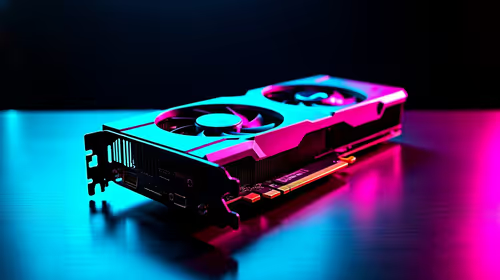
Starfield Max Settings on RTX 5070 Ti. Tested & verified settings for best FPS and visual quality on SA hardware budgets.
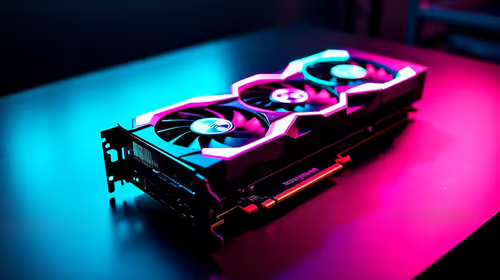
Top RTX 5090 Under R5000 picks evaluated on performance, value & SA availability with current Rand pricing from Evetech.