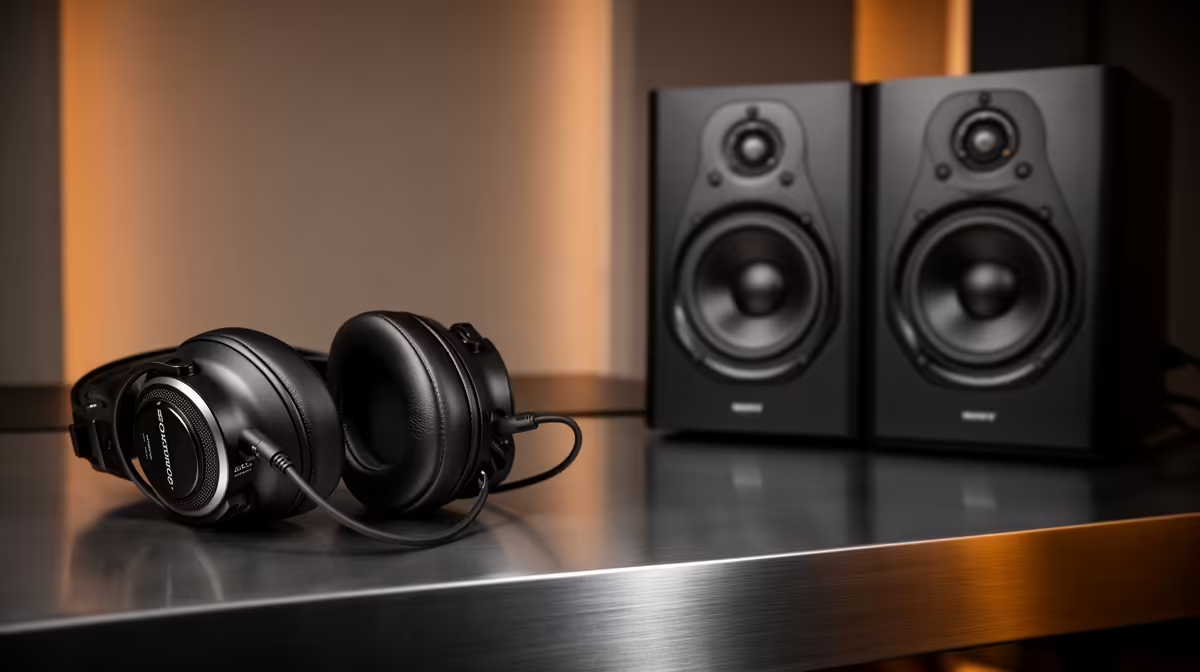
A mix that sounds perfect through one set of ears can fall apart the moment it plays back somewhere else, and the choice between studio monitors vs headphones for mixing is usually the reason why. Monitors put your mix into a real room, where the sound bounces off walls and reaches both ears the way an audience would hear it. Headphones seal the room out entirely, feeding each ear its own channel with surgical detail. Neither is automatically more honest. Each tells you a different kind of truth, and each lies in a predictable way.
Quick Answer
Studio monitors give the most natural stereo image and the most realistic sense of depth, but only in a room with some acoustic treatment, since reflections otherwise distort what you hear. Headphones give consistent, portable detail that ignores the room, but they exaggerate stereo width and can fool you into a mix that collapses on speakers. The strongest workflow uses both and cross-checks between them.
What studio monitors reveal
Monitors interact with your room, and that interaction is the point. Sound leaves the speakers, reflects off surfaces, and arrives at both ears combined, which is exactly how listeners experience music on real systems. That gives you a genuine sense of width, depth and placement in the stereo field, the spatial information you need to judge reverb tails, panning and how instruments sit around each other.
The cost is the room. Untreated walls create reflections and standing waves that colour what you hear, so even capable monitors can mislead you in a bare space. A reflective bedroom can make the bass sound boomy in one spot and thin in another. This is why monitoring on speakers is most trustworthy once you have added some treatment, even soft furnishings and a panel or two behind the listening position help. A monitor rig also costs more once you factor in stands, an interface and treatment.
What headphones reveal
Headphones remove the room from the equation. Each ear hears only its own channel, with no reflections and no crosstalk, so what you hear is identical whether you are in a treated studio or a noisy flat. That consistency is a real advantage for anyone without a good listening space, and it makes headphones excellent for catching fine detail: small clicks, pops, reverb tails, edit seams and low-level distortion that can hide behind a room on speakers.
The downside is the way they handle stereo. Because there is no natural crosstalk between left and right, the stereo image feels wider than it really is. Mix on headphones alone and you can spread elements too far apart, only to hear them snap inward when the track plays on speakers. Sounds also appear to sit "inside your head" rather than out in front of you, which makes depth and front-to-back placement harder to judge confidently.
When to reach for each
Use monitors when you are shaping the overall balance, judging low end, and making decisions about space and width, assuming your room has at least basic treatment. Use headphones for detailed editing, for checking mono compatibility and subtle artefacts, and whenever the room is working against you, late at night, in a shared space, or anywhere untreated.
Cross-checking is the real skill
The professionals who get translatable mixes do not pick a side. They build the balance on one, then flip to the other and listen for what changed. If the stereo image collapses going from headphones to speakers, it was too wide. If the bass disappears on headphones after sounding full on monitors, the room was flattering you. Switching often is how a mix learns to survive earbuds, car speakers and a laptop alike. Quality closed-back models are ideal here because they isolate you from the room while you check, and the headphones and headset range at Evetech covers options suited to this kind of reference listening.
Building translation habits that actually work
The final test for any mix is how it holds up across radically different systems. Engineers who produce consistently translatable results build a set of reference points: they know how a track they trust sounds on every system they own, which tells them immediately when their mix is departing from reality. Checking on laptop speakers and earbuds before you call a mix done is not a sign of insecurity; it is the professional routine. A mix that survives a phone speaker almost always survives everything else.
Mono compatibility is part of the same check. Play your mix in mono and listen for instruments that vanish or phase out of each other. Most streaming listeners will hear your track on a Bluetooth speaker with limited stereo separation, so a mono collapse is a real-world problem, not just a technical formality.
Choosing your first serious setup
If budget forces one purchase, a good pair of studio headphones is the more forgiving starting point, because it gives reliable detail without demanding a treated room, costs less than a full monitor rig, and works anywhere. Move to monitors once you can give them a half-decent acoustic environment, otherwise much of their advantage is lost to reflections. When you are ready to compare specific models, the top-selling headsets at Evetech are a useful shortlist of what local creators are actually buying.
Positioning matters as much as the speakers
Once you do add monitors, place them at ear height and arrange them so the two speakers and your head form an equal triangle, with each speaker aimed at your ears. That single placement step does more for accuracy than most acoustic upgrades. If the room is untreated, a rug on the floor and curtains on hard walls absorb the first reflections that distort your low end, and both cost nothing if you already have them.
Frequently Asked Questions
Can I mix professionally on headphones alone?
You can produce a strong mix on headphones, especially with practice and a model you know well, but the exaggerated stereo width is a real risk. Cross-checking on any pair of speakers before you finalise is strongly advised.
Do I need to treat my room before buying studio monitors?
For monitors to be trustworthy, yes, at least basic treatment. Reflections and standing waves in a bare room distort the response, so an untreated space undermines much of what monitors offer over headphones.
Why does my mix sound wider on headphones than on speakers?
Headphones feed each ear only its own channel with no crosstalk, so the stereo image is artificially exaggerated. Speakers blend left and right naturally in the room, which narrows the perceived width.
Are open-back or closed-back headphones better for mixing?
Open-back models often sound more natural for critical listening, while closed-back models isolate you from the room and from spill, which suits untreated or shared spaces. Many engineers keep both for different tasks.
What is the single most important habit for translatable mixes?
Switching between monitoring sources frequently. Building a mix on one device and checking it on at least one other reveals the flattery and the lies in each, which is what makes a mix hold up across different playback systems.