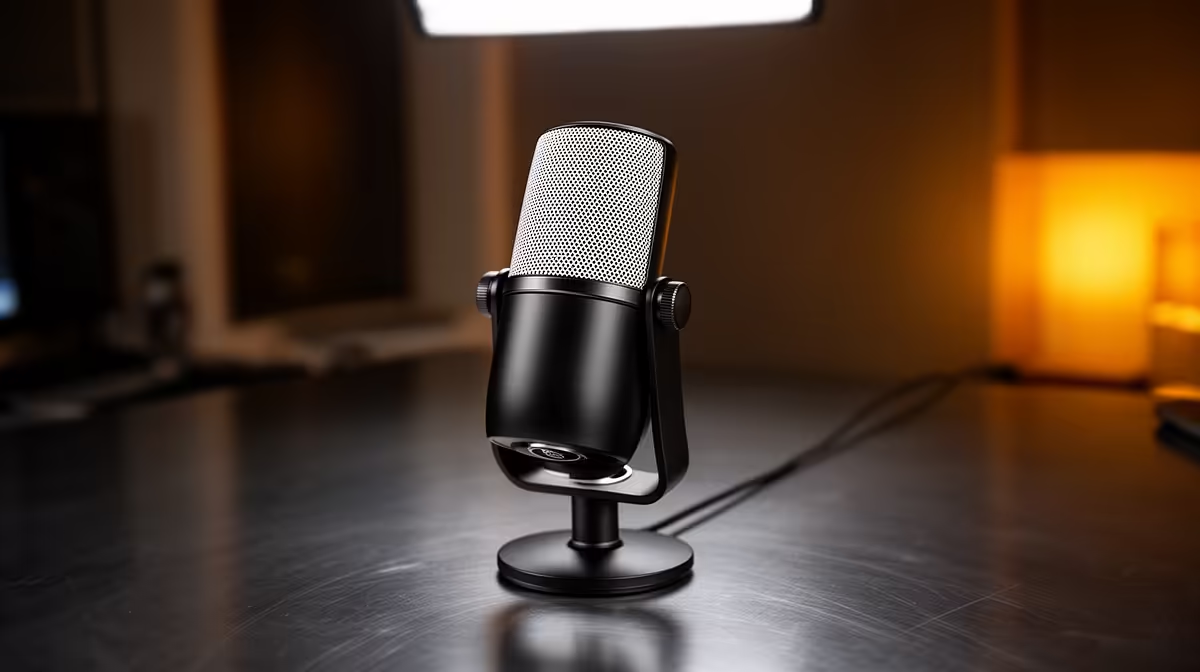
The mic you choose matters, but so does its sensitivity to where your voice is not. Supercardioid vs standard cardioid pickup patterns for desktops is a question of trade-offs: how tightly you want the mic to listen, how noisy your room is, and how precisely you are willing to aim every time you sit down to record. Both patterns do the same job in a quiet, treated studio. In the real world, the difference becomes audible fast.
Quick Answer
Standard cardioid captures a wider front arc and ignores the rear entirely, making it forgiving for desktop use. Supercardioid narrows the front lobe, rejects sides more aggressively and adds a small rear pickup. Choose cardioid for casual setups and supercardioid for genuinely noisy environments where side rejection matters more than flexibility.
🎯 What the Pickup Pattern Actually Controls
A microphone's polar pattern is a map of where it listens and how well. It is drawn as a circular graph where the capsule sits at the centre, and the boundary lines show the relative sensitivity at every angle.
Standard cardioid gets its name from the heart-shaped curve it produces. The front arc covers roughly 130 degrees of focused capture, the sensitivity rolls off as you move to the sides, and the rear dead zone rejects sound at roughly 25dB below the front. That rear null is the pattern's biggest practical advantage for desktop work: anything directly behind the capsule, a noisy PC tower, a television, a partner talking across the room, sits in the quietest part of the mic's hearing.
Supercardioid tightens the front lobe to about 115 degrees and achieves stronger side rejection, around 10 to 12dB better than standard cardioid at the 90-degree mark. The trade-off is a small but real rear lobe. Where a standard cardioid treats the 180-degree rear position as near-silence, a supercardioid picks up a modest fraction of that angle. In practice, this means the classic streaming desk setup, PC tower sitting behind the mic, needs a rethink. The fan noise that a cardioid ignores will bleed slightly into a supercardioid pointed at you.
The Numbers Behind the Patterns
Most manufacturers publish sensitivity figures for side rejection (90 degrees) and rear rejection (180 degrees) separately. A standard cardioid typically rejects around 16 to 18dB at 90 degrees. A supercardioid pushes that to 25 to 28dB. The rear figure flips: cardioid hits 25dB or better while supercardioid drops to around 8 to 12dB.
Every 6dB of rejection roughly halves the perceived loudness of a sound source. The extra 10dB of side rejection from a supercardioid is meaningful in a room with traffic, fans or an air conditioner humming to the left or right of the desk.
🔧 How Desktop Environments Shape the Choice
Home desks in South Africa are rarely acoustically treated spaces. Most setups live in a spare bedroom, a shared lounge, or a flat with tiled floors and bare walls. These rooms share a few problems that pickup patterns affect differently.
Side noise is the first. A PC with a 360-degree airflow cooler sits beside the monitor, off to one side of the mic. Keyboard and mouse sounds arrive from slightly below and in front. In a busy Joburg flat, street traffic bleeds through windows at roughly 90 degrees to the desk. Supercardioid handles all of these better, pressing its narrow front lobe toward the voice and rejecting the wider angles more firmly.
Rear noise is trickier. The PC tower at the back of the desk, the door opening behind you, the room echo bouncing off the wall behind the chair, all of these land near the 180-degree rear position. Here standard cardioid has the cleaner null. A supercardioid's rear lobe picks up a small but measurable signal from those sources.
Head movement is the third variable. During a long stream or a podcast episode, you shift, look at a second monitor, lean forward to read chat, or turn to react. Standard cardioid's wider front arc absorbs those small rotations without audible level change. Supercardioid's tighter lobe means a 15-degree off-axis lean produces a noticeable dip in your recorded volume, which is frustrating to fix in post.
Treating the Room vs Choosing the Pattern
The pattern choice interacts with acoustic treatment. A room with a rug, curtains and a full bookshelf has far less high-frequency echo than a bare one, which reduces the advantage supercardioid's side rejection buys you. A treated room can make standard cardioid sound nearly as clean as a supercardioid in a raw space. If your room is already soft and quiet, standard cardioid is the simpler and more forgiving answer. If you cannot treat the room and noise arrives from the sides, supercardioid earns its tighter aim.
⚡ Positioning Strategy for Each Pattern
The pattern you choose changes how you mount and aim the mic.
A standard cardioid can sit 15 to 20cm in front of your mouth, angled slightly downward from above or placed level with the face. The wide capture arc gives you latitude. You can suspend it slightly off-axis to kill plosives without the voice thinning, and minor head turns will not drop the level noticeably.
Supercardioid demands more precision. Aim it directly at your mouth and keep head movement minimal. Positioning it on a boom arm that allows you to lock the angle is more important here than with a standard cardioid. Locks and adjustable knuckles on a metal arm help because you can dial the angle in once and rely on it session after session.
For both patterns, keep the capsule away from the rear of the PC case if possible. This matters more for supercardioid, but the general rule of keeping fan exhaust out of any live mic position applies to both.
Pro Tip ⚡
Before committing to a mic, record 30 seconds of room noise with the gain up and listen carefully to which direction your loudest background sounds come from. If they arrive from the sides, supercardioid is the justified upgrade. If most noise comes from behind you or the room is generally quiet, standard cardioid is the more practical pick and the more forgiving one to live with.
🧠 Which Pattern Wins for Specific Desktop Use Cases
Different desk setups benefit differently. Here is how the choice plays out across the most common South African streaming and recording scenarios.
Solo streamers on a quiet desk in a carpeted room, with the PC tower tucked beside the monitor and a headset for audio monitoring: standard cardioid fits naturally. The wide arc keeps the voice steady during animated reactions, the rear null handles the tower, and there is no penalty for leaning back.
Podcasters recording in an open-plan space or a room with hard floors and echoing walls: supercardioid earns its place. The tight front lobe focuses the capsule on one voice while rejecting chairs scraping at 90 degrees and ambient voices entering from the sides.
Multi-speaker setups with two hosts facing each other across a table: standard cardioid on each mic with careful positioning keeps the opposing speaker in the rear null. Supercardioid could improve side rejection but risks the rear lobe catching the other person's voice at certain angles.
Voice actors doing close-mic work in a padded space: either pattern works. The room is treated and the capsule is close, so the choice comes down to personal preference for tonal character.
Frequently Asked Questions
What is the core difference between supercardioid and standard cardioid?
Standard cardioid captures a wide front arc of roughly 130 degrees with a clean rear null, making it forgiving for desktop use where head movement is normal. Supercardioid narrows that front arc to around 115 degrees, delivers stronger side rejection by about 10 to 12dB, but trades the clean rear null for a small rear lobe. The choice is focus versus flexibility.
Which pattern rejects side noise better?
Supercardioid, by a meaningful margin. It pushes side rejection to around 25 to 28dB at 90 degrees versus a standard cardioid's 16 to 18dB. In a desk environment where fans, traffic or keyboard noise arrive from the sides, that extra attenuation is audible. If noise comes primarily from behind rather than beside you, the standard cardioid's cleaner rear null may outperform it.
Is standard cardioid easier for beginners?
Yes. The wider capture arc means small head movements, looking at a second monitor or leaning slightly back during a long session, do not produce noticeable level drops. You can position it with reasonable accuracy and trust it to stay consistent. Supercardioid's tighter lobe requires more deliberate aim and consistent mic discipline that beginners often underestimate until they hear the recordings.
Does supercardioid pick up sound from behind?
It does. The small rear lobe picks up a fraction of sound arriving from directly behind the capsule. For most desks this means slight fan noise from a PC tower or a door behind the chair. Keep loud rear sources away from the back of the mic, and a supercardioid still outperforms a standard cardioid in noisy side environments.
How do I decide between them for my specific desk setup?
Start by identifying where your loudest background noise comes from. Side noise from fans, air conditioning or street traffic points toward supercardioid. A quieter room or noise arriving from behind the chair points toward standard cardioid, which handles head movement better and simplifies positioning.
Ready to pick the right microphone for your desk?
Browse the full condenser and dynamic microphone range and find the capsule pattern that suits your room, your setup and your recording style.