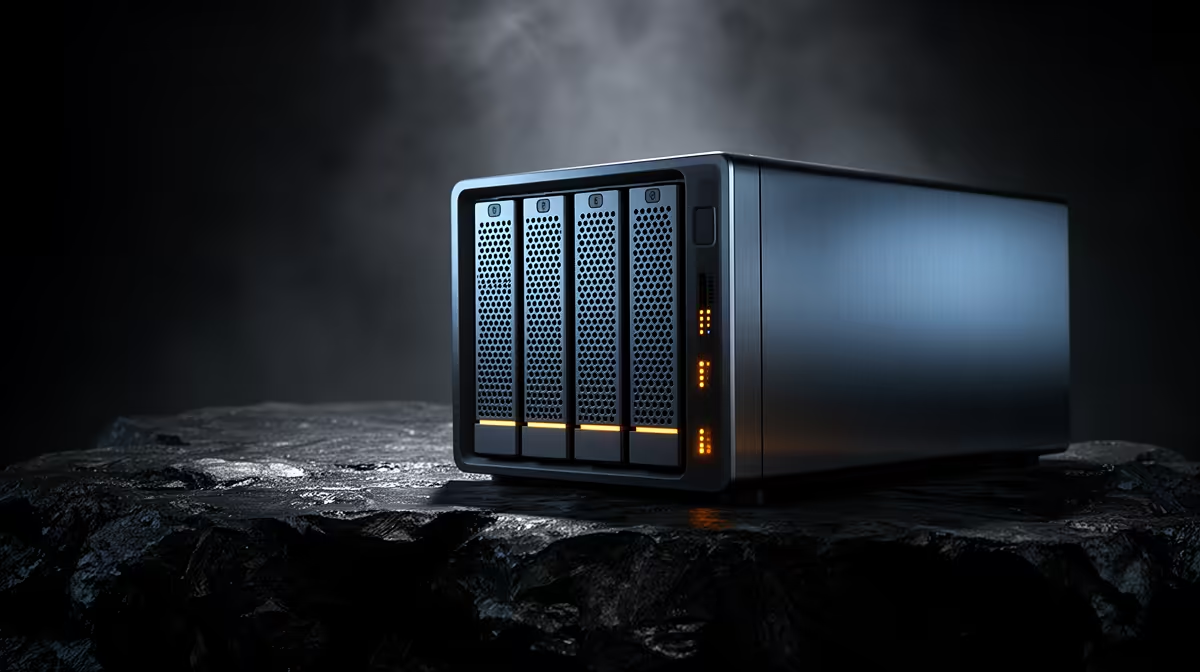
Pick a home NAS and the brand fight that matters most is the software it runs every day. Synology DSM is the most polished NAS operating system on the market, refined over more than two decades of continuous development. QNAP's QTS exposes more raw hardware capability and tends to deliver better value on media-server builds where transcoding muscle counts. The right answer depends on whether you prize a frictionless interface or flexible, harder-working hardware.
Quick Answer
Choose Synology DSM for the cleanest, most polished software, the best first-party apps, and the deepest support community. Choose QNAP QTS for stronger hardware value and better Plex transcoding, with the QNAP TS-464 standing out thanks to an Intel quad-core chip with integrated graphics. DSM wins on ease; QTS wins on power and media value.
Two operating systems, two design mindsets
DSM and QTS are both among the most user-friendly NAS platforms you can buy, but they think differently. Synology's DSM feels closest to a desktop operating system, clean, restrained, and approachable, hiding complexity behind a tidy interface. It is the system to hand someone who wants their files, photos and backups to simply work without reading a manual.
QTS borrows more from the Android and Windows world. It shares most of DSM's core functionality but is not shy about surfacing technical detail and options. That makes it more flexible and more capable in expert hands, at the cost of a slightly busier, more intimidating first impression. Neither is wrong; they suit different temperaments. You can weigh the enclosures running each across the diskless NAS storage range.
Plex and media: QNAP's strong suit
Why transcoding favours QNAP
If your NAS will spend its life as a Plex media server, QNAP generally has the edge. QNAP units tend to be more efficient at transcoding than equivalent Synology boxes, largely because more of their models pair an Intel chip with an integrated GPU that handles video re-encoding in hardware. That hardware transcoding is what lets a NAS convert a 4K file on the fly for a device that cannot play the original format.
The TS-464 as the Plex pick
The QNAP TS-464 is the standout here. It packs an Intel quad-core processor with integrated graphics, four drive bays and M.2 slots, and that integrated GPU is exactly what efficient transcoding needs. It comfortably handles demanding streams, including 4K transcoding to client hardware that requires it, which makes it a natural home-server heart for a media-heavy household.
Where Synology pulls ahead
Synology's lead is software polish and ecosystem depth. After more than two decades of development, DSM's first-party apps for photos, backups, snapshots and surveillance feel finished and consistent in a way few rivals match. For most home and small-business users, that app quality is the single strongest reason to choose the brand.
The support picture reinforces it. Synology's huge community means that when something goes wrong, a fix has usually already been documented somewhere. QNAP counters with greater breadth and technical depth in its app catalogue, appealing to users who want to push the hardware, but it asks more of you to get there. For a set-and-forget family server, DSM's polish is hard to beat, and pairing it with fast storage is where the SSD best sellers come in for caching or an all-flash build.
Security Track Record
This is one area where the two brands diverge noticeably. Synology has a strong security reputation, patches quickly when vulnerabilities are found, and actively maintains a threat intelligence programme. QNAP has had a rougher history: several serious ransomware campaigns, including the Qlocker attack, specifically targeted QNAP devices exposed to the internet. Most of those incidents exploited default ports or unpatched firmware, and they are avoidable with proper hardening, but the pattern is worth knowing about. If you plan to expose any NAS port to the internet, both platforms need careful firewall configuration, but Synology's safety record makes it the less anxious choice for less experienced users.
Backup and Snapshot Capabilities
DSM's backup tooling remains one of the clearest reasons to choose Synology. Hyper Backup creates versioned backups to external drives, a remote NAS, or cloud targets. Active Backup for Business consolidates PC, Mac, and virtual machine backups into one agent-based console with an incremental-forever approach that is surprisingly capable for a no-licence-fee tool. Snapshot Replication gives you near-instant point-in-time recovery on Btrfs volumes, which is particularly useful if a cryptolocker ever touches your mapped share.
QNAP counters with its own HBS 3 backup app, which is feature-rich but takes more effort to configure correctly. QNAP also supports snapshots on Btrfs pools and offers Snapshot Replica for replication between two QNAP units. For advanced users the breadth is impressive; for those who want something to just work, DSM's first-party tools have the smoother experience.
Expandability and PCIe Options
QNAP leans harder into hardware expandability. Many TS-x64 and TS-x73 series models include a PCIe slot, letting you add a 10GbE card, a graphics card for transcoding, or additional storage interface. The TS-464 includes M.2 slots and a PCIe 3.0 x2 slot for adding a 10GbE adapter or additional NVMe storage. That flexibility is genuinely useful if your needs grow.
Synology's Plus models are more conservative with expansion in the mid-range, typically offering M.2 slots and occasionally PCIe on pricier units. For a home build that is unlikely to outgrow a 2.5GbE connection, that is rarely a constraint. For a small business planning for growth, QNAP's expandability is a real argument in its favour.
Who should buy which
Go Synology if you value a clean, low-maintenance experience, the best first-party apps, and the safety net of a vast support community. It is the most refined choice for general home use and light Plex duty.
Go QNAP if media serving is central, especially Plex with 4K transcoding, or if you want more hardware capability per rand and are comfortable with a more technical interface. The TS-464 is the obvious starting point for a transcoding-focused build. Match either to good NAS-rated drives, and consider SSD cache if responsiveness matters to you.
Frequently Asked Questions
Is Synology or QNAP better for Plex?
QNAP generally edges it for Plex because its Intel-plus-integrated-GPU models transcode video more efficiently. The QNAP TS-464, with its integrated graphics, handles 4K transcoding well and is a popular Plex choice.
Which has the easier software for beginners?
Synology DSM. Its interface resembles a desktop operating system and is the most polished and approachable, which makes it the friendlier option for someone new to running a NAS.
Does QNAP QTS do everything DSM does?
QTS shares most of DSM's core functionality and exposes more technical options and hardware features. The trade-off is a busier interface and a steeper learning curve compared with DSM's restraint.
Which brand has better apps?
Synology leads on first-party app quality and polish, while QNAP leads on breadth and technical depth. For most home users, DSM's app quality is the strongest reason to pick Synology.
Do I need SSDs in a NAS for Plex?
Not for bulk storage, where NAS-rated hard drives are standard. SSDs help as a cache for snappier browsing, or in an all-flash build, but the transcoding workload depends on the CPU and integrated GPU, not the drives.