Quick Answer
Tempered glass side panels show off internal components and ARGB lighting but add 1 to 3 kg to the case and transmit fan noise more readily than solid steel panels. Solid panels reduce noise by 3 to 5 dB(A) and are harder to scratch or crack during transport, making them the practical choice for a build that moves frequently or sits in a noise-sensitive room.
Visibility and Aesthetics: Why Builders Choose Glass 🖥️
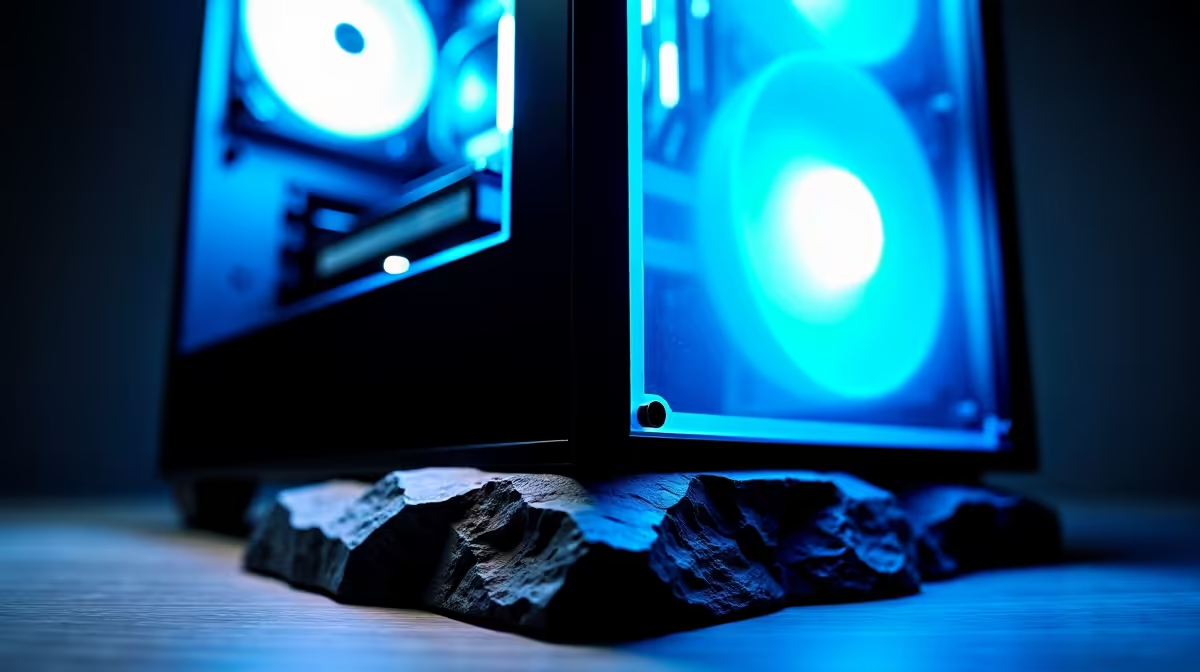
Tempered glass panels are typically 4mm thick and treated to be shatter-resistant, though they are not unbreakable. The primary appeal is showcasing RGB and ARGB components: a glass panel turns the interior into a display. For SA builders who have invested R2,000 to R5,000 in ARGB fans, RAM, AIO pump heads, and cable combs, a glass panel provides the payoff visibility that justifies the aesthetic spend. Most cases offer the glass panel on the left side only, aligned with the motherboard and GPU face. Some premium cases include glass on both left and right sides plus a glass top, though these are rare and typically cost R3,000 or more in South Africa. The glass itself adds mass: a tempered glass panel weighs 1.5kg to 3kg depending on size, making a full-tower glass case substantially heavier than its steel counterpart.
Acoustic Differences: Does Solid Panel Make a Measurable Difference? 🔇
Steel side panels, especially those with foam acoustic damping bonded to the interior surface, reduce noise transmission by 3 to 6 dB(A) compared to glass. This is equivalent to roughly halving the perceived loudness of fan noise in a quiet room. For a gaming setup in a shared flat or a home studio where recordings are made, the difference is meaningful. Tempered glass has no acoustic damping properties; it is acoustically transparent at most frequencies. If silence matters and the build will not be displayed publicly, a solid steel panel with acoustic foam is the objectively better choice. Some cases offer swappable glass and steel panels as purchase options, letting you choose based on the build's current use case.
Practical Build Considerations 🔧
Glass panels require more care during installation and transport. A knocked corner or a drop onto a hard floor can crack even tempered glass. During cable management, tools dropped inside the case can scratch or crack the glass. Steel panels absorb minor impacts without damage. For SA builders who take their rigs to LAN events or move them between home and university accommodation, a steel-panelled case avoids the anxiety of glass handling. Weight is also a factor: a full-tower glass case can weigh 18kg to 25kg fully loaded, which is difficult to carry without assistance. The same case with steel panels is typically 2kg to 4kg lighter.
Use Microfibre for Glass Panel Cleaning ⚡
Fingerprints and dust are visible on tempered glass within hours of handling. Keep a dry microfibre cloth inside the case box to wipe the glass exterior after any handling. Avoid glass cleaner with ammonia as it can leave streaks on anti-reflective coatings used on some premium panels.
FAQ
Are tempered glass panels safe if they crack?
Tempered glass is designed to shatter into small, relatively blunt fragments rather than sharp shards. A cracked panel should be removed carefully with gloves and replaced rather than operated with.
Do solid panels improve cooling vs glass panels?
Neither panel type significantly affects airflow since cases are not sealed. The difference comes from front and top panels, not the side glass versus steel choice.
Can I buy replacement glass panels for my case?
Many case manufacturers sell replacement glass panels separately. Check your case brand's support page. Pricing in SA typically ranges from R300 to R700 for a standard replacement panel.
Picking a case for your next build?
Evetech stocks PC cases with tempered glass and solid panel options across multiple brands and budgets. Browse the range and choose the look and functionality that suits your setup.