The single biggest upgrade to a creator's videos is rarely a better camera. It is voice that sounds close, clean and free of room echo, and that comes down to one decision: a dynamic microphone placed near your mouth, feeding a clean interface. Most home offices and bedroom studios in South Africa have hard walls, tile floors and zero acoustic treatment, and a dynamic mic is engineered to ignore exactly the reflections those rooms throw back.
Quick Answer
The cleanest creator voice for video comes from a dynamic mic positioned within a few centimetres of your mouth, feeding a quality audio interface, with closed-back headphones for monitoring. A dynamic capsule rejects the room reflections an untreated space generates, which a sensitive condenser would capture and amplify. Budget roughly R3,000 to R9,000 for a solid full chain.
Why dynamic beats condenser for untreated rooms
A condenser microphone is extremely sensitive and picks up everything: your voice, the keyboard, the air conditioner, and every reflection bouncing off bare walls. That sensitivity is wonderful in a treated studio and a liability in a normal room. A dynamic mic, by contrast, needs to sit close to the source and naturally rejects sound arriving from further away, so the wall behind you and the tiled floor under your desk stop showing up in the recording.
Proximity is the trick. Because a dynamic capsule is less sensitive, you place it 5 to 15cm from your mouth, and at that distance your voice utterly dominates whatever the room is doing. The result reads as broadcast-close on camera even when nothing about the space is acoustically ideal.
The classic broadcast choice
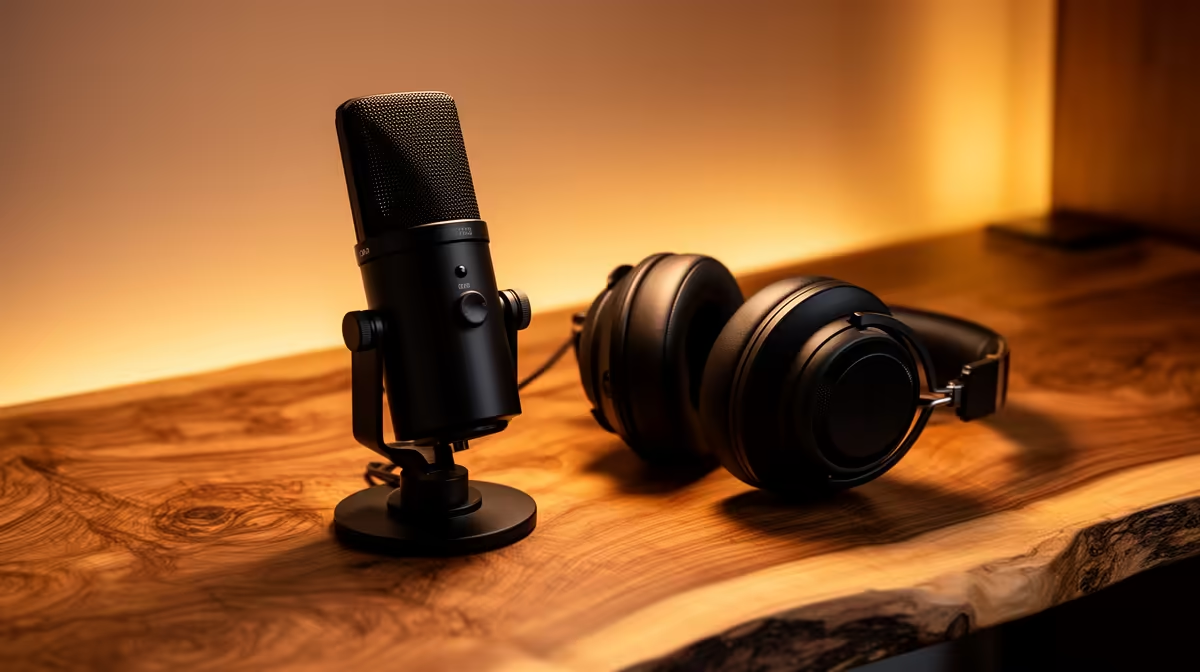
The Shure SM7B is the reference dynamic for podcasts and voice-over, prized for its warm tone and excellent off-axis rejection. Its one demand is gain: it wants a preamp delivering around +60dB, which is more than a basic interface provides on its own. The newer SM7dB solves this with a built-in preamp, so it drives cleanly from almost any XLR input without an inline booster.
The full signal chain that actually matters
The microphone
Start here, because nothing downstream fixes a poor capsule choice. A road-tested live mic like the Shure SM58 also doubles brilliantly for spoken content and shrugs off handling and untreated rooms. Whatever you pick, a dynamic capsule is the foundation of a clean creator voice.
The interface
The interface is where gain quality decides everything. A unit that gives a one-mic setup a real XLR input, direct monitoring and clean preamp gain is the goal. For high-gain dynamics like the SM7B, an interface with plenty of clean headroom, or a mic with an onboard preamp, keeps the noise floor low so you are not amplifying hiss alongside your voice.
Monitoring headphones
You cannot fix what you cannot hear. Closed-back headphones isolate you from the room and let you catch plosives, mouth noise and level problems while recording rather than in the edit. The headphone and headset range at Evetech covers closed-back models suited to monitoring as well as everyday listening.
A simpler all-in-one path
Not everyone wants an XLR chain. A dual USB and XLR dynamic like the Rode PodMic USB delivers broadcast-quality sound straight over USB without needing a separate interface or an inline gain booster, then leaves the XLR door open for later. It is the most painless way for a solo creator to get a genuinely good voice on day one. When you are weighing options, the best-selling headsets at Evetech are a useful gauge of what creators in SA are pairing with their mics.
Treating the room for almost nothing
You do not need foam panels. Soft furnishings you already own do real work: a rug on a tiled floor, curtains over a window, and a bookshelf along one wall all soak up reflections. Combine that with a close-placed dynamic mic and most home spaces sound noticeably more controlled without spending a Rand on treatment.
Boom arm, pop filter, and shock mount
These three mechanical accessories matter more than most creators expect. A boom arm removes the mic from the desk surface entirely, which stops keyboard vibrations and typing rumble travelling up the stand and landing in the recording. A shock mount decouples the capsule from the stand, adding a second layer of isolation. A pop filter, a mesh disc positioned a few centimetres in front of the capsule, breaks up the burst of air that plosive sounds like P and B push at the mic, and those plosives are the most difficult problem to fix cleanly in post-production.
Prioritise the boom arm first, then the shock mount, then the pop filter. Together they solve problems that no amount of EQ or noise removal handles gracefully after the fact, and the cost of all three combined is typically less than the difference between a mid-tier and premium interface.
Mic positioning and gain staging
Position the mic roughly at chin or cheek height rather than pointing it straight at the mouth, then angle it slightly upward toward the mouth from below. This off-axis technique reduces plosive impact further and catches the warmth of a voice without the harsh high-frequency burst of direct on-axis breath. Set your interface gain so peaks land at roughly -12 to -6 dBFS while you perform at realistic volume, leaving headroom for louder moments. Recording too hot is harder to fix than recording a little quiet.
Frequently Asked Questions
Is a dynamic mic really better than a condenser for video?
For untreated rooms, yes. A dynamic capsule rejects room reflections that a sensitive condenser captures and amplifies. In a properly treated studio a condenser can sound more detailed, but most creators are not working in treated spaces.
Do I need an expensive interface?
You need a clean one, not necessarily a pricey one. The priority is quiet, high-headroom gain so you amplify your voice and not hiss. High-gain dynamics like the SM7B raise the bar; a mic with an onboard preamp or a dual USB/XLR mic sidesteps the requirement entirely.
Can I skip the interface with a USB mic?
Yes. A quality dual USB and XLR dynamic gives you broadcast-grade sound over USB on its own, which is the simplest starting point. You can add an interface later and switch to XLR without replacing the microphone.
How close should the mic be to my mouth?
A dynamic mic works best at roughly 5 to 15cm. That closeness lets your voice dominate and pushes the room into the background, which is the whole point of choosing a dynamic for an untreated space.
What headphones should I monitor with?
Closed-back headphones, because they isolate you from the room and let you catch problems live. Open-back models leak and let room sound in, which defeats the purpose while recording.