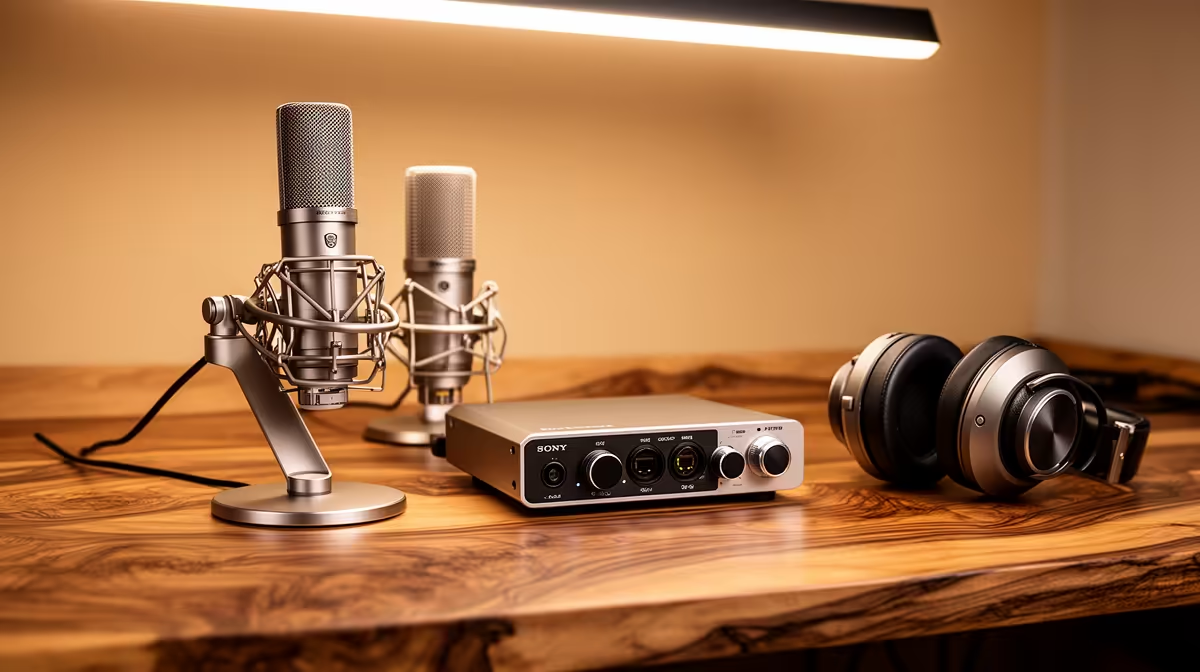
A great-sounding podcast almost never comes down to one hero microphone. It comes from a podcast audio setup where the mic, the interface that feeds it, and the headphones you monitor on all suit each other. Pick a mic your interface can actually drive cleanly, and a quiet, untreated voice recording suddenly sounds professional. Pick the wrong pairing and you fight hiss for every episode. Here is how the three pieces fit together.
Quick Answer
For most home podcasters, a dynamic XLR broadcast mic into a clean USB audio interface, monitored on closed-back headphones, is the sweet spot. The Shure SM7B needs roughly 60 dB of clean gain or an inline preamp booster to sit at a healthy level, while the Rode PodMic is more sensitive and runs straight off budget interfaces without extra help. Budget realistically from around R6,000 for a solid full chain in South Africa.
Why dynamic XLR mics win for spoken voice
Condenser mics capture beautiful detail but they also capture the room, every keyboard tap, the fridge, traffic outside. Dynamic broadcast mics have a tighter cardioid pickup that favours the voice directly in front and pushes away the majority of off-axis sound. In an ordinary home room with no acoustic treatment, that rejection is what separates a clean recording from one that sounds hollow and distant.
The cardioid pattern only works if you stay on axis and close, typically a hand's width from the capsule. Drift off to the side and the rejection that was helping you starts cutting your own voice instead.
The gain question: SM7B versus PodMic
This is the decision that trips up most first-time buyers, and it is entirely about how much amplification each mic demands.
The Shure SM7B and its gain appetite
The SM7B is a broadcast standard for a reason, its sound is rich and forgiving. But it has low output, so it needs a lot of clean gain to reach a usable level, in the region of 60 dB. Many entry-level interfaces top out around 40 to 50 dB, and if you push them that hard to compensate, you amplify the preamp's own hiss along with your voice. The fix is either an interface with genuinely quiet high-gain preamps, or a small inline preamp booster that adds roughly 20 to 25 dB of clean gain ahead of the interface.
The Rode PodMic as the simpler path
The PodMic sidesteps that whole problem. It is more sensitive, so it reaches a healthy recording level on the modest preamps in budget interfaces without an inline booster. For a podcaster who does not want to think about gain headroom, it is the lower-friction, lower-cost route to a broadcast-style dynamic sound.
Choosing the audio interface
The interface is the bridge between an XLR mic and your computer, and it sets your noise floor. For a single-host show you only need one or two XLR inputs, but the quality of those preamps matters more than the input count. A clean two-input interface lets you add a co-host mic later without rebuying.
If you have settled on the SM7B, prioritise an interface known for quiet, high-gain preamps, or plan for that inline booster from day one. If you are on the PodMic, almost any reputable two-channel interface will drive it well. Either way, look for one with direct monitoring so you can hear yourself with no delay while recording.
Headphones for monitoring, not listening for pleasure
Monitoring headphones do a different job from everyday listening cans. You want closed-back design so the headphone sound does not leak back into the mic, and a fairly honest, flat response so you catch problems, plosives, sibilance, background noise, while you record rather than discovering them in the edit.
Comfort matters more than it sounds, because podcast sessions run long. A pair that clamps too hard becomes unbearable after an hour. The full headphones and headset range at Evetech covers closed-back monitoring options, and if you want to see what other creators in South Africa are picking up, the top-rated headsets at Evetech show you at a glance what other local podcasters are actually choosing.
Mic placement: the free upgrade most podcasters ignore
Even a perfect chain sounds mediocre if the microphone is too far from the mouth, pointed the wrong way, or picking up desk vibrations through the stand. Dynamic cardioid mics reward closeness. Aim to keep the capsule roughly 10 to 15 centimetres from your lips, with the mic body angled slightly toward your mouth rather than pointed straight at it. That off-axis placement cuts plosive air blasts without reducing intelligibility.
A solid boom arm attached to the desk edge instead of a desk stand removes vibration from typing and keeps the mic at consistent height throughout the session. Without a boom arm, the mic tends to drift as you move, and proximity changes mean uneven volume across an episode.
Acoustic treatment without spending much
Dynamic mics reject off-axis sound well, but they do not eliminate room echo. A reflective, bare room will still colour a dynamic mic's output, adding a slight hollowness that no interface upgrade can remove. Soft furnishings help: a rug, curtains over a hard wall, a bookshelf behind the recording position. Recording inside a wardrobe with clothes hanging around you is a common low-cost workaround that genuinely works for spoken word. None of these solutions cost anything if you already own them, yet each visibly improves the recording.
Putting the whole chain together
A complete home podcast chain is a dynamic XLR mic, a clean interface, a boom arm to keep the mic at mouth height, a pop filter for plosives, and closed-back headphones. You do not have to buy it all at once. Start with the mic and interface, since they define your sound, then add the boom arm and pop filter as you refine your recording position. Built sensibly, a chain like this lasts years and outlives several laptops.
Frequently Asked Questions
Do I need a Cloudlifter-style booster for the SM7B?
Only if your interface cannot deliver around 60 dB of clean gain. If you push a weak preamp that hard, you raise its hiss along with your voice, so an inline booster that adds clean gain ahead of the interface solves it. With a genuinely high-gain quiet interface, you can skip the booster.
Is the Rode PodMic good enough for a serious podcast?
Yes. It delivers a broadcast-style dynamic sound at a far lower cost and, because it is more sensitive, it runs cleanly off budget interfaces. For most home podcasters it removes the gain headache entirely.
Can I just use a USB mic instead of an XLR setup?
You can, and a good USB mic is fine for starting out. The XLR route gives you more control, easier upgrades, and a cleaner path to adding a second mic for a co-host, which is why the XLR-plus-interface route has become the professional baseline for shows built to scale.
Why closed-back headphones rather than open-back?
Closed-back cans contain the sound so it does not bleed back into your mic during recording. Open-back models leak audio, which a sensitive mic will pick up and bake into your recording.
How much should a decent podcast setup cost in South Africa?
A solid dynamic mic, a clean two-channel interface, monitoring headphones, a boom arm and a pop filter together typically start from around R6,000 and climb with the SM7B and a high-gain interface. Building it in stages spreads the cost.
Get the monitoring half of your podcast chain right first. Browse the headphones and headsets at Evetech for closed-back pairs that let you catch problems while you record.