Quick Answer
ARGB case fans combine addressable RGB lighting with standard 120mm or 140mm airflow. The key specs are CFM rating (airflow volume), static pressure (for radiator and filter mounting), PWM control (for fan curve support), and LED count (for lighting quality). Getting all four right for your build and budget is the goal.
CFM, Static Pressure, and Noise in ARGB Fans 🌬️
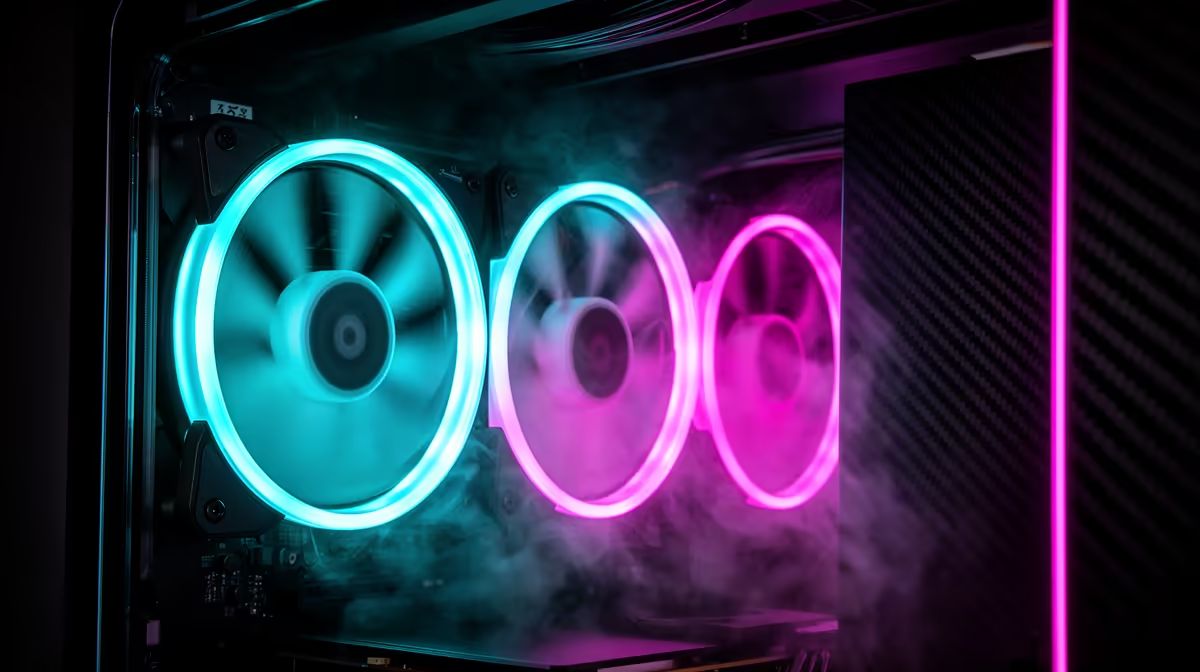
CFM measures how much air a fan moves in open air. A quality 120mm ARGB fan delivers 50 to 65 CFM; a 140mm model reaches 70 to 90 CFM. These figures drop 20 to 35 percent when mounted against a dust filter or radiator. Static pressure, measured in mm H2O, determines how effectively a fan pushes air through that restriction. High-static-pressure fans (3.0 mm H2O or above) suit radiator mounting; high-airflow fans suit open mesh front panels.
Noise matters in South African bedrooms and shared living spaces. A quality ARGB fan at 1,000 RPM produces around 22 dB. At full 1,800 to 2,000 RPM, the same fan rises to 32 to 38 dB, clearly audible in a quiet room. PWM control is essential for keeping fans quiet during gaming idle and only spinning up when temperatures demand it.
Optimal Fan Configuration Layouts for ATX Cases 🔧
The most effective standard layout for an ATX gaming case is three 120mm intake fans at the front, one 120mm exhaust at the rear, and one 120mm or 140mm exhaust at the top rear. This five-fan setup creates positive pressure (more intake than exhaust), preventing unfiltered dust from entering through unsealed gaps.
For cases with a 360mm AIO, the radiator fans replace the three front case fan positions. Add two rear and top exhaust fans for a five-fan total that handles RTX 5070 Ti and RTX 5080 heat loads. South African builders should note that 140mm fans in the top position move meaningfully more air than 120mm equivalents at similar noise levels. Upgrading a pre-installed top 120mm exhaust to a 140mm fan reduces GPU temperatures by 2 to 4 degrees at moderate speeds.
ARGB LED Quality and Lighting Sync Standards 🔆
ARGB LEDs use individually addressable 5V signal chains, allowing each LED a different colour simultaneously. Fan LED counts range from 6 per ring in budget models to 24 or more in premium designs. Higher counts produce smoother gradients and more detailed patterns when synced with ASUS Aura Sync, MSI Mystic Light, or Gigabyte RGB Fusion.
All ARGB fans use the 3-pin 5V header standard. Do not confuse this with the older 4-pin 12V RGB header. Applying 12V to a 5V ARGB component damages the LEDs. Most current-generation motherboards provide two to four ARGB headers, sufficient for a full case fan set and CPU cooler without needing a hub.
Fan Bearing Type and Longevity ⚡
ARGB fans use sleeve, ball, or fluid dynamic (FDB) bearings. Sleeve bearings are quiet but wear out faster (30,000 to 40,000 hours). Ball bearings last longer but add noise at low RPM. FDB bearings offer the best combination of low noise and long life (50,000 hours or more) and are worth the small price premium for a build running daily for years.
FAQ
How many ARGB fans do I need for a standard ATX gaming case?
Five fans is the recommended minimum for a high-performance build: three front intake, one rear exhaust, one top exhaust. Four fans is adequate for mid-range Ryzen 5 or Core i5 builds paired with RTX 5060 Ti or RX 9060 class GPUs.
Can I mix different brands of ARGB fans?
Yes, functionally. Lighting sync across brands is possible through ARGB header software. For uniform effects, matching brands is cleaner since some proprietary lighting patterns do not replicate on other brands' hardware.
Do ARGB fans from cases sync with GPU lighting?
Yes, if the GPU uses a 3-pin 5V ARGB connector and your ARGB software supports it. Most current ASUS, MSI, and Gigabyte GPUs integrate with their respective motherboard ARGB ecosystems for unified system lighting.
Building a clean, lit gaming PC with real airflow?
Evetech stocks individual ARGB fans and complete cases with pre-installed ARGB setups for every ATX build size.