Quick Answer
Built-in GPU braces are adjustable arms or rail systems integrated into a PC case to prevent graphics cards from sagging under their own weight. They are essential for any triple-slot GPU over 1.5 kg, including current RTX 50-series and RX 9000-series flagship cards, and they prevent the PCIe contact stress that causes intermittent connectivity failures over months of use.
Understanding GPU Sag and Its Consequences 🔧
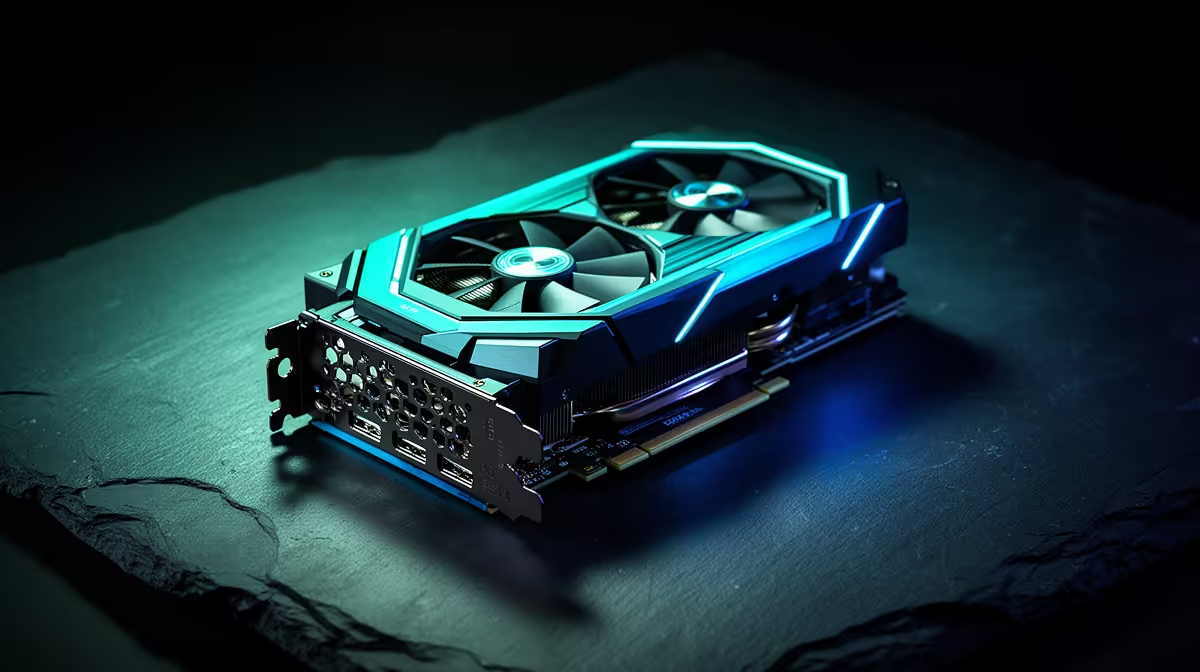
GPU sag is the downward deflection of a graphics card cantilevered from a single PCIe x16 slot. The RTX 5090 reference card weighs approximately 2.1 kg and extends 336 mm from the motherboard, creating a torque load the PCIe slot was never engineered to sustain indefinitely. Measured sag on an unbraced RTX 5090 typically ranges from 4 mm to 8 mm at the card's far end. This deflection bends the PCB, stresses the PCIe connector housing, and in extended use can cause micro-fractures in solder joints near the card's PCIe edge connector. Symptoms include intermittent PCIe errors in Windows Event Viewer and random display driver resets under load.
Types of Built-In Brace Systems 🖥️
Built-in GPU brace systems fall into three categories. The first is a sliding floor rail: a horizontal track runs along the PSU shroud top surface with a vertical arm that slides to position under the GPU shroud. The second is a fixed PCIe bracket brace: an arm extends from one of the case's expansion bracket positions, locked at a set height. The third is a full card cradle: a dedicated rail mounts to the case floor and slides a platform under the GPU, supporting the full cooler length. The cradle design is found in top-tier cases at R6,500 and above and is the most effective for extreme-length AIB cards.
Setting Up and Maintaining a GPU Brace 💡
Correct setup is critical. Position the brace arm directly below the GPU cooler shroud midpoint, approximately 150 mm to 180 mm from the PCIe bracket end. Raise the arm until it just contacts the shroud base without applying upward force. Apply a strip of anti-static foam to the arm contact point to prevent wear marks on the cooler finish. After the first full thermal cycle, re-check the contact point since heat-induced expansion can shift the GPU's resting position by 1 mm to 2 mm.
Long-Term Brace Maintenance ⚡
Inspect your GPU brace every 6 months by removing the side panel and checking that the arm still makes light contact with the GPU shroud. Fan vibration can loosen the arm lock screw over time, allowing the arm to creep downward and provide no protection. A 30-second visual check and a quarter-turn on the lock screw is all that is required to maintain full protection.
FAQ
Does GPU sag occur in all PC orientations?
Sag only occurs in standard horizontal motherboard orientation where gravity acts perpendicularly to the GPU PCB. In a vertical motherboard case or with a vertical PCIe riser in a standard case, sag is eliminated entirely since gravity acts along the card's length.
Are third-party aftermarket braces as effective as built-in ones?
Quality aftermarket braces are effective, but built-in systems are designed for the case's exact internal geometry. Aftermarket universal braces occasionally foul PSU shroud edges or cable routing paths in ways that built-in designs avoid by design.
What is the maximum GPU weight a standard PCIe slot is rated for?
The PCIe specification does not define a GPU weight limit, but industry practice treats 1 kg as the threshold above which supplementary support is advisable. Above 1.5 kg, a brace is recommended by every major AIB partner in their installation documentation.
Building with a heavy flagship GPU?
Evetech stocks cases with integrated GPU brace systems and the full range of RTX 50-series and RX 9000-series cards, so your build is protected from day one.