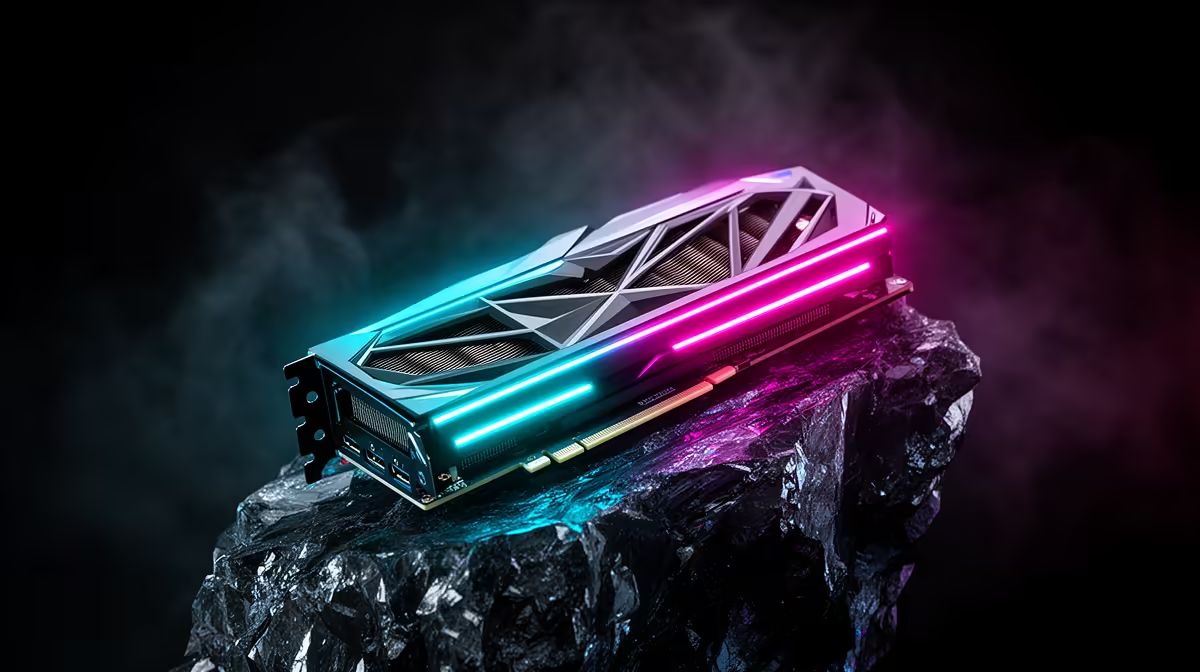
Every GPU generation produces the same quiet agony: you are ready to upgrade, but a rumour of something better is always 18 months out. The patient upgrader's dilemma in 2026 is whether to keep waiting for NVIDIA's RTX 60 Rubin cards or buy now and start enjoying the performance you are already paying to delay. The maths, once you lay it out, leans hard toward not waiting.
Quick Answer
NVIDIA's RTX 60 Rubin lineup is expected in the second half of 2027, which means holding out from mid-2026 commits you to roughly 18 months of waiting with no guaranteed price advantage. For most gamers, an RTX 50 series card bought today delivers a year and a half of real performance you would otherwise forfeit, so waiting only makes sense in a few narrow cases.
The 18-Month Cost of Waiting
This is the part most people skip. Waiting is not free. If the RTX 60 arrives in late 2027 and you are sitting on tired hardware in mid-2026, you are not saving money, you are paying with 18 months of worse gaming. Every title you play at lower settings, every frame rate you tolerate, every effect you switch off is a cost you absorb so that a future card can impress you.
Set against that, an RTX 50 series card bought now starts returning value immediately. By the time Rubin actually ships, you will have had a year and a half of high frame rates and full settings. The card does not vanish when the next generation lands either. It keeps performing, and it carries resale value if you do decide to jump.
Why the Performance Gap Rarely Justifies the Wait
Generational Jumps Are Not Magic
There is a tendency to imagine the next generation as a transformative leap. In reality, generation-to-generation gains are meaningful but incremental, and they are concentrated at the very top of the stack. A current high-end RTX 50 card already drives modern titles at high settings and strong frame rates at 1440p and 4K. The slice of Rubin's improvement you would actually notice in the games you play is smaller than the hype suggests, especially below the flagship tier.
Diminishing Returns at Your Resolution
If you game at 1080p or 1440p, much of a new flagship's extra power goes unused because your monitor is the real limit. A mid to upper RTX 50 card can already exceed your display's refresh rate in many titles, so a faster GPU would render frames your screen never shows. Match the card to your monitor, not to a spec sheet you will not see the benefit of.
You can weigh up current options across the graphics card range at Evetech to find the tier that matches your resolution rather than chasing the absolute top.
There Is No Guaranteed Price Advantage
The hope behind waiting is often that prices will be better later. History does not support that. New generations launch at or above the prices of the cards they replace, and early stock tends to carry a premium until supply settles. Meanwhile the card you were eyeing today can creep up rather than down as a generation matures and stock thins. Waiting to save money is a bet that frequently loses.
For the SA buyer there is an extra layer. Import costs and exchange rate movements shape local GPU pricing in ways that have nothing to do with the generation, so a weaker Rand can erase any theoretical saving from a new launch. Buying a well-priced card now removes that uncertainty entirely.
When Waiting Actually Makes Sense
To be fair, the patient path is right for some people:
- Your GPU covers all the titles you care about at the frame rates and detail levels you want. If nothing is bottlenecking you, there is no urgency, so coast and reassess closer to the Rubin launch.
- You only ever buy the absolute flagship and intend to keep it for many years. If you are a true top-tier-only buyer, waiting for the new halo card can fit that pattern.
- You are mid-build and can comfortably wait without sacrificing gaming in the meantime.
If none of those describe you, and your current card is holding you back today, the dilemma resolves itself. Buy the performance you need now. You can sanity-check value against the current best-selling GPUs to see where the sweet spot sits.
How to Buy Without Regret
If you accept that buying now beats waiting, the next worry is choosing a card you will not resent when Rubin lands. The trick is to buy for the resolution and refresh rate you actually play at, not for a spec war.
Size the Card to Your Monitor
- 1080p high refresh: a mid-tier RTX 50 card comfortably pushes high frame rates, and a flagship would be wasted here.
- 1440p: an upper mid to high RTX 50 card hits the sweet spot of strong frames at high settings without overspending.
- 4K: this is where the higher tiers earn their price, so spend up if you genuinely game at 4K and want headroom.
Buying the right tier for your screen means you are not paying for performance you cannot see, which is the same trap that makes a future flagship look more tempting than it really is.
The Resale Cushion
A current-generation card retains meaningful value while it is still current. If you buy a good RTX 50 card now and Rubin genuinely tempts you in 2027, you can recover a chunk of your spend by selling it on rather than starting from zero. That resale cushion further narrows the supposed saving from waiting, because the card you used for 18 months still has worth when you are done with it.
The Honest Recommendation
For the majority of gamers in 2026, holding out for RTX 60 means trading 18 months of real, usable performance for an incremental future gain at an uncertain price. Buy a well-matched RTX 50 card today, enjoy it through 2027, and only then decide whether Rubin genuinely earns an upgrade. Patience is a virtue, but waiting purely to wait is just self-imposed slowness.
Frequently Asked Questions
When is the RTX 60 Rubin series expected to launch?
NVIDIA's RTX 60 Rubin lineup is expected in the second half of 2027. Buying in mid-2026 and waiting for it therefore means roughly 18 months without an upgrade.
Will GPU prices drop when the RTX 60 launches?
There is no guaranteed price advantage. New generations typically launch at or above the prices of the cards they replace, and early stock often carries a premium, so waiting to save money is an unreliable bet.
Is the performance jump to RTX 60 worth waiting for?
For most gamers, no. Generational gains are incremental and concentrated at the flagship tier, and a current RTX 50 card already handles modern titles at high settings, so the noticeable benefit is smaller than the hype.
I game at 1080p. Should I wait for the next generation?
Probably not. At 1080p your monitor is often the limit, so a current mid to upper card can already exceed your display's refresh rate. A future flagship would render frames your screen never shows.
When does it actually make sense to wait?
Wait if your GPU already handles every game you care about at the frame rates and detail levels you want, or if you exclusively buy the top flagship and keep it for many years. Otherwise, buying now gives you performance you would otherwise lose.