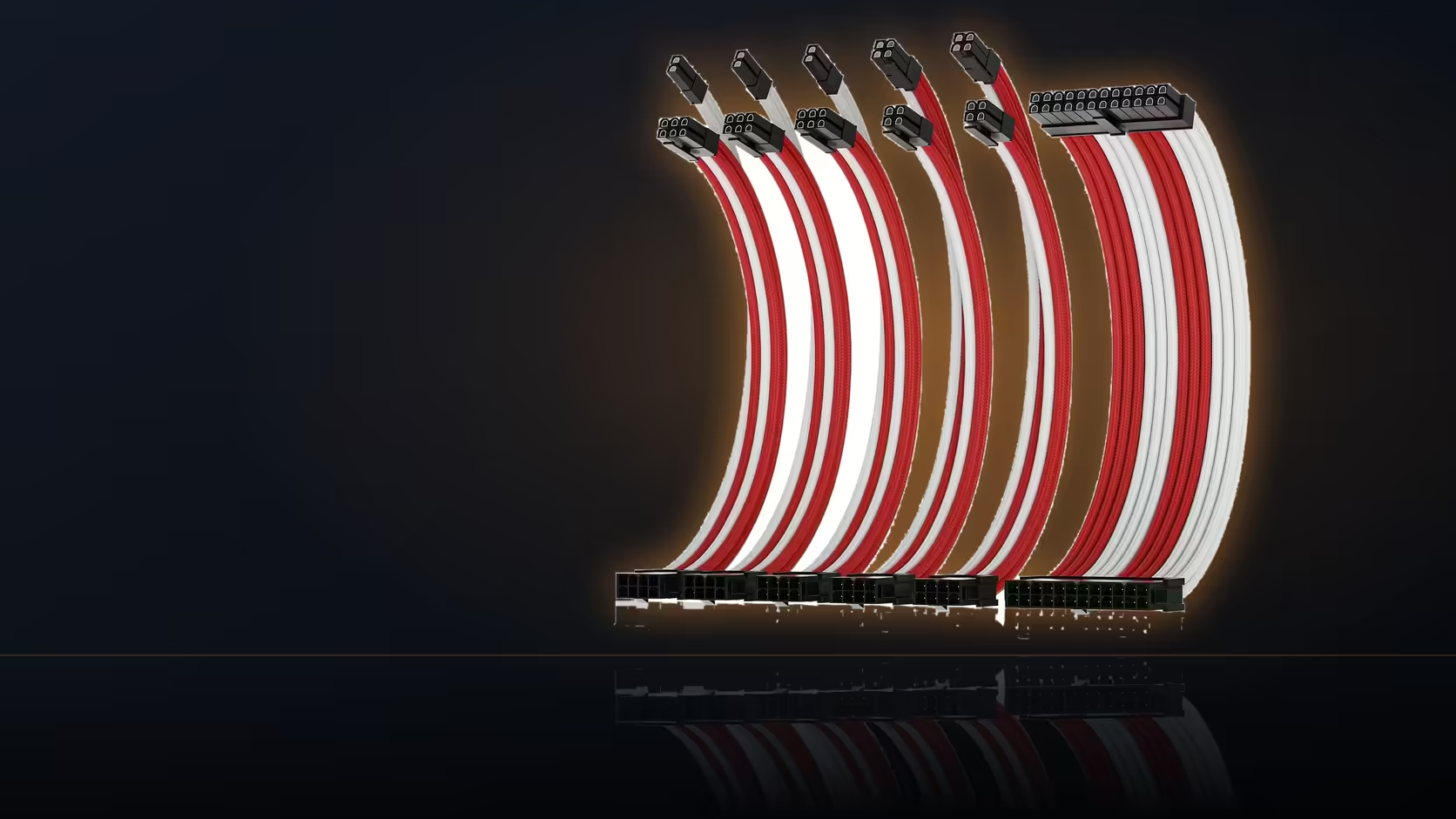
Stepping up from the four-piece kit to the six-piece set is not a single upgrade - it is two entirely separate changes bundled into one purchase, and conflating them leads to buying more kit than a given build actually needs.
Quick Answer
The six-piece kit brings two separate changes over the four-piece. It adds two leads and steps from 18AWG to 16AWG copper. Judge those apart: a build needing six runs benefits from both, one needing four pays for gauge alone.
🔢 Change one: two extra leads
The most obvious difference is coverage - a second processor extension and a third graphics extension that the four-piece kit simply does not include at any price. For most buyers this is the change that actually matters, since it decides whether every visible connector on a build can be dressed at all, or whether some runs are permanently left in their factory finish regardless of how carefully everything else gets fitted. Nothing about gauge or conductor spec can substitute for coverage a build genuinely needs.
🔩 Change two: a thicker conductor
Less visible but still real: the six-piece family steps from the four-piece kit's 18AWG copper up to 16AWG throughout. This is a specification you will never actually see once the sleeve is on, since it lives entirely inside the cable rather than on its surface - but it is a genuine, measurable difference in the product, not a marketing distinction without substance. In the hand, 16AWG feels a little stiffer than 18AWG, which helps a routed run hold its shape once bent into place, though it also asks for a slightly gentler bend radius through especially tight corners than the thinner gauge would need.
💸 Would gauge alone justify the higher price
Rarely, on its own. If a build only ever exposes four connectors that need dressing - the standard board, processor and dual-card layout most mainstream builds present - the four-piece kit covers every single one of them completely, and the extra spend on the six-piece set buys a conductor specification difference the build has no functional need for. The gauge upgrade genuinely earns its keep only when it arrives bundled together with the coverage the larger kit also provides, not as a reason to buy the bigger kit in isolation.
🔗 What stays identical between the two kits
Both families use the exact same connector types throughout - a 24-pin board lead, 4+4 processor leads and 6+2 card leads - so nothing about connector technology or compatibility separates them; only the quantities and the underlying conductor gauge do. Both are also built at an identical 30cm length per piece, meaning any routing plan drawn up for one kit transfers directly to the other without adjustment if you end up switching your decision partway through planning. Combs are included with both kits too, though the six-piece set ships a genuine two-colour comb kit rather than the four-piece kit's single-colour provision, giving more choice of accent across its larger set of runs. The decision ultimately comes down to one simple step: count your build's actual sockets first. If four covers everything visible, the decision is effectively closed in favour of the smaller kit. If it does not, the six-piece kit brings the necessary coverage and the thicker gauge together in one purchase, and at that point the gauge upgrade stops being an optional extra and becomes part of what you were always going to need anyway. For the wider range either kit belongs to, cable solutions is worth a browse, and individually sleeved premium cables is the reference point for a fully bespoke loom if neither boxed option matches your exact build precisely.
🧠 Why builders conflate the two changes so easily
It is an easy mistake to make, mentally bundling lead count and conductor gauge into one undifferentiated "bigger kit" impression rather than treating them as the two genuinely separate upgrades they actually are. Marketing language rarely helps here either, since a listing calling something the larger or more premium option invites exactly that kind of bundled thinking rather than the itemised comparison a careful buyer actually needs to make before parting with the extra money.
🧾 A framework for thinking about the premium
It helps to hold the two changes apart mentally even though they arrive bundled in one purchase price: some of what you pay stepping up from the four-piece kit to the six-piece set is buying two extra leads, and some of it is buying a genuinely thicker conductor across the whole family. Neither the listing nor the box breaks that premium down explicitly, but thinking of it in those two separate terms is a useful way to judge whether the step up is worth it for a specific build.
Builders who already own the four-piece kit and later discover a genuine need for a second processor lead or a third card lead are not locked into buying the larger kit from scratch either - a single matching extension bought separately still carries the six-piece family's own specification for whichever connector it replaces, giving the same coverage without duplicating anything already fitted, and without carrying the extra cost of parts your build already has dressed, fitted and working perfectly well.
Frequently Asked Questions
Which of the two changes matters more?
Lead count, for most buyers. It decides whether every visible run can be dressed, where gauge is a specification difference you will never see.
Is 16AWG noticeably different to handle?
It feels a little stiffer in the hand, which helps a run hold its shape but asks for a gentler bend radius when routing.
Would the gauge alone justify the higher price?
Rarely on its own. If a build only exposes four runs, the four-piece kit covers them and the extra spend buys specification rather than coverage.
Do both kits use the same connectors?
Yes, a 24-pin board lead, 4+4 processor leads and 6+2 card leads. The types match; only the quantities and the gauge differ.
Are the lengths the same?
Both families are built at 30cm per piece, so routing plans transfer between the two without any change in reach.
Does either kit include combs?
Both do. The six-piece set ships a two-colour comb kit, which gives more choice of accent than the four-piece provision.
How should I decide between them?
Count your sockets first. If four covers them, the decision is closed. If not, the six-piece kit brings the coverage and the gauge together.
Working out whether gauge or coverage matters more for you?
Browse Evetech's power supply range and count your build's sockets before choosing between the two kit families.