Most home studio noise problems trace back to the same culprit: a gain stage that cannot amplify quietly. The moment you push beyond about 45dB, a standard USB interface starts contributing its own hiss to your vocal, and no amount of editing recovers what was never captured cleanly. Ultra-low-noise preamps shift the ceiling dramatically higher, and understanding where they differ from a stock USB interface explains why vocal clarity lives or dies at the preamp stage.
Quick Answer
An ultra-low-noise preamp keeps its equivalent input noise near -128dB, letting you push 60dB of gain on a quiet dynamic or ribbon mic without audible hiss. A budget USB interface typically adds noise above 45dB of gain, blurring soft vocals and introducing a permanent hiss floor.
🔧 What EIN Actually Tells You About Noise
Equivalent input noise is the number that cuts through marketing. It describes how much self-noise the preamp contributes at maximum gain, referenced to a completely silent source. The closer to -130dBu, the quieter the preamp stage at full stretch.
A figure near -128dBu means that even when you are pushing 60 or 65dB of gain for a low-output ribbon or broadcast dynamic, the noise the preamp adds stays below audible thresholds. You hear your voice, not a hiss layer underneath it.
Standard budget interfaces often publish EIN around -120dBu to -124dBu. That four to eight decibel difference sounds small on paper, but noise is logarithmic. At high gain settings that gap translates to an audible fizz, particularly on quiet vowels and long consonants where the ear expects silence.
The gain headroom problem on budget units
A budget interface's preamp frequently runs out of clean headroom around 45dB. Push beyond that and the gain stage is no longer amplifying cleanly; it is amplifying the signal and its own thermal noise together. Soft-spoken presenters, voice-over artists working close to a ribbon mic, or anyone recording in a quiet room at low levels will expose this ceiling immediately.
Why ribbon mics expose noise floors fastest
A ribbon microphone puts out a very low signal level, often 10 to 15dB quieter than a dynamic, and 25 to 30dB quieter than a hot condenser. That output demands every decibel of clean gain the interface can supply. On a noisy preamp, reaching the level you need also means riding the hiss floor to the same volume. Ultra-low-noise stages are the only way to use a ribbon without a separate dedicated outboard amplifier.
⚡ Where Standard USB Interfaces Fall Short on Vocals
A budget all-in-one USB interface bundles convenience at a price: the analogue gain stage is often a cost-reduced design that meets basic specification but cannot match a dedicated preamp circuit.
The thin vocal sound many beginners attribute to their microphone is regularly a preamp problem. Low clean gain headroom forces them to record quietly and apply digital amplification in their DAW to reach broadcast-ready levels. Digital gain does not add clean signal; it raises the floor by ten decibels or more, surfacing noise that was already there but sitting just below audible.
The second limitation is consistent phantom power delivery. Condenser mics require 48V phantom power to bias their capsule. Budget interfaces often deliver this at lower actual voltages under load, particularly when two mics are connected simultaneously. Capsule performance drops subtly, and the sensitivity gap between two nominally identical mics increases.
🎙️ The Practical Case for an Ultra-Low-Noise Preamp
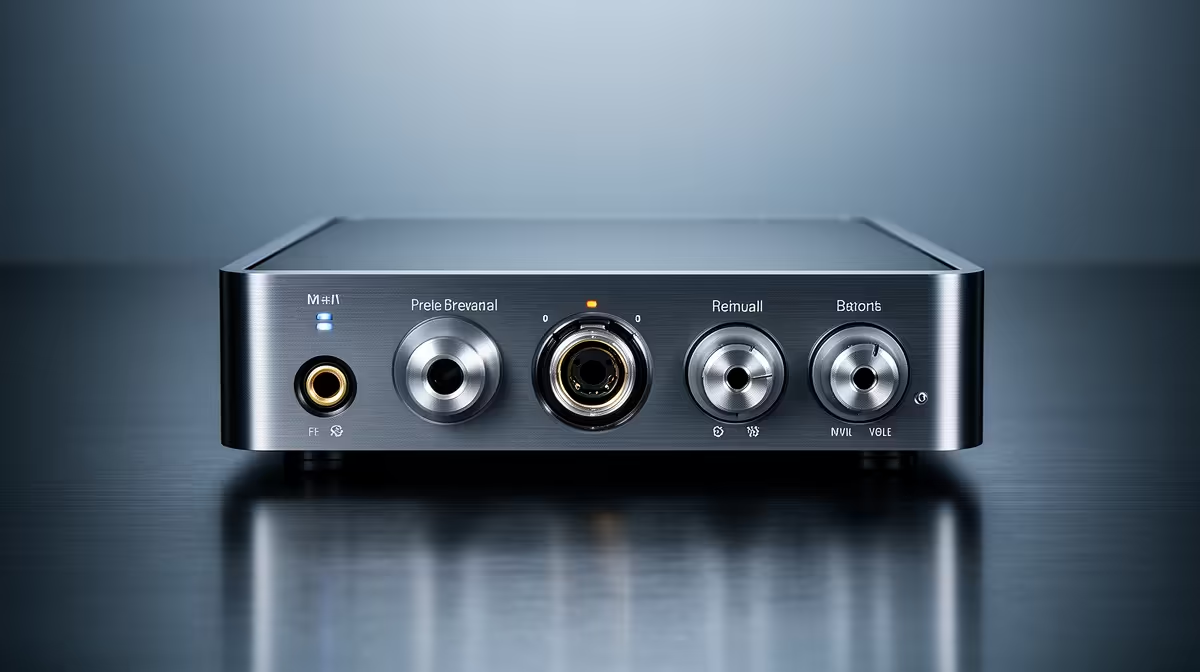
Moving to an ultra-low-noise design -- either as a standalone two-channel preamp feeding the line input of your interface, or as an all-in-one unit built with a premium gain stage -- changes what your existing microphones can do.
A common workaround for podcasters who want cleaner gain without buying a new interface entirely is to feed a clean outboard preamp into the line input of their current unit. The interface's mic preamp is bypassed, and the line stage adds minimal noise. The outboard unit does the gain work at its -128dBu specification. For one or two mics, a compact two-channel unit near R3,000 to R5,000 handles this cleanly.
Built around that principal, mixers designed with audiophile-grade input stages give podcasters and streamers access to broadcast-standard signal chains without the cost of a professional rack. The key spec to compare is still EIN: if it is not published, ask the retailer to confirm it. A unit that cannot supply the figure is usually hiding an ordinary gain stage behind a feature list.
Pro Tip ⚡
a 60-second gain test: record silence at maximum gain on your interface. If you hear a hiss layer above your room noise, the mic preamp is your bottleneck. A clean external preamp fed into the line input of the same interface will show you exactly how much the gain stage is contributing.
🎯 Matching the Preamp to the Microphone
Condenser mics sit at the top of the sensitivity range and are generally forgiving of preamps; even modest gain stages can drive them to proper recording levels below 45dB where most units are clean. Dynamics and ribbons are where the choice matters.
A broadcast dynamic typically needs 55 to 65dB of gain to hit a clean recording level in a quiet room. That sits squarely in the range where a -128dBu preamp sounds identical to silence while a budget stage sounds like a tap running softly in the background.
For South African podcasters recording in home offices near Joburg or Cape Town, external traffic and ambient home noise are already competing with the mic. Adding preamp hiss on top means post-production noise reduction becomes a necessity rather than an occasional tool, and aggressive noise reduction introduces artefacts in vocal sibilants. Starting with a quiet gain stage keeps the vocal chain transparent from the first take.
Frequently Asked Questions
What EIN figure should I require from a vocal preamp?
Aim for -128dBu or better. At that figure you can push 60dB of gain onto a quiet dynamic without audible self-noise appearing under the vocal. Anything above -120dBu will add hiss at high gain settings, which becomes a problem the moment you use a low-output mic or record in a very quiet environment.
Why does my budget interface sound thin and noisy on a dynamic mic?
The mic's low output forces you to push gain beyond the point where the preamp stage stays clean. Above around 45dB, a budget unit adds its own noise to the signal. That hiss amplified alongside the vocal is what sounds thin. The fix is more clean gain headroom, not a different microphone.
How do I use an external preamp with an interface I already own?
Set the gain on your interface line input to minimum, then run your mic into the external preamp and its output into the interface line input with a balanced cable. The mic preamp stage of the interface is bypassed entirely; your clean outboard unit handles all the gain. This approach is cost-effective if your interface already supports a stable line level.
Does phantom power quality affect vocal clarity?
Yes, though subtly. A condenser mic relies on steady 48V phantom power to hold capsule bias correctly. Some budget interfaces sag below 48V when two condensers are connected, reducing sensitivity slightly and causing one mic to sound different from the other. A well-designed unit maintains full phantom voltage under dual-mic load.
Is a better preamp or a better microphone the priority?
Start with the preamp. A clean -128dBu gain stage allows a R2,000 dynamic microphone to record at broadcast quality. Put that same dynamic through a noisy interface and you will spend hours in post trying to recover clarity that was never captured. Once you have a clean chain, upgrading the microphone has a genuine, audible return.
Ready to record vocals cleanly at any gain setting?
Browse the audio interface and mixer range at Evetech to find units with verified low-noise preamp specs built for South African studios and home recording setups.