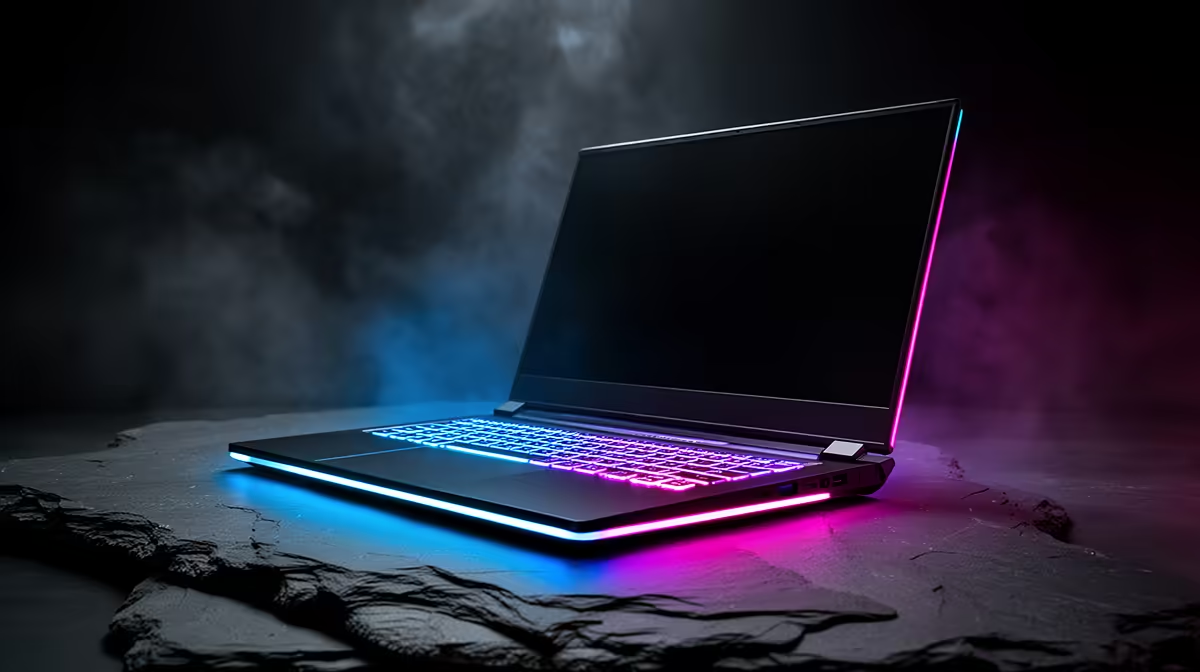
A GTX 1650 gaming laptop is due for replacement in 2026 when current games no longer meet your frame-rate or image-quality target. The four-gigabyte graphics memory and older feature set are real limits. You can keep it for esports, older games or study while a new machine is chosen with care.
Quick Answer
Upgrade when the laptop drops below a stable 60fps in the games you play, needs texture settings that spoil the image, or has developed battery and cooling problems alongside the performance gap. An RTX 5050 laptop is a useful entry point to compare, but an RTX 5060 may offer a better multi-year step if the complete-system price and cooling work for you.
Build the shortlist from current laptop best sellers and compare full configurations in the gaming laptop deal range. Record each named model's price as of July 2026. A GPU tier without a dated laptop price cannot show the real upgrade cost.
Confirm the GTX 1650 Is the Limit
Run your heaviest game at native resolution with the settings you want. Record average frame rate, one-percent lows and GPU utilisation during a busy section. If the GPU stays near full use while the processor has headroom, graphics performance is the main constraint.
Watch graphics memory use and frame times. Four gigabytes can force reduced textures and produce hitches as data moves between system memory and the GPU. A smooth average can hide those spikes.
If lowering resolution and graphics settings barely changes performance, the processor may be limiting the game. Old laptop CPUs, single-channel memory and heat can each reduce lows. Clean vents, use the correct power mode and confirm both memory channels before declaring the whole machine finished.
Modern Features Change the Experience
The GTX 1650 lacks dedicated hardware for current ray-tracing workloads and does not support the DLSS path available on RTX GPUs. Newer laptop graphics can use supported upscaling to recover frame rate and may offer frame generation in compatible games.
Generated frames improve perceived smoothness, while input response still comes from the base rendered rate. Aim for a playable base before enabling the feature. It should polish an already responsive game, rather than hide severe stutter.
Newer video encoders can also help streaming and capture. If you broadcast, compare image quality and application support at the bitrate your connection can sustain.
RTX 5050 Is a Starting Point
An RTX 5050 laptop can provide a large generational move from GTX 1650 for 1080p gaming. The exact gain varies with laptop power, cooling, CPU and memory. Read sustained benchmarks from the same model, not a desktop card or a different chassis.
Compare one RTX 5060 alternative before buying. The higher tier may offer extra performance headroom for a 1440p or 1600p screen. A modest price gap can make that step worthwhile, while a large gap or poorer laptop design can leave the RTX 5050 as the balanced system.
Do not chase the GPU at the expense of everything around it. A dim screen, weak cooling or soldered low-capacity memory stays with you for the life of the laptop.
Match the GPU to the Screen
A 1080p or 1200p panel is easier for an entry GPU to drive. A 2560 x 1600 display looks sharper and places more load on games. Upscaling can bridge part of the gap, but native text and desktop work still benefit from the higher resolution.
Check refresh rate, response, brightness and colour coverage. A 165Hz label means little when pixels smear or the panel covers a narrow colour range. Adaptive sync can smooth frame delivery where supported.
Look at how the internal display connects to the graphics processor. A MUX switch or advanced display routing can improve performance by letting the discrete GPU drive the panel directly. The benefit varies by game and mode.
Cooling Decides Sustained Speed
Laptop graphics power is configurable. Two machines with the same GPU badge can have different limits and fan profiles. A thin chassis may be easier to carry while running louder or slower under a combined CPU and GPU load.
Read long-loop testing. Temperatures need context beside clock speed and noise. A hot component holding its intended performance can be acceptable; a cooler chip with a low power limit may be slower.
Check whether the charger supplies full gaming performance and how large it is. Battery gaming runs at reduced speed and drains fast, so treat the battery as a mobility bridge rather than the main gaming power source.
Memory, Storage and Ports Matter
Aim for enough system memory in dual-channel operation. Sixteen gigabytes can cover many gaming systems, while 32GB helps heavy multitasking, creation tools and some demanding titles. Check whether memory is socketed and what capacity the machine supports.
A 512GB SSD can fill after Windows and a few large games. Look for a second M.2 slot or price a larger drive. Confirm whether opening the chassis affects any support terms you rely on.
List the ports used by your monitor, mouse, headset, network and storage. USB-C does not always include display output or charging. HDMI versions can limit an external high-refresh display.
Price the Whole Change
Add the laptop, any RAM or SSD upgrade, a suitable bag and the peripherals you need. Compare that total with keeping the GTX 1650 for lighter use and buying a desktop for demanding games, if portability is optional.
Record a July 2026 named-model price for every finalist. Avoid comparing a sale claim with an assumed future number. Stock and pricing move, so the dated shortlist should be refreshed when you are ready to order.
Think about resale or reuse. The old laptop may become a study machine, media PC or travel device. Back up data, remove accounts and perform a secure reset before it changes hands.
Test the New Laptop Early
During the applicable return window, inspect the panel, keyboard, trackpad and ports. Run your own games for long enough to reach stable temperatures. Listen for abnormal fan noise and check wireless performance in the room where you play.
Update drivers from the laptop maker and GPU vendor where appropriate, then compare performance with reputable results for the same configuration. A large unexplained gap can reveal a wrong power mode, single-channel memory or thermal problem.
The upgrade should improve the whole session: clean frame times, a screen you enjoy, enough storage and manageable noise. A benchmark number alone is too narrow.
FAQ
Can a GTX 1650 laptop still play esports games?
Yes. Many lighter titles remain playable with suitable settings, provided the CPU and cooling are healthy.
Is RTX 5050 a meaningful upgrade from GTX 1650?
It can be a large step in supported features and game performance. Check results for the exact laptop configuration.
Should I choose RTX 5060 instead?
Compare the total price, graphics power, screen and cooling. The higher tier is useful when the price gap fits your budget and games.
Benchmark your GTX 1650 in its hardest game, set a complete-system budget and compare exact RTX 5050 and RTX 5060 laptops at July 2026 prices.