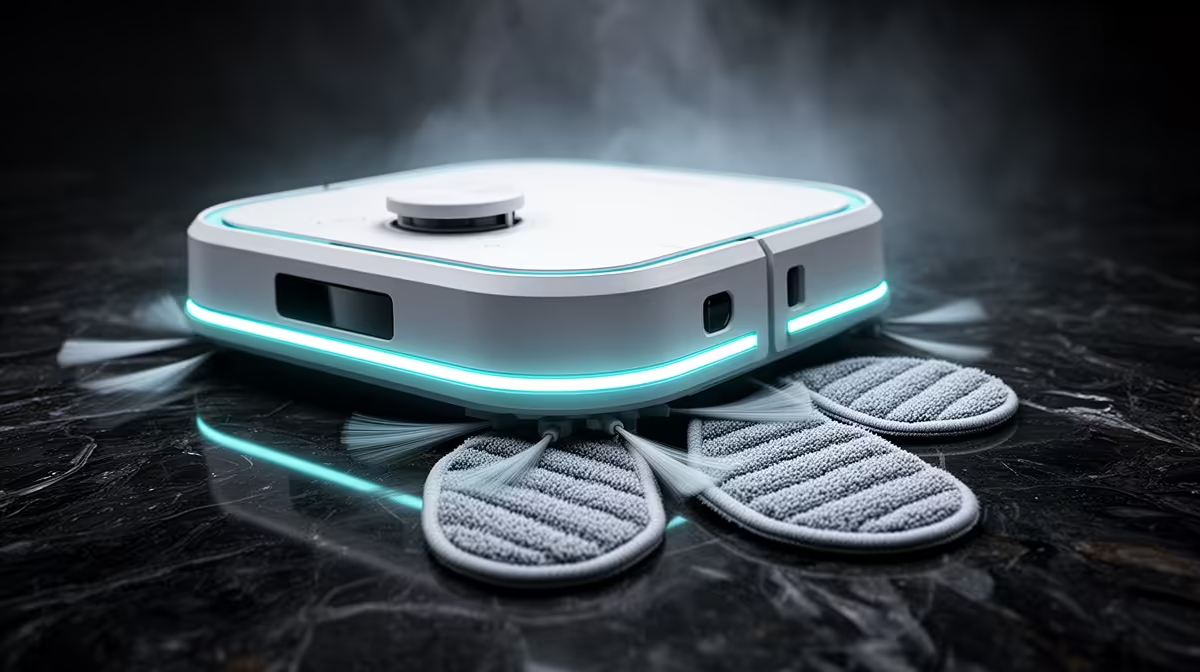
A robot that vacuums and mops in one pass sounds like an obvious upgrade, until you remember that half the homes it cleans are mostly carpet. Vacuum-and-mop robots add a water tank and pads to wipe hard floors, but whether that second feature earns its place comes down to one number: how much of your home is tile, laminate or sealed wood versus carpet and rugs.
Quick Answer
A vacuum-and-mop combo adds a water tank and mop pads to clean hard floors in the same pass, and 2026 models lift the pad 10 to 20mm when they sense carpet so they do not soak it. If most of your home is hard flooring, mopping adds real value. If it is mostly carpeted, a vacuum-only robot does the job for less.
How Combo Robots Handle the Carpet Problem
The old worry with mopping robots was simple: a wet pad dragged across a rug leaves it damp and dirty. Current combo models solve this by detecting carpet and physically lifting the mop pad clear, usually by 10 to 20mm, before they roll onto it. On hard floors the pad drops back down and resumes wiping.
That carpet-detection step is what makes a single-pass clean practical in a mixed home. Without it, you would either avoid mopping near rugs or end up re-cleaning them. With it, the robot can vacuum the lounge carpet and mop the kitchen tile in one uninterrupted run.
When Mopping Genuinely Earns Its Keep
The value of mopping scales directly with your hard-floor area. A flat or townhouse with tiled living spaces, a laminate bedroom and a sealed-wood passage gets daily benefit, since dust that a vacuum lifts is followed by a damp wipe that removes the fine grime vacuuming leaves behind. Kitchens especially gain, where sticky spots and footprints build up fast.
There is also the South African dust factor. In drier regions and during windy spells, fine dust settles quickly on hard floors, and a mop pass keeps surfaces looking clean between deeper cleans. For a home that is genuinely hard-floor heavy, the combo robot is doing two useful jobs every run.
When Vacuum-Only Is the Smarter Buy
If your home is wall-to-wall carpet with only a small kitchen or bathroom in tile, a mopping function spends most of its time lifted and idle. You would be paying for a water tank and pad system that rarely touches the floor. A capable vacuum-only robot with strong suction and good navigation covers a carpeted home thoroughly and usually costs less.
Maintenance matters too. Mopping robots need their tanks refilled, pads rinsed or replaced, and water lines kept clean. In a mostly carpeted home that upkeep buys you very little, so the simpler machine is less to look after.
What to Check Before You Buy a Combo
Look at how the carpet detection works and how high the pad lifts, since a bigger lift protects thicker rugs better. Check whether the pad needs manual rinsing or whether a base station washes it. And confirm the water tank size suits your hard-floor area, so the robot does not run dry mid-clean.
How Good Is Mopping in 2026 Combo Robots?
The gap between a budget and a flagship mopping system has widened considerably. Entry-level combo robots drag a damp static cloth, which removes surface dust but smears anything sticky. Mid-range models add a vibrating pad, which oscillates against the floor to loosen dried marks. Flagships step further with dual rotating pads that spin under the robot with real downward pressure, close to what a spinning floor polisher does. The Roborock Saros 20 Sonic, for example, delivers around 4,000 vibrations per minute with 14 newtons of pressure. That distinction matters if your floors have footprints, paw prints or dried spills, where a static cloth will move the problem around rather than lift it.
Dock-based pad washing has also improved. Auto-wash docks on current flagships rinse pads during the run rather than only at the end, so a large floor gets mopped with a consistently clean pad throughout rather than a dirty one by the midpoint.
Matching the Robot to Your Floor Plan
Walk your home and roughly tally hard floor against carpet. If hard surfaces dominate, prioritise mopping quality and tank capacity. If carpet dominates, prioritise suction and battery life instead. The right machine follows your floors, not the spec sheet. The wider smart home range is a useful place to compare what suits your layout.
The South African Context
SA homes in drier inland regions accumulate fine dust on hard floors faster than coastal cities. A daily mopping pass from a combo robot keeps tile and laminate looking clean without daily manual effort, and the running cost is just the water, a small amount of cleaning solution and a pad replacement every few months. For a flat or townhouse with predominantly tiled living areas, the combo robot earns its keep faster than in a carpeted home where the mop side rarely engages.
Frequently Asked Questions
Do mopping robots actually clean carpet, or just avoid it?
They vacuum carpet normally and lift the mop pad clear so it stays dry. The mopping function is strictly for hard floors, while the vacuum side handles carpet in the same run.
How high do 2026 models lift the mop pad?
Typically 10 to 20mm, which is enough to clear most low and medium-pile rugs. A higher lift gives better protection on thicker carpets, so it is worth checking the figure for your rugs.
Is a combo robot worth it for a mostly carpeted home?
Usually not. The mopping side stays lifted most of the time, so you pay for a feature you rarely use. A strong vacuum-only robot is the better value there.
How much maintenance does the mopping side add?
You refill the water tank, and you rinse or replace the pad regularly. Models with a self-washing base reduce that, but there is always more upkeep than a vacuum-only unit.
Can one robot replace manual mopping entirely?
For light daily upkeep on hard floors, largely yes. For deep cleaning of heavy grime or grout, you will still want an occasional manual pass, but the robot keeps the gap between those much smaller.