



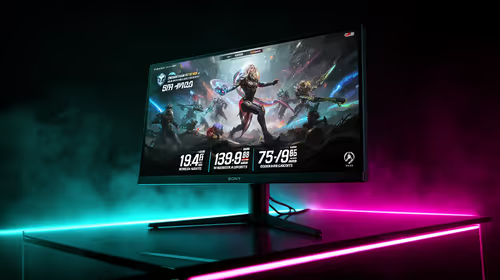
IPS vs OLED for Competitive esports in SA
IPS vs OLED depends on Competitive esports needs, platform limits, and budget fit. Compare compatibility, latency, upgrade path, and real setup constraints before choosing for an SA build.
Read moreA VR headset gives true 1:1 head-tracked depth and a full wraparound cockpit view, while triple monitors offer a wide flat field of view with sharper text and no headset weight on long stints. The best choice depends on whether depth or clarity matters more.
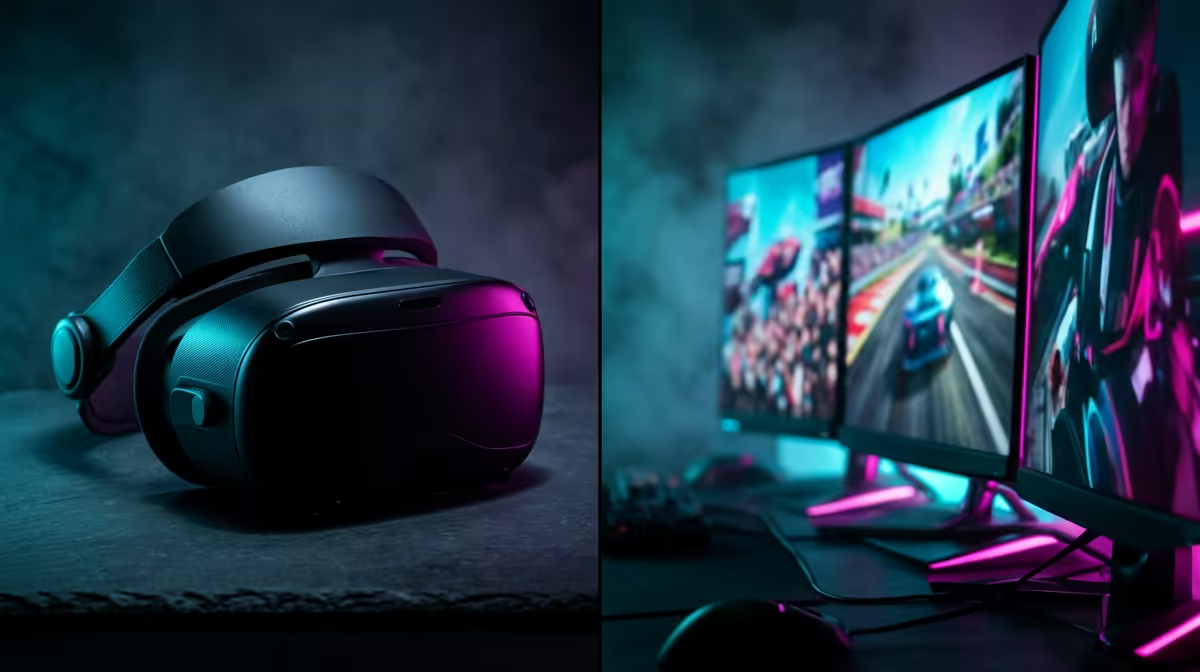
Sit in a virtual cockpit with a headset on and the apex of a corner has genuine depth: you can lean to see past the A-pillar and judge the kerb by eye. Run three flat panels instead and the text on your dash is razor-sharp, your peripheral vision is full, and your neck is fresh after a two-hour endurance stint. The VR vs triple monitors debate for sim racing is really a choice between depth and clarity, and which one matters more to you decides the whole rig.
VR wins on immersion and spatial awareness with true head-tracked 1:1 depth and a full wraparound view. Triple monitors win on clarity, comfort over long sessions, and the ability to glance at a phone or telemetry. For pure presence, choose VR; for endurance racing and sharp readability, choose triples.
A VR headset renders a separate image per eye, so you perceive real depth. Braking points snap into focus because you judge distance the way you do in a real car, and you instinctively look into corners as your head turns. The cockpit surrounds you completely, mirrors included, with no bezels breaking the world.
The cost is resolution and weight. Even a sharp headset spreads its pixels across your whole field of view, so distant signage and small dashboard text look softer than on a monitor. After ninety minutes the headset's weight on your face becomes noticeable, and a small number of drivers feel motion discomfort until they acclimatise. AR and VR headset options for sim rigs are easy to compare in the AR glasses and headset range.
Three flat panels give you crisp, native-resolution text and graphics. Your apex markers, the track surface, and your timing screens all stay sharp, which makes consistent lap times easier to chase. You can read tyre temperatures at a glance and never lose detail to a soft headset image.
Triples also let you stay connected to the room. You can sip a drink, check your phone, or glance at a separate telemetry display without lifting anything off your face. For league racers running long stints, that comfort and situational ease is a real performance factor, not just a convenience.
The catch with triples is that they present a flat, windowed view rather than true depth. Good sim titles correct the perspective across the three angled panels so the world looks geometrically right, but you still do not get the head-tracked parallax that VR gives. Bezels between the panels also create thin blind seams, although ultra-narrow-bezel monitors make these easy to ignore.
VR is demanding. The GPU must push a separate high-resolution frame to each eye at 90fps or more, and a frame-rate dip in VR is far more jarring than on a monitor because it can trigger discomfort. Triple monitors at high refresh also push a GPU hard, but a dropped frame there is merely a visual hiccup, not a physical one.
Budget-wise, a quality VR headset can cost less than three matched high-refresh monitors plus the mounting frame to hold them. In ZAR terms the gap narrows when you factor in that a VR setup demands a stronger GPU to stay comfortable at 90fps per eye, whereas triples tolerate a somewhat lighter card because dropped frames are not a physical problem. The total rig cost often lands closer than the headline prices suggest.
Not every sim handles both display modes with equal care. iRacing and Assetto Corsa Competizione both support VR well, but their rendering paths differ. In iRacing, VR is a first-class option with an active community; many top-split drivers use it specifically for the spatial awareness it gives in wheel-to-wheel racing. ACC's VR implementation is stable but more demanding on the GPU than its flat-screen equivalent, and the menus are easier to navigate on a monitor.
Triple monitors have historically had an edge in ACC for competitive play because the UI, tyre data, and replays are designed around a flat-screen workflow. The perspective correction across three angled panels is more mature in both ACC and iRacing than in some smaller titles.
If you stream races, triples win clearly: overlays, chat windows, and capture cards all operate in the standard desktop space. A VR driver streaming their session needs a mixed-capture setup, which adds complexity and an extra GPU workload on top of an already demanding render.
In 2026 the conversation around sim racing displays has matured. Many competitive racers now own both setups and split use by session type: VR for hot-lap practice and sprint events where depth perception gives an edge on corner placement, triples for long endurance races and streamed events where overlay readability and multi-hour comfort matter most. The two are no longer presented as an either-or; they serve different racing modes, and many cockpits are built to support both.
Choose VR if presence is everything: hot-lapping, rally, and any racing where reading the road by eye and feeling the car around you is the point. The depth perception genuinely improves car placement and corner confidence for many drivers.
Choose triples if you run long races, value rock-solid clarity, and want to stay aware of your physical surroundings. Endurance and league racers overwhelmingly favour triples for the comfort and readability across multi-hour sessions. If you are kitting out a full cockpit, the components that move fastest with local sim racers are grouped in the best-selling accessories list, which gives you a quick sense of what others are running.
For many drivers, yes, because true depth perception sharpens braking points and corner placement. Others lap just as quickly on triples thanks to the clearer view and lower fatigue. The advantage depends on the individual and how well they tolerate a headset over time.
Three matched monitors, ideally the same model and size, angled inward around you. Sim titles then correct the perspective across all three so the world looks geometrically continuous, giving you a wide, accurate field of view.
It can be. The headset weight becomes noticeable after an hour or more, and a minority of drivers feel motion discomfort early on, though most acclimatise. For multi-hour endurance racing, triple monitors are generally the more comfortable choice.
VR is more demanding because it renders a separate high-resolution image to each eye at a high, steady frame rate, and dropped frames cause discomfort rather than just a visual stutter. Triple monitors also load the GPU heavily but tolerate the odd frame dip far better.
Yes. Many racers own a headset and a triple-monitor rig and pick whichever suits the session. The wheelbase, pedals, and cockpit carry over, so adding the second display option is mostly a matter of the screens or headset themselves.
Deciding between depth and clarity for your rig? Compare headset options in the AR and VR range at Evetech and match your choice to a GPU that can drive it cleanly.
For many drivers, yes, because true depth perception sharpens braking points and corner placement. Others lap just as quickly on triples thanks to the clearer view and lower fatigue. The advantage depends on the individual and how well they tolerate a headset over time.
Three matched monitors, ideally the same model and size, angled inward around you. Sim titles then correct the perspective across all three so the world looks geometrically continuous, giving you a wide, accurate field of view.
It can be. The headset weight becomes noticeable after an hour or more, and a minority of drivers feel motion discomfort early on, though most acclimatise. For multi-hour endurance racing, triple monitors are generally the more comfortable choice.
VR is more demanding because it renders a separate high-resolution image to each eye at a high, steady frame rate, and dropped frames cause discomfort rather than just a visual stutter. Triple monitors also load the GPU heavily but tolerate the odd frame dip far better.
Yes. Many racers own a headset and a triple-monitor rig and pick whichever suits the session. The wheelbase, pedals, and cockpit carry over, so adding the second display option is mostly a matter of the screens or headset themselves.
IPS vs OLED depends on Competitive esports needs, platform limits, and budget fit. Compare compatibility, latency, upgrade path, and real setup constraints before choosing for an SA build.
Read more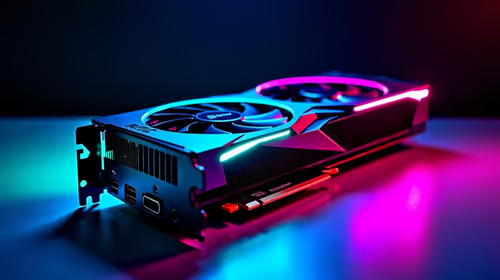
Skip the RTX 5060 for local AI workloads if memory headroom is the bigger need. SA buyers should compare VRAM capacity, CUDA support, PSU needs, case space, gaming overlap, software stack, and realistic model sizes before choosing a GPU for your PC.
Read more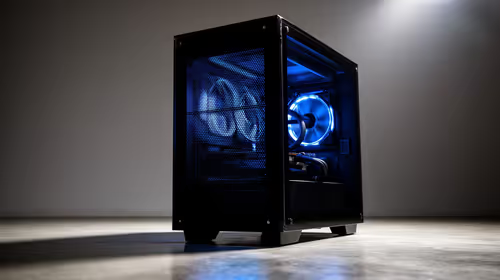
Front-mesh airflow cases has practical trade-offs for SA buyers, not one answer for every setup. Compare fit, compatibility, upgrade path, price tier, and daily gaming needs before deciding.
Read more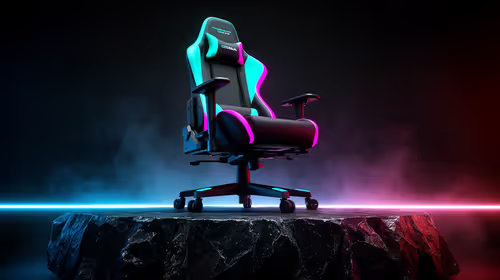
gaming chair guide for Pietermaritzburg gamers should be shortlisted around the job it must do. South African buyers should compare fit, performance, compatibility, and upgrade room, warranty path, and upgrade room before treating any pick as best.
Read more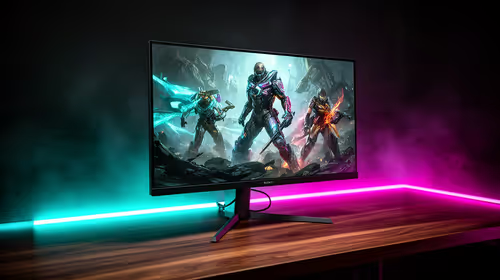
Where East London gamers buy a gaming monitor should be shortlisted around the job it must do. South African buyers should compare panel type, resolution, refresh rate, and ports, warranty path, and upgrade room before treating any pick as best.
Read more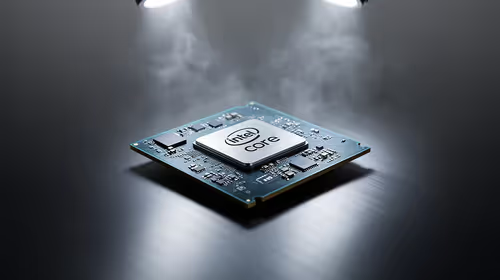
Intel Core Ultra CPU S-tier through F-tier should be shortlisted around the job it must do. South African buyers should compare fit, performance, compatibility, and upgrade room, warranty path, and upgrade room before treating any pick as best.
Read more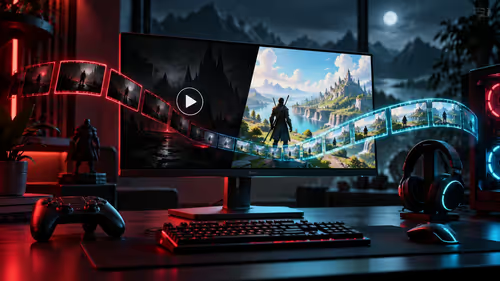
Steam game recording black screen needs a fresh capture and export test before a hardware upgrade. Check the recording mode, free space and whether another game records correctly. Community reports suggest testing broadcasting settings, but that is not a universal fix.
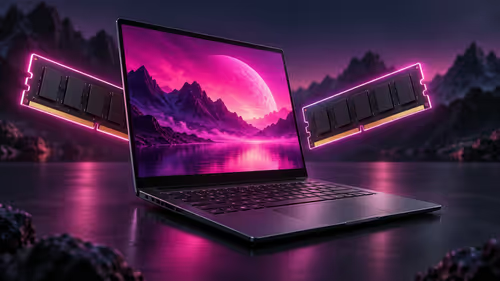
MSI Stealth 16 RTX 5070 specs need an exact SKU check because current listings disagree on GPU memory. One UK listing says 12GB while MSI's family table says 8GB. Confirm the supplied configuration rather than assuming either describes every machine.
SHIELD TV Pro price increase means a higher US price for the existing streaming box. NVIDIA confirmed the change starts on 2 October and cited component costs. Compare playback needs, regional service access and the full local quote before buying.

Is a transparent phone mount the key to clearer windshield views? 🚗 We analyze if these see-through accessories actually reduce obstruction while driving or if they’re just a clever marketing gimmick. Find out which mount keeps your dash clean. 📱
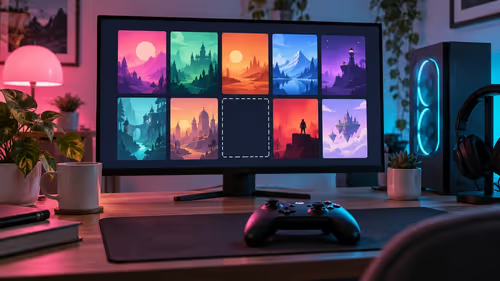
Steam game missing from library usually needs an account and filter check before a reinstall. Match your receipt to the signed-in account, clear library filters and inspect hidden games. Installed files do not establish ownership on the account you are using.
Steam game recording black screen needs a fresh capture and export test before a hardware upgrade. Check the recording mode, free space and whether another game records correctly. Community reports suggest testing broadcasting settings, but that is not a universal fix.

Windows 11 two finger scroll not working needs a gesture and driver check first. Test pointer movement and scrolling in more than one app, inspect Touchpad settings and use Windows Update or the laptop maker's driver. A new mouse is only a workaround.
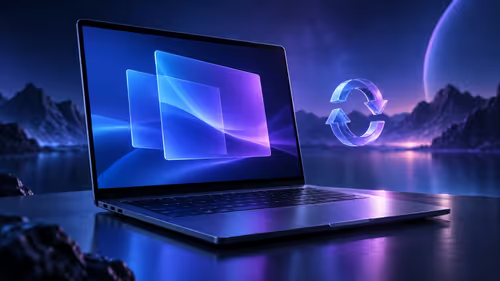
Windows 11 Insider 26220.9587 is a Beta preview released on 2 October. Microsoft lists Unicode text support, Settings performance work and a Cloud Rebuild entry point. These are preview changes, not a reason to move your only working PC onto a test build.
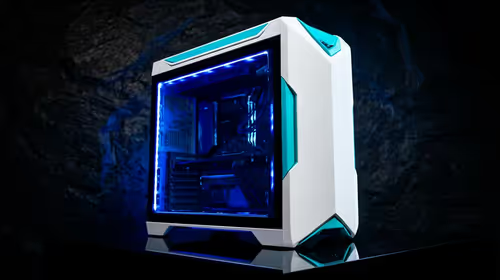
white PC builds in SA is worth checking through fit, cost, availability, and upgrade impact instead of a blanket trend claim. SA builders should compare setup details before changing parts or priorities.
IPS vs OLED depends on Competitive esports needs, platform limits, and budget fit. Compare compatibility, latency, upgrade path, and real setup constraints before choosing for an SA build.
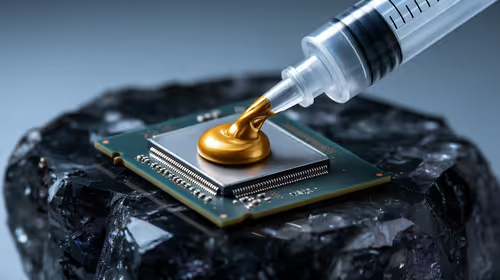
Should I use thermal paste or thermal pads should be shortlisted around the job it must do. South African buyers should compare GPU tier, VRAM, cooling, and PSU headroom, warranty path, and upgrade room before treating any pick as best.
Skip the RTX 5060 for local AI workloads if memory headroom is the bigger need. SA buyers should compare VRAM capacity, CUDA support, PSU needs, case space, gaming overlap, software stack, and realistic model sizes before choosing a GPU for your PC.