Quick Answer
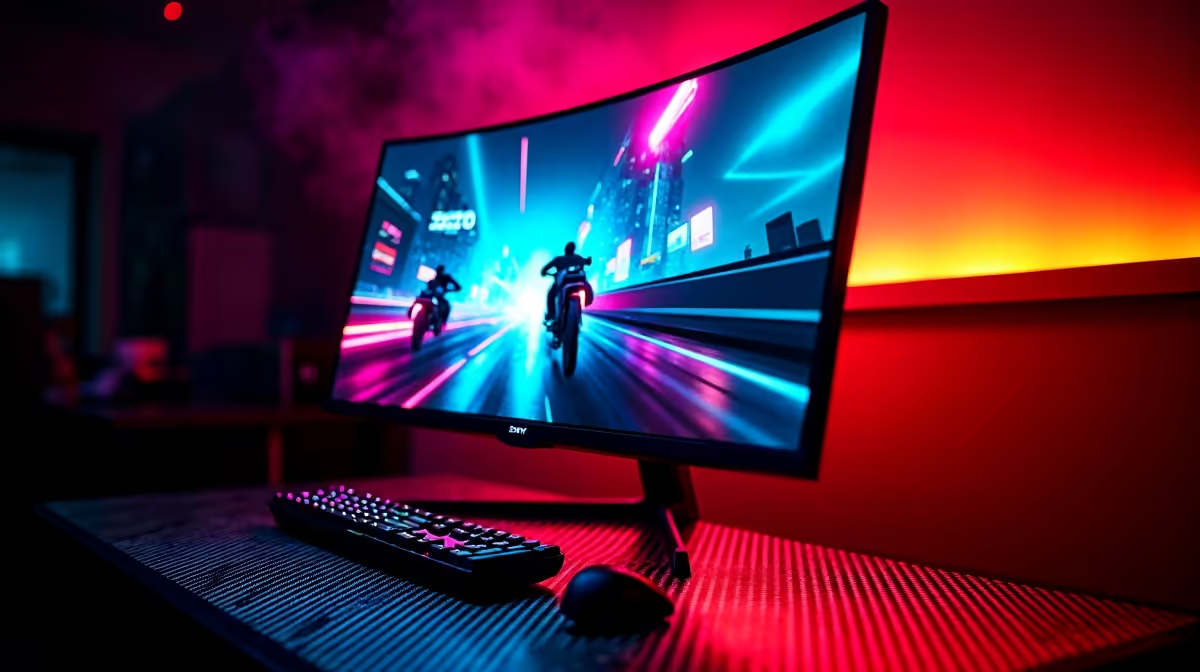
For Warzone, a 1080p 165Hz to 240Hz monitor balances reaction speed with the frame rates a strong build can deliver. A 1080p 165Hz IPS panel near R4,500 suits most players; a 1080p 240Hz IPS near R6,500-R9,000 is the competitive pick. Target 144fps-plus on a Ryzen 7 7700X and RTX 4070-class GPU.
Refresh, Resolution and Warzone Reality
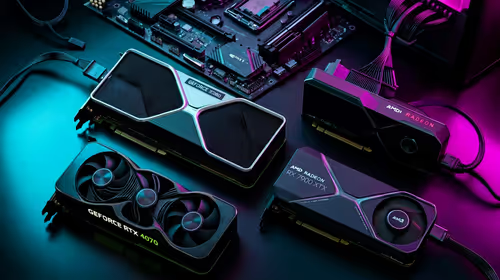
Warzone is more demanding than esports titles, so frame rate depends heavily on the GPU. At 1080p competitive settings a Ryzen 7 7700X and RTX 4070-class GPU push past 144fps, feeding a 165Hz panel comfortably and approaching a 240Hz panel's potential with upscaling. A high refresh reduces motion blur during long-range tracking and close flicks. The jump from 60Hz to 144Hz is the biggest single improvement; 165Hz to 240Hz is a competitive refinement.
Picks and Pairing at SA Prices
A 1080p 165Hz IPS monitor near R4,500 is the value choice for most Warzone players. A 1080p 240Hz IPS near R6,500-R9,000 is the competitive option for those with a strong enough build to feed it. Look for a 1ms GtG response and FreeSync or G-Sync support for tear-free motion. Pair the monitor with a Ryzen 7 7700X and RTX 4070-class GPU, enable upscaling, and Warzone's tracking stays smooth.
FAQ
What monitor suits Warzone?
A 1080p 165Hz IPS for most players, or a 1080p 240Hz IPS for competition. Both reduce motion blur during the long-range tracking and close flicks Warzone demands.
What FPS will my build hit in Warzone?
A Ryzen 7 7700X with an RTX 4070-class GPU pushes past 144fps at 1080p competitive settings, and upscaling like DLSS lifts that toward a 240Hz panel's potential.
Is 240Hz worth it for Warzone?
Only if your build can feed it. Warzone is GPU-heavy, so a strong card matters; otherwise a 165Hz panel paired with high frame rates is the smarter spend.
monitor to your GPU: a 165Hz panel suits most Warzone builds, while a 240Hz panel needs a strong card and upscaling to stay fed.